IVF Motherhood Role Analyzer
Select Your Scenario
Click on a common IVF setup to see how motherhood roles are assigned.
Role Breakdown
Imagine holding a newborn who shares your DNA but was carried by another woman. Or perhaps you carried a child for nine months, yet share no genetic material with them. In the world of assisted reproductive technology, these scenarios are not just hypothetical-they are daily realities for thousands of families. The question "Who is the biological mother of an IVF baby?" sounds simple, but the answer depends entirely on which definition of "mother" you choose.
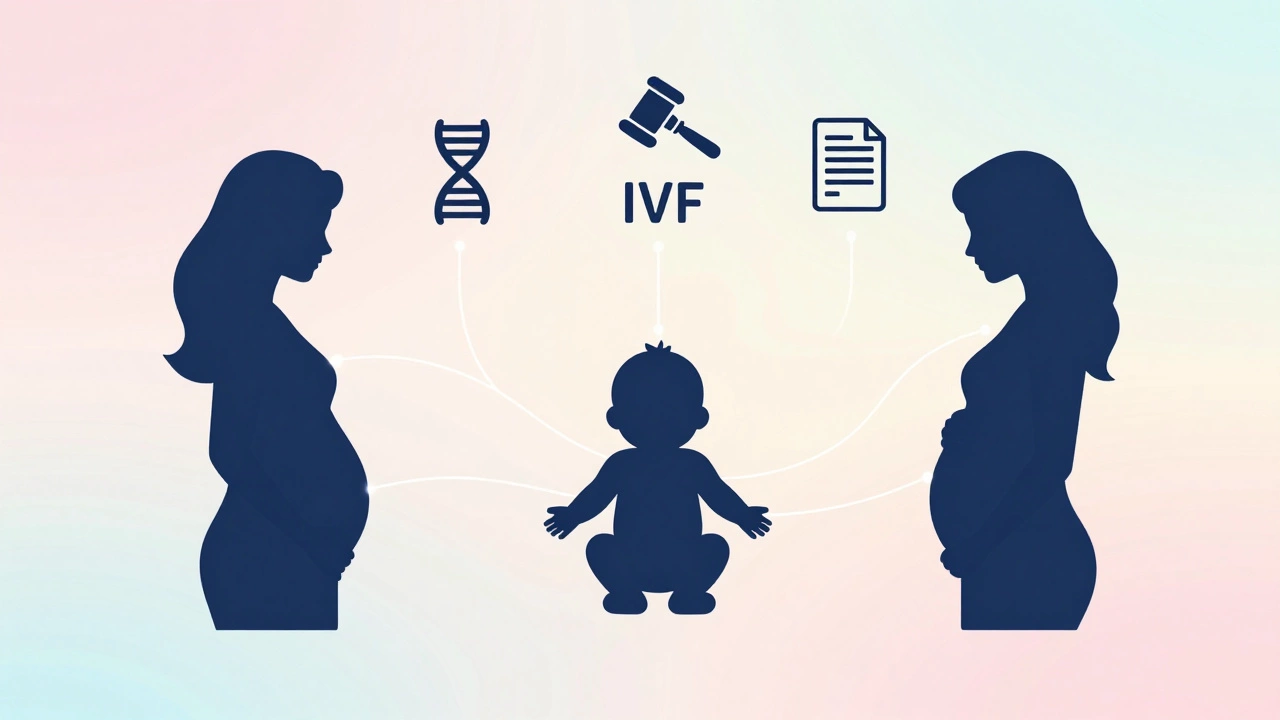
In traditional conception, one person provides the egg, carries the pregnancy, and gives birth. In In Vitro Fertilization, or IVF, this process can be split between two different women. This separation creates three distinct roles: the genetic mother, the gestational mother, and the legal mother. Understanding who holds which title is crucial for anyone navigating fertility treatments, surrogacy agreements, or adoption processes in 2026.
The Three Types of Motherhood in IVF
To understand who the biological mother is, we first need to break down the concept of motherhood into its component parts. Historically, biology treated motherhood as a single package deal. Today, science allows us to separate it.
- Genetic Mother: The woman who provides the egg (oocyte). She contributes half of the child’s DNA.
- Gestational Mother: The woman who carries the pregnancy and gives birth. She provides the womb environment but typically no genetic material.
- Legal Mother: The woman recognized by law as the parent, responsible for custody, support, and decision-making.
In many IVF cases, especially those involving a surrogate, these roles are held by different people. If you are asking who the "biological" mother is, you are likely referring to either the genetic or gestational connection. However, the law often cares most about the third category: legal motherhood. Let’s look closer at each role.
The Genetic Mother: The Source of DNA
If you define "biological" strictly by genetics, then the biological mother is the egg donor. This is the woman whose ovaries produced the egg that was fertilized by sperm to create the embryo. Her DNA determines traits like eye color, height potential, and certain health predispositions.
Egg donors can be anonymous, known relatives, or friends. In cases where a woman uses her own eggs, she is both the genetic mother and usually the intended parent. But when donor eggs are used, the genetic link goes to the donor, not necessarily the woman who raises the child.
Does this make the egg donor the "real" mother? Biologically, yes, in terms of heredity. Legally, almost never. Most jurisdictions have strict laws stating that an egg donor relinquishes all parental rights upon donation. The donor is viewed similarly to a blood donor-providing tissue, not parenting.
| Role | Biological Connection | Legal Rights (Typical) | Primary Contribution |
|---|---|---|---|
| Genetic Mother | DNA from egg | None (if donor) | Oocyte (Egg) |
| Gestational Mother | Womb environment only | Varies by contract/law | Pregnancy & Birth |
| Intended/Legal Mother | May have none | Full parental rights | Raising the child |
The Gestational Mother: The Carrier
Now consider the woman who carries the baby. She is the gestational carrier, often called a surrogate. In a gestational surrogacy arrangement, the embryo created from the intended parents' (or donors') eggs and sperm is transferred into her uterus. She shares no genetic link with the child.
Is she the biological mother? Some might argue yes, because she provided the physical environment for growth. The placenta forms from her tissues, and her body supports the fetus for nine months. There is a profound physiological bond here. Hormones, nutrients, and immune factors pass from her to the developing baby.
However, in modern medical and legal definitions, the gestational carrier is distinct from the genetic mother. Unlike traditional surrogacy (where the surrogate uses her own egg), gestational surrogacy separates the carrying function from the genetic function. This distinction is vital because it helps prevent legal battles over custody. The gestational mother agrees, via contract and medical procedure, to carry the child for others.

Legal Motherhood: Who Holds the Rights?
This is where things get complicated. Biology doesn’t always dictate law. In many countries, including much of the United States and parts of Europe, the woman who gives birth is presumed to be the legal mother until proven otherwise. This is known as the "birth mother presumption."
For intended parents using a gestational carrier, this means they cannot simply assume they are the legal parents at the moment of birth. They must go through legal steps to establish their parenthood. These steps vary significantly by location.
- Pre-birth Orders: In some US states, courts can issue orders before the baby is born, naming the intended parents on the birth certificate.
- Post-birth Adoptions: In other regions, the gestational carrier may need to formally adopt the child back to the intended parents after birth, or sign an affidavit relinquishing rights.
- Automatic Recognition: A growing number of jurisdictions now recognize intended parents automatically if proper contracts are in place, especially if one partner provides the genetic material.
If you are an intended parent, do not rely on biology alone. You need a lawyer specializing in reproductive law. Without proper legal documentation, a gestational carrier could theoretically claim parental rights, even if she has no genetic link to the child.
Scenarios: Who Is the Mother in Different IVF Cases?
To clarify this further, let’s look at common IVF scenarios. The identity of the "biological" mother changes based on whose eggs and whose womb are used.
Scenario 1: Woman Uses Own Eggs, Own Womb
Here, the wife/partner is the genetic mother, gestational mother, and legal mother. There is no ambiguity. She is the biological mother in every sense.
Scenario 2: Woman Uses Donor Eggs, Own Womb
The intended mother is the gestational and legal mother. The egg donor is the genetic mother. Legally, the intended mother is the parent. Genetically, the child resembles the donor.
Scenario 3: Surrogacy with Intended Parents’ Eggs
The intended mother is the genetic and legal mother. The surrogate is the gestational mother. The surrogate has no genetic claim, making legal transfers smoother in most jurisdictions.
Scenario 4: Surrogacy with Donor Eggs
The intended mother is only the legal mother. The egg donor is the genetic mother. The surrogate is the gestational mother. This is the most complex scenario legally, requiring robust contracts to ensure the intended parents retain full rights.
The Emotional Reality of Separated Motherhood
While laws and biology provide clear categories, human emotions do not fit neatly into boxes. Many intended mothers struggle with the fact that they did not carry the child. Conversely, some gestational carriers form deep bonds with the babies they carry, even knowing they will give them up.
It is important to acknowledge that "biological" does not equal "best." Parenting is defined by care, love, and commitment, not just DNA or pregnancy. Studies in psychology show that children raised by intended parents in surrogacy arrangements develop healthy attachments, regardless of the lack of a genetic or gestational link to one or both parents.
However, transparency matters. As these children grow older, they may seek information about their genetic origins. Knowing who the egg donor was, or understanding the role of the gestational carrier, can help them construct their personal narratives. Open communication within the family about how they were conceived is often recommended by fertility counselors.
Global Differences in Defining Motherhood
If you are considering IVF abroad, be aware that definitions of motherhood vary wildly. In some countries, commercial surrogacy is banned entirely. In others, the gestational carrier retains permanent parental rights, meaning intended parents must go through a lengthy adoption process that may not be guaranteed.
For example, in France and Germany, surrogacy contracts are not legally enforceable. The woman who gives birth is always considered the legal mother, regardless of any prior agreement. This poses significant risks for intended parents traveling from countries where such arrangements are legal. Always consult with international reproductive lawyers before proceeding with cross-border IVF.
Next Steps for Intended Parents
If you are planning an IVF journey that involves donor eggs or a surrogate, take these steps to protect your family:
- Consult a Reproductive Lawyer Early: Do not wait until after the baby is born. Establish legal parentage plans before the embryo transfer.
- Understand Your State/Country Laws: Research whether pre-birth orders are available and what the requirements are.
- Choose Reputable Agencies: If using a surrogate, work with agencies that screen for psychological stability and legal compliance.
- Plan for Disclosure: Decide how and when you will tell your child about their origins. Honesty builds trust.
The question of who the biological mother is has no single answer. It is a triad of genetics, gestation, and law. By understanding each component, you can navigate the emotional and legal complexities of IVF with confidence and clarity.
Is the egg donor considered the legal mother of the IVF baby?
No, in most jurisdictions, the egg donor is not considered the legal mother. Egg donation is typically structured so that the donor relinquishes all parental rights. The intended parents, who commission the treatment, are recognized as the legal parents, provided proper legal procedures are followed.
Can a gestational surrogate claim custody of the baby?
In rare cases, yes, if legal paperwork is missing or invalid. However, in properly managed gestational surrogacy arrangements with enforceable contracts and pre-birth orders, the surrogate has no legal claim to the child. The law prioritizes the intent of the parties involved, especially when the surrogate has no genetic link to the baby.
Who is listed as the mother on the birth certificate in a surrogacy case?
This depends on local laws. In some places, the gestational carrier is initially listed as the mother, and the intended parents must amend the certificate later. In other jurisdictions, particularly those allowing pre-birth orders, the intended mother’s name appears on the birth certificate immediately after delivery.
Does the gestational mother have any genetic link to the baby?
No, in gestational surrogacy, the surrogate does not provide the egg. Therefore, she shares no DNA with the child. Her role is purely physiological, providing the uterine environment for the embryo to develop. This distinguishes gestational surrogacy from traditional surrogacy, where the surrogate uses her own egg.
What happens if both partners are male and use a surrogate and egg donor?
Both men are typically recognized as the intended parents. One or both may be listed as fathers on the birth certificate depending on local laws regarding same-sex parenthood. The egg donor and gestational carrier have no parental rights. Legal adoption or second-parent adoption may be required in some regions to secure rights for both fathers.