
Healthcare Cost Calculator: Portugal vs US
Estimate Your Medical Costs
Compare what you might pay for medical care in Portugal versus the United States.
Cost Comparison
Note: Costs are estimates based on the article's data. Actual costs may vary based on individual circumstances.
When an American ends up in a Portuguese hospital-whether it’s from a fall on a cobblestone street in Lisbon, a bad case of food poisoning in the Algarve, or a sudden heart palpitation during a hike in the Azores-they’re often surprised by how smoothly things work. Portugal’s public healthcare system isn’t just for locals. It’s open to anyone legally present, including tourists and short-term visitors. And for many Americans, the experience is better than expected.
Emergency care is fast and free
If you need urgent help, walk into any hospital emergency room in Portugal. You won’t be turned away for lack of insurance. Emergency care is guaranteed under Portuguese law, no matter your nationality or ability to pay. That means if you’re in a car accident in Porto or collapse from heatstroke in Coimbra, you’ll get treated immediately. The staff will stabilize you, run tests, and start treatment without asking for your credit card first.
Most ER staff speak English, especially in tourist-heavy areas like Lisbon, Porto, and the Algarve. Signs are bilingual, and forms often come in both Portuguese and English. One American woman who had a severe allergic reaction in Lagos told her story to a travel blog: "They gave me epinephrine within five minutes. No questions. No forms. Just help."
What about costs? You might pay later
Emergency care is free at the point of service-but that doesn’t mean it’s free forever. Portugal’s public health system bills foreign visitors after treatment. You’ll get a letter in the mail, usually within 30 to 90 days, with a detailed invoice. The cost depends on the treatment:
- Basic ER visit: €10-€50
- Minor surgery or imaging (X-ray, ultrasound): €50-€200
- Overnight stay: €100-€250 per day
- Complex procedures (like appendectomy or heart monitoring): €1,000-€5,000
These prices are a fraction of what you’d pay in the U.S. For example, a broken arm treated in a U.S. ER can cost $5,000-$15,000. In Portugal, even with imaging and a cast, it’s under €400. Most Americans pay the bill without issue. Some use travel insurance to cover it; others pay out of pocket because it’s still cheaper than U.S. rates.
Non-emergency care? You’ll need to plan
For non-urgent care-like seeing a doctor for a persistent cough or getting a prescription refill-you can’t just walk into a public hospital. Portugal’s public system prioritizes residents. Tourists without a European Health Insurance Card (EHIC) or private insurance usually can’t book routine appointments.
That’s where private clinics come in. Portugal has a strong network of private hospitals and clinics that welcome foreigners. They accept cash, credit cards, and international insurance. Popular spots include Lusíadas Saúde a leading private healthcare provider in Portugal with multiple locations and English-speaking staff in Lisbon and Cuf a major private healthcare network known for high standards and modern facilities in Porto. Many offer same-day or next-day appointments.
Costs are transparent. A private GP visit runs €40-€70. A specialist consultation (cardiologist, dermatologist, etc.) is €70-€120. Blood tests cost €20-€80. No hidden fees. No surprise bills. You pay at the front desk and leave with a receipt.
Prescriptions are easy to fill
If you need medication, Portuguese pharmacies are everywhere. They’re called farmácias, and they’re open late, even on Sundays. You can get most common prescriptions filled without a U.S. prescription-though it’s smarter to bring one.
Pharmacists are highly trained and often speak English. They’ll ask about your symptoms, check for allergies, and recommend the right drug. Many common U.S. medications are available under different brand names. For example, ibuprofen is sold as Nurofen or Advil. Insulin, antibiotics, and blood pressure meds are all easy to find.
One American who needed a refill on his cholesterol medicine in Sintra said: "I showed them the bottle. They said, ‘Oh, this is atorvastatin.’ And handed me the same thing for half the price."

Language isn’t a barrier
Portuguese is the official language, but in healthcare settings, English is widely spoken. Doctors, nurses, and receptionists in tourist areas often studied English in school or worked with international patients. In smaller towns, you might need a translator. Hospitals in bigger cities have free interpreter services. You can also use Google Translate on your phone-most staff are used to it.
Some hospitals even offer multilingual patient portals. You can book appointments, view test results, and message doctors in English. The SNS 24 Portugal’s national health hotline that provides medical advice in multiple languages, including English line (212 808 508) is available 24/7 and connects you to a nurse who speaks English.
Insurance matters-but not like in the U.S.
Most Americans assume they need comprehensive international insurance. And yes, it’s smart to have it. But here’s the twist: even without insurance, you won’t be bankrupted by a hospital bill in Portugal. The average cost of a hospital stay is less than 10% of what it costs in the U.S.
Travel insurance with medical coverage is still recommended. It covers things like emergency evacuation, repatriation, and sometimes even the bill itself. But if you don’t have it, you can still pay the invoice later. Many Americans use services like World Nomads a popular travel insurance provider known for covering medical emergencies abroad or Allianz Travel a global travel insurance company with strong medical coverage options for peace of mind.
What if you need long-term care?
If you’re planning to stay in Portugal for months or years-say, you’re a digital nomad or retiree-you can enroll in the public system. You’ll need a tax number (NIF), proof of address, and proof of income or savings. Once enrolled, you get the same access as locals: free GP visits, subsidized prescriptions, and hospital care.
Many Americans who move to Portugal do this. They pay a small monthly fee (around €20-€40) and get full access. No co-pays for most services. No network restrictions. No pre-authorization needed. It’s a system built for fairness, not profit.
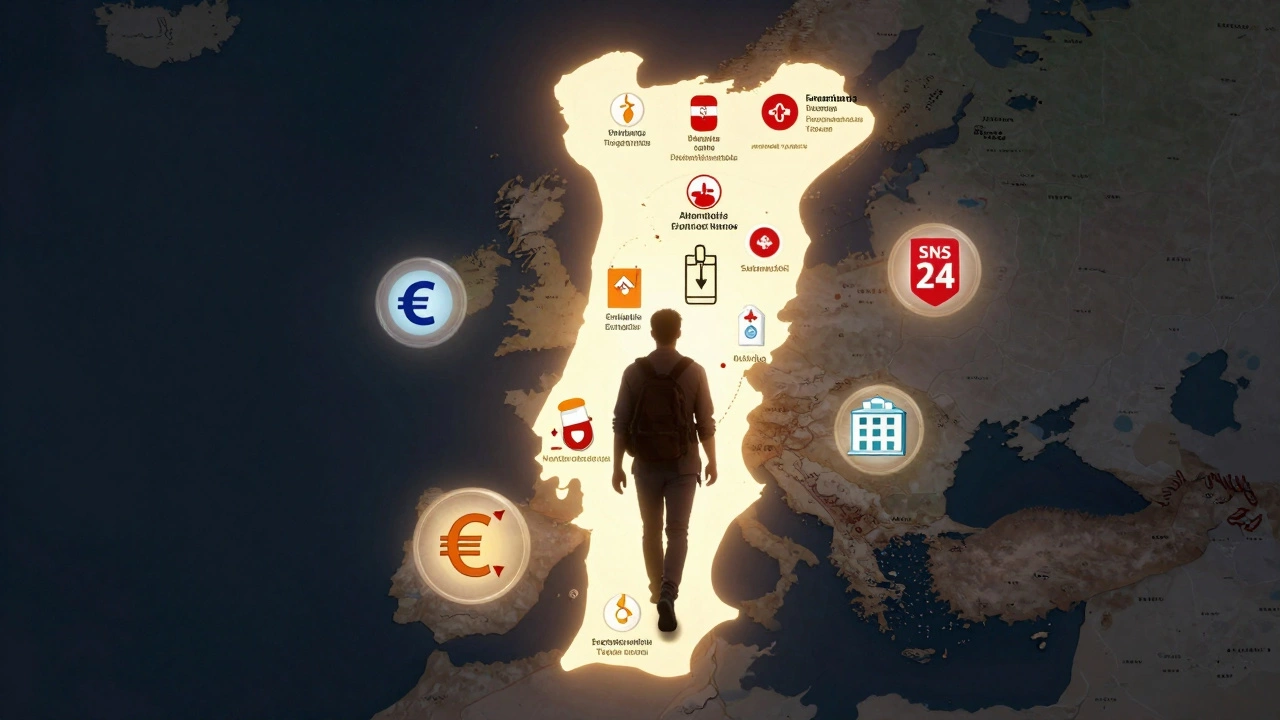
Real stories from real Americans
One couple from Chicago spent Christmas in the Algarve when the husband had a stroke. They called 112. An ambulance arrived in eight minutes. He was admitted to Faro Hospital. After a week of treatment and rehab, they were discharged. The total bill? €3,200. Their U.S. insurance covered everything. But they said the care was more personal than back home. "The nurses sat with us. Asked how we were doing. Didn’t rush us out."
An artist from Portland broke her ankle hiking in the Douro Valley. She went to a local hospital. Got an X-ray, cast, and painkillers. Paid €180. She posted about it on Reddit: "I was braced for chaos. Got kindness."
What you should do before you go
Don’t wait until you’re in pain to plan. Here’s what works:
- Get travel insurance with medical coverage. Look for at least €100,000 in emergency coverage.
- Bring a copy of your prescriptions and a letter from your doctor explaining your conditions.
- Download the SNS 24 app or save the number: 212 808 508.
- Know the location of the nearest hospital or clinic where you’re staying.
- Carry your passport and proof of address (hotel booking) at all times.
Portugal’s healthcare system isn’t perfect. Wait times for non-emergency care can be long in public hospitals. Some rural clinics have limited equipment. But for emergency care, affordability, and human touch-it’s one of the best in Europe. Americans who’ve been through it don’t just say it’s cheap. They say it’s better.
Do I need travel insurance to go to a hospital in Portugal?
You don’t legally need it-Portugal gives emergency care to everyone. But travel insurance is strongly recommended. It covers things like evacuation, repatriation, and can pay your hospital bill upfront so you don’t have to wait for a bill in the mail. Without it, you’ll pay out of pocket, but costs are still far lower than in the U.S.
Can I use my U.S. health insurance in Portugal?
Most U.S. health plans don’t cover care abroad. Medicare definitely doesn’t. Some private insurers offer limited international coverage, but you’ll likely need to pay upfront and submit a claim later. Always call your insurer before you leave. Travel insurance is a better option for foreign medical care.
Are Portuguese hospitals clean and modern?
Yes. Public hospitals in major cities like Lisbon, Porto, and Coimbra are well-maintained and meet EU standards. Private hospitals like Lusíadas and Cuf are modern, with advanced equipment and English-speaking staff. Rural clinics may be older, but they’re still safe and clean. Portugal ranks among the top 10 countries in Europe for hospital hygiene.
What if I need a specialist in Portugal?
In private clinics, you can book a specialist appointment within days. Cardiologists, orthopedists, dermatologists, and neurologists are widely available. In public hospitals, wait times can be weeks or months unless it’s an emergency. For tourists, private care is the fastest and most reliable option.
Can I get dental care in Portugal as a tourist?
Yes. Portugal is known for affordable, high-quality dental care. A root canal costs €200-€400 (vs. $1,000+ in the U.S.). Crowns are €300-€600. Many clinics cater to international patients with English-speaking staff and online booking. It’s a popular destination for dental tourism.
Bottom line: Portugal’s system works for visitors
Going to a hospital in Portugal as an American isn’t a nightmare. It’s a relief. The care is fast, the prices are fair, and the people are kind. You won’t be treated like a number. You’ll be treated like a person. And if you plan ahead-with insurance, a copy of your meds, and a little research-you’ll leave not just healed, but impressed.