IVF Cost Estimator Calculator
Estimate your IVF costs based on location, medication choices, and travel needs. See how much you could save.
If you're looking for the cheapest IVF in the United States, you're not alone. More than 80,000 IVF cycles are performed each year in the U.S., and the average cost per cycle hovers around $15,000 to $20,000. But that number isn’t fixed. Where you live - even which city you pick - can slash that price by nearly half. The truth is, IVF isn’t one price across America. It’s a patchwork of clinics, state regulations, insurance rules, and hidden fees that make some places dramatically cheaper than others.
Why IVF Costs Vary So Much Across States
IVF isn’t covered by most private insurance plans, and federal law doesn’t require it. That means clinics set their own prices. But it’s not just about greed or profit. Costs reflect local overhead: rent in Manhattan is 300% higher than in Des Moines. Labor costs in California are among the highest in the nation. Medication prices fluctuate based on pharmacy networks. Even the number of clinics in a state affects competition - more clinics usually mean lower prices.
Some states, like Massachusetts and Illinois, have laws forcing insurers to cover at least some IVF treatment. That drives up costs there because clinics adjust pricing based on what insurers will pay. Meanwhile, in states with no mandate, clinics compete directly with each other on price. That’s where you find the real deals.
The Top 5 Cheapest States for IVF in 2025
Based on clinic data from the Society for Assisted Reproductive Technology (SART) and patient-reported costs from fertility forums, here are the five states where you can get the most affordable IVF cycles in 2025:
- Michigan - Average cost: $8,500-$11,000 per cycle
- Tennessee - Average cost: $9,000-$11,500 per cycle
- Ohio - Average cost: $9,200-$12,000 per cycle
- Indiana - Average cost: $9,500-$12,500 per cycle
- North Carolina - Average cost: $10,000-$13,000 per cycle
These states don’t have mandatory insurance coverage for IVF. That means clinics compete on price. Many offer bundled packages - including medications, monitoring, egg retrieval, and embryo transfer - for a flat fee. Some even include a free second cycle if the first one fails.
What’s Included in the Price? Don’t Get Tricked
One clinic might quote you $9,000. Another says $14,000. At first glance, the cheaper one wins. But here’s the catch: not all prices are created equal.
Some clinics advertise the base procedure cost - just the retrieval and transfer. Medications? That’s extra. Blood tests? Extra. Embryo freezing? Extra. Genetic testing? Extra. Cryo-storage fees? Often $500-$1,000 a year.
Here’s what a true all-inclusive IVF package should cover:
- Initial consultations and blood work
- Ultrasound monitoring (6-10 visits)
- Medications for ovarian stimulation (Clomid, Gonal-F, Menopur)
- Egg retrieval procedure
- Lab fees for fertilization and embryo culture
- Embryo transfer
- Post-transfer pregnancy test
- One free frozen embryo transfer (FET) within 12 months
Ask for a written breakdown. If they can’t give you one, walk away. A transparent clinic will list every fee upfront. A shady one will hide costs until you’re already committed.

How to Find the Best Value - Not Just the Lowest Price
Lowest price doesn’t mean best outcome. A clinic charging $8,000 might have a 20% success rate. One charging $12,000 might have a 50% success rate. That’s not just a $4,000 difference - it’s a $20,000 difference if you need three cycles to succeed.
Look at live birth rates per cycle, not just pregnancy rates. The CDC publishes annual data for every U.S. clinic. Go to the Society for Assisted Reproductive Technology (SART) Clinic Outcomes Reporting System and search by zip code. Filter for clinics with:
- Success rates above 40% for women under 35
- At least 50 cycles performed in the last year
- Low cancellation rates (under 15%)
Don’t just pick the cheapest. Pick the one with the best cost-to-success ratio. In Michigan, clinics like Reproductive Medicine Associates of Michigan and Michigan Fertility Center consistently rank in the top 10% nationally for success rates while charging under $11,000. That’s rare.
Hidden Savings: Discounts, Grants, and Payment Plans
Even in the cheapest states, $9,000 is a lot. But there are ways to cut it further.
Discounts: Some clinics offer 10-20% off if you pay upfront. Others have reduced rates for military families, teachers, or healthcare workers. Ask.
Shared Risk Programs: Pay $15,000-$20,000 upfront for up to six cycles. If you don’t have a baby after six, you get most of your money back. These programs are popular in Ohio and Tennessee. They shift the financial risk to the clinic - and they work.
Grants: Organizations like Resolve: The National Infertility Association offer $1,000-$5,000 grants annually. Apply early - funds run out fast.
Payment Plans: Many clinics partner with Chase Health Advance or Prosper Healthcare Lending to offer 0% interest for 12-24 months. No credit check needed for some plans.
What About Medication Costs? They Can Blow Up Your Budget
Medications alone can add $3,000-$6,000 to your bill. But you don’t have to pay clinic prices.
Most clinics use their own pharmacy, which marks up drugs by 50-100%. Instead, use a mail-order pharmacy like MaxiMed, Capitol Pharmacy, or Marshall Pharmacy. They sell the same drugs - Gonal-F, Menopur, Lupron - for 40-60% less. Many patients save $2,500 just on meds.
Ask your doctor for the exact drug names and dosages. Then shop around. You’re allowed to buy your own meds. Most clinics won’t stop you - and many will even encourage it.
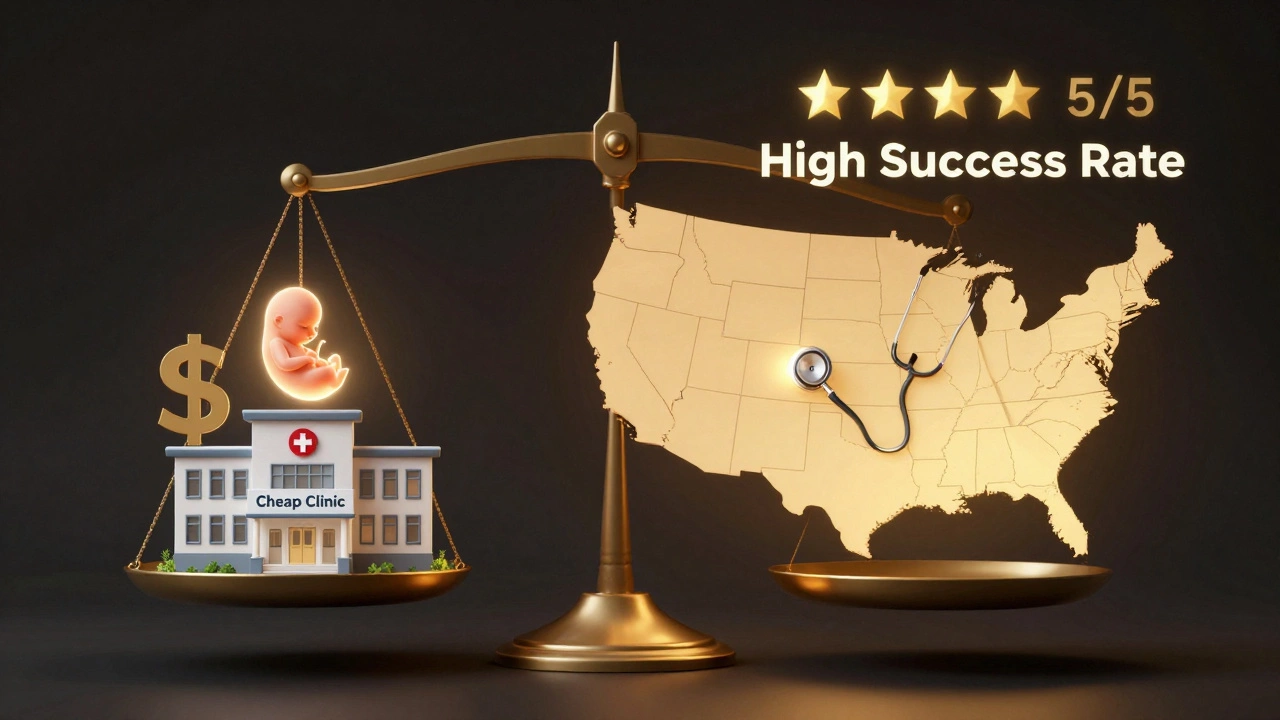
Is Travel Worth It? The Real Math Behind IVF Tourism
Some people fly to Texas or Georgia for cheaper IVF. But is it worth it?
Let’s say you live in New York. You find a clinic in Nashville for $9,500 - $6,000 cheaper than your local option. But you need to make four trips: initial consult, monitoring visits, retrieval, and transfer. Add $1,200 in flights, $800 in hotels, $300 in meals, $200 in car rentals. That’s $2,500 extra.
Your net savings? $3,500. But now you’re stressed, tired, and far from your support system. Is that worth it?
For most people, the answer is no. The best value is often local. Pick a clinic in Michigan, Ohio, or Tennessee that’s within a 3-hour drive. You’ll save money, reduce stress, and have better outcomes because you’re not fighting travel fatigue.
Red Flags: When a Deal Is Too Good to Be True
Watch out for clinics advertising IVF for $5,000 or $6,000. That’s not a bargain - it’s a trap.
Here’s what’s usually missing:
- No medication included
- Only one embryo transfer (no freeze-all option)
- High cancellation rates - if your eggs don’t mature, you pay again
- Doctors with low experience - some are new graduates
- No genetic testing - increases risk of miscarriage or birth defects
Also avoid clinics that pressure you to sign contracts on the first visit. Reputable clinics give you time. They answer questions. They show you data. If they don’t, walk away.
Final Tip: Timing Matters
IVF cycles start on the first day of your period. But clinics often have waiting lists. The best deals - the ones with the lowest prices and highest success rates - get booked 3-6 months in advance.
If you’re ready to start, call clinics now. Ask: "Do you have openings in the next 60 days? What’s your current pricing? Do you offer a money-back guarantee?"
Don’t wait for "the perfect time." The cheapest IVF doesn’t stay cheap for long. Spots fill up. Prices rise. And your biological clock doesn’t pause.
What is the average cost of IVF in the United States in 2025?
The average cost of a single IVF cycle in the U.S. in 2025 is between $15,000 and $20,000. This includes medications, monitoring, egg retrieval, and embryo transfer. However, prices vary widely by state and clinic, with some offering all-inclusive packages for as low as $8,500 in states like Michigan and Tennessee.
Which state has the cheapest IVF in the U.S.?
Michigan currently has the cheapest IVF in the U.S., with average costs ranging from $8,500 to $11,000 per cycle. Tennessee, Ohio, Indiana, and North Carolina follow closely behind. These states have no insurance mandates for IVF, leading to more competition and lower prices among clinics.
Are there any grants or financial aid programs for IVF?
Yes. Resolve: The National Infertility Association offers annual grants of $1,000 to $5,000 for IVF treatment. Some clinics also offer discounts for military personnel, teachers, and healthcare workers. Additionally, shared risk programs allow you to pay a lump sum for multiple cycles with a refund if you don’t have a baby.
Can I save money on IVF medications?
Yes. IVF medications can cost $3,000-$6,000, but many clinics mark them up by 50-100%. You can buy the same drugs from mail-order pharmacies like MaxiMed, Capitol Pharmacy, or Marshall Pharmacy for 40-60% less. Always ask your doctor for the exact drug names and dosages so you can shop independently.
Should I travel out of state for cheaper IVF?
Usually not. While some states offer lower clinic prices, travel costs - flights, hotels, meals - can add $2,000-$3,000. You’ll also face added stress and fatigue, which can affect outcomes. It’s often better to find a high-quality, affordable clinic within a 3-hour drive than to fly across the country.
How do I know if a clinic is trustworthy?
Check the SART Clinic Outcomes Reporting System for live birth rates, cancellation rates, and number of cycles performed. Avoid clinics that pressure you to sign contracts immediately or don’t provide a written price breakdown. Reputable clinics will show you data, answer all your questions, and give you time to decide.