Knee Replacement Recovery Timeline Explorer
Click on any recovery stage below to see detailed information about pain levels, activities, challenges, and expert tips for that specific time period.
Day 1: Surgery Day
The Honeymoon PhaseDays 2-3: Reality Check
⚠️ Worst DaysWeek 1: Uphill Battle
Sleep ChallengesWeeks 2-6: The Grind
Stiffness PhaseMonths 3-6: Long Tail
Almost NormalDay 1: Surgery Day
What to Expect
The day of surgery is often surprisingly manageable due to powerful medications including spinal blocks and IV painkillers. You may feel groggy or weak, but sharp pain is rare.
Key Activities
- ✓ Standing with assistance
- ✓ Short walks with walker
- ✓ Following nurse instructions
Common Challenges
Pro Tips
You’ve heard the stories. You’ve seen the videos. Now you’re staring down the barrel of your own knee replacement a surgical procedure to replace damaged knee joints with artificial implants. The big question isn’t just about the surgery itself; it’s about what comes next. Specifically, you want to know: when does it hurt the most?
If you are looking for a single number, here is the hard truth: for most patients, the absolute worst day is usually Day 2 or Day 3. But "worst" doesn't mean unbearable. It means the anesthesia has worn off, the adrenaline from the surgery is gone, and your body is screaming that something major happened. Understanding this timeline can save you from panic and help you prepare for the real journey ahead.
The First 24 Hours: The Honeymoon Phase
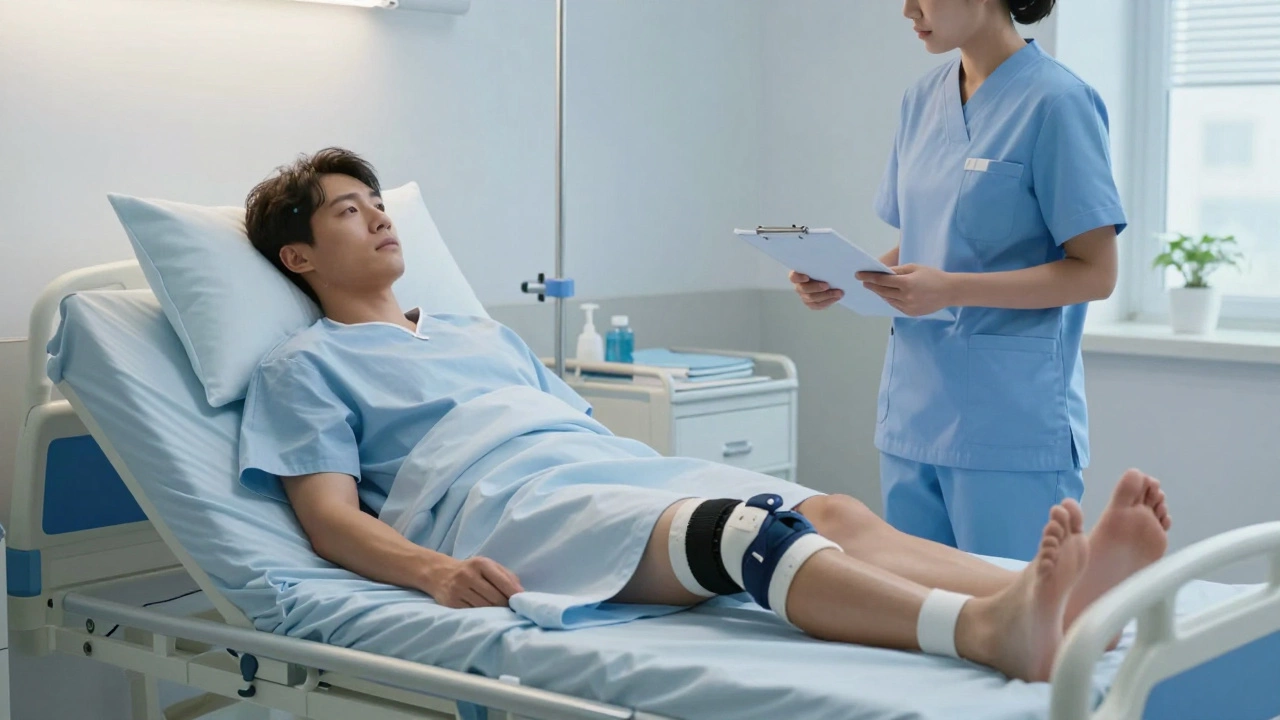
Let’s start with the good news. Day 1, the day of your surgery, is often surprisingly manageable. This is largely due to the powerful cocktail of medications your medical team uses. You’ll likely receive a spinal block or nerve block during the procedure, which numbs the leg for 12 to 24 hours. On top of that, you’ll get IV painkillers and anti-inflammatories.
Many patients walk out of the hospital on their first night, sometimes even driving themselves home if they had a local anesthetic and no general sedation (though this varies by surgeon). You might feel groggy, weak, or like your leg is asleep, but sharp, stabbing pain is rare at this stage. Your primary job on Day 1 is simple: keep moving. Nurses will push you to stand up and take a few steps with a walker. It feels awkward, yes, but it isn’t agony yet.
Days 2-3: The Reality Check
This is where the rubber meets the road. By the morning of Day 2, the nerve block wears off. Suddenly, you can feel everything. The incision site throbs. The muscles around the knee, which have been stretched and cut, are stiff and angry. This is typically the peak of acute pain.
Why is this day so tough? Two main reasons:
- Inflammatory Peak: Your body’s inflammatory response is at its highest. Swelling increases, putting pressure on nerves and tissues.
- Mobility Demands: Physical therapy intensifies. You’re no longer just standing; you’re trying to straighten the leg fully (extension) and bend it (flexion). Bending a fresh knee replacement hurts. A lot.
Patients often report feeling frustrated here. They expected to be in constant pain, but the sudden onset of discomfort after a relatively calm Day 1 can be shocking. The key is to stay ahead of the pain. Don’t wait until it hits a 9 out of 10 to take medication. Take your prescribed pain relievers on schedule, especially before physical therapy sessions.
Week 1: The Uphill Battle
After the initial shock of Days 2 and 3, the pain level drops slightly, but the nature of the discomfort changes. It becomes more muscular and less sharp. You’re dealing with stiffness, bruising, and swelling that travels down into your calf and ankle.
During this week, sleep becomes a major challenge. Lying flat can cause the knee to ache, and finding a comfortable position is tricky. Most patients find relief by placing a pillow under the calf (not directly behind the knee) to elevate the leg and reduce swelling. Ice packs are your best friend-apply them for 20 minutes every hour while awake.
By the end of Week 1, most people are walking with a walker inside the house and starting to transition to a cane. The goal is to achieve full extension (straightening the leg completely) because walking with a bent knee leads to long-term gait problems. This process is tedious and painful, but essential.
Weeks 2-6: The Grind
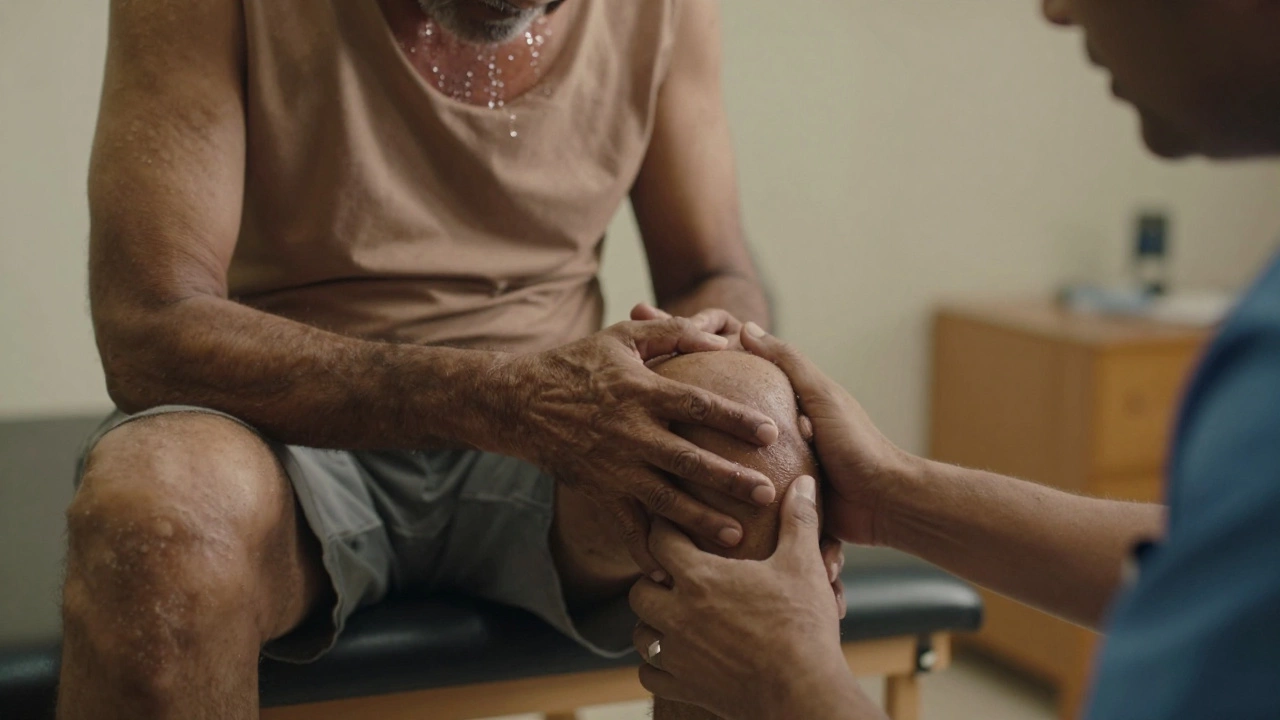
The sharp pain is mostly gone, replaced by a dull ache and significant stiffness. This phase is less about surviving pain and more about enduring boredom and frustration. You’re stuck doing the same exercises over and over: heel slides, quad sets, and straight leg raises.
Swelling can fluctuate wildly. One day your knee looks fine; the next, it’s puffy again. This is normal. Activity causes swelling, and rest reduces it. If you overdo it, the knee swells, and the pain returns. If you do too little, the knee stiffens, and the pain returns. Finding that balance is the hardest part of this phase.
Most patients return to sedentary work between weeks 2 and 4. Driving is usually possible once you’ve stopped taking opioid painkillers and can brake quickly without hesitation-typically around week 3 or 4 for left-knee replacements, and later for right-knee replacements.
Months 3-6: The Long Tail
By month 3, you’re likely walking without aids and doing light activities. But don’t let yourself get complacent. The knee still heals internally. Bone ingrowth into the implant takes up to 6 months. During this time, you might experience intermittent stiffness, especially in the morning or after sitting for long periods.
Full recovery-where the knee feels truly "normal" and you forget it’s there-can take 6 to 12 months. However, for daily life, most people feel significantly better by month 3.
| Timeframe | Pain Level | Key Activities | Common Challenges |
|---|---|---|---|
| Day 1 | Low-Moderate | Standing, short walks with walker | Grogginess, nausea from meds |
| Days 2-3 | High (Peak) | Physical therapy, bending exercises | Nerve block wears off, inflammation peaks |
| Week 1 | Moderate-High | Home PT, elevation, ice | Sleep disruption, swelling |
| Weeks 2-6 | Moderate-Low | Cane use, driving (left knee), return to desk work | Stiffness, balancing activity vs. rest |
| Months 3-6 | Low | Light exercise, swimming, cycling | Intermittent stiffness, fatigue |

How to Survive the Worst Days
Knowing that Days 2 and 3 are the toughest allows you to prepare. Here’s how to make them bearable:
- Pre-medicate: Take your pain medication 30-60 minutes before physical therapy. It takes time for oral meds to kick in.
- Ice Aggressively: Use a cryo-cuff or ice packs frequently. Cold reduces inflammation and numbs the area.
- Elevate: Keep the leg above heart level when resting. This drains fluid and reduces throbbing.
- Stay Hydrated: Dehydration worsens pain perception and causes constipation from opioids.
- Ask for Help: Have someone bring you water, meds, and snacks. Don’t try to be a hero on Day 2.
When to Worry: Red Flags
Pain is expected. Certain symptoms are not. Contact your surgeon immediately if you experience:
- Signs of Infection: Fever over 101°F (38.3°C), chills, or increasing redness/warmth around the incision.
- Blood Clots (DVT): Calf pain, tenderness, swelling, or redness in the lower leg. This is a medical emergency.
- Excessive Bleeding: Soaking through bandages repeatedly.
- Numbness or Tingling: Persistent loss of sensation in the foot or toes.
These complications are rare but serious. Better to call and be reassured than to ignore a potential issue.
Is the pain after knee replacement worse than childbirth?
This is a common comparison, but it’s subjective. Many patients report that knee replacement pain is sharper and more localized than labor pain, but shorter in duration. Labor pain is intense but episodic and ends with delivery. Knee replacement pain is constant for the first few days but improves steadily. Both are manageable with modern pain control techniques.
How long do I need to take strong painkillers?
Most patients only need opioids for the first 5-7 days. After that, you should transition to acetaminophen (Tylenol) and NSAIDs (like ibuprofen or naproxen) if approved by your doctor. Long-term opioid use is discouraged due to side effects and addiction risk.
Can I go home alone after knee replacement?
No. You must have someone drive you home and assist you for at least the first 3-5 days. You won’t be able to cook, clean, or manage stairs safely on your own initially. Having help is critical for preventing falls and managing daily tasks.
Why does my knee swell so much after activity?
Swelling is a natural inflammatory response to tissue trauma and increased blood flow from exercise. It’s your body’s way of protecting the healing joint. Reduce swelling by icing, elevating, and moderating your activity levels. If swelling persists despite rest, consult your doctor.
When can I drive after knee replacement?
If you had your left knee replaced, you may drive in 2-3 weeks if you’re not on opioids. For right knee replacements, it’s typically 4-6 weeks. You must be able to brake suddenly without hesitation and pain. Always check with your surgeon before getting back behind the wheel.