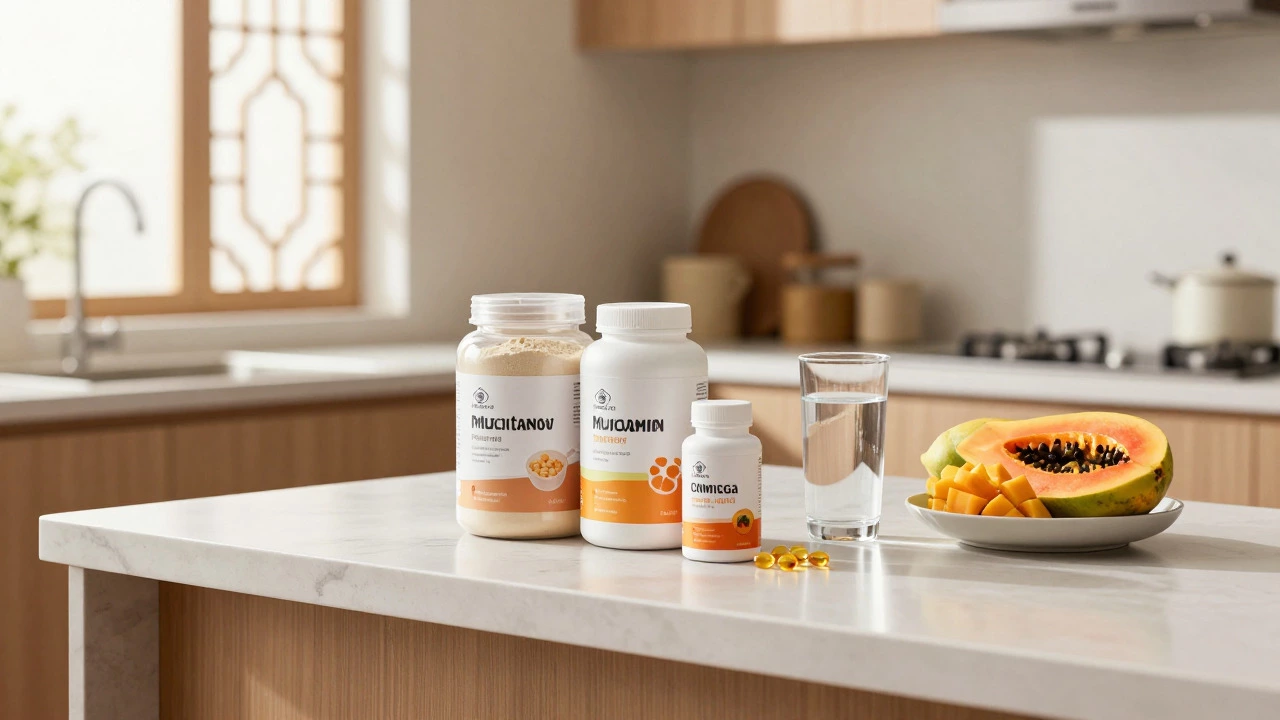
Personalized Supplement Routine Builder
Your Profile
1. Protein Strategy
Daily Target: --
2. Multivitamin Selection
3. Omega-3 Protocol
Suggested Daily Schedule
- Morning (Breakfast): Multivitamin (with food)
- Post-Workout or Snack: Protein Shake
- Dinner: Omega-3 Supplement
Enter your details to see which supplements fit your lifestyle best.
You walk into a health store or scroll through an online shop, and what do you see? A wall of bottles. Hundreds of them. Some promise eternal youth, others claim to boost your energy by 200%, and many look like they belong in a chemistry lab experiment gone wrong. It is overwhelming. If you are trying to figure out what are the 3 main supplements, you are not alone. Most people feel lost in this sea of options.
The truth is simpler than the marketing suggests. While there are thousands of compounds available, three categories stand out as the foundation for most people’s nutritional needs. These are not magic pills, but they address common gaps in modern diets. We are talking about high-quality protein sources, broad-spectrum multivitamins, and essential fatty acids like Omega-3s. Understanding these three helps you cut through the noise and build a routine that actually works.
Why Focus on Just Three?
Before we break down each one, let’s talk strategy. Why limit yourself to three? Because more is not always better. Taking ten different pills can lead to nutrient interactions, digestive issues, and wasted money. The goal of supplementation is to fill gaps, not replace food. By focusing on the big three-protein, vitamins, and fats-you cover the macronutrients and micronutrients that are hardest to get enough of from diet alone.
This approach also saves you from buying trendy powders that sound good in ads but lack scientific backing. You want reliability. You want ingredients that have been studied for decades, not just months. Let’s look at why these specific three make the cut.
1. Protein Powder: The Building Block
Protein powder is a dietary supplement derived from animal or plant sources, used to increase daily protein intake. It is arguably the most popular supplement in the world, and for good reason. Protein is the stuff your body is made of-muscles, skin, hair, nails, and enzymes. Without enough of it, everything slows down.
Most adults need between 0.8 to 1.6 grams of protein per kilogram of body weight, depending on activity level. Sounds manageable, right? Try hitting that number if you eat a mostly vegetarian diet or if you work long hours and skip meals. That is where protein powder steps in. It is convenient. You mix it with water or milk, drink it, and boom-you’ve added 20 to 30 grams of protein to your day.
But not all protein is created equal. Here is what you need to know:
- Whey Protein: This comes from milk. It is fast-digesting and rich in branched-chain amino acids (BCAAs), which help repair muscle after exercise. If you lift weights or do intense cardio, this is usually the top choice.
- Casein Protein: Also from milk, but it digests slowly. People often take this before bed because it provides a steady stream of amino acids while you sleep.
- Plant-Based Proteins: Pea, rice, hemp, and soy proteins are great for vegans or those with lactose intolerance. Pea protein, for instance, has a complete amino acid profile similar to whey.
A common mistake is thinking protein powder replaces a meal entirely. It shouldn’t. It is a supplement, not a substitute for whole foods like chicken, fish, beans, or lentils. Use it when you are busy, post-workout, or struggling to hit your daily target. Check the label for added sugars; some brands load their shakes with flavorings that turn a healthy boost into a dessert.
2. Multivitamins: The Safety Net
Multivitamins are dietary supplements containing a combination of vitamins and minerals, designed to prevent deficiencies. Think of a multivitamin as insurance. You hope you never need to file a claim, but you are glad you have it. Even if you eat well, modern farming practices and soil depletion mean our fruits and vegetables don’t always contain the same nutrient density they did fifty years ago.
Soil quality matters. Crops grown in depleted soil have lower levels of magnesium, zinc, and iron. Then add in the processing and storage time between harvest and your plate. It adds up. A basic multivitamin covers the bases for vitamins A, C, D, E, K, and B-complex, along with minerals like calcium, iron, and magnesium.
However, the "one-size-fits-all" pill is dying out. Your needs depend on your age, gender, and lifestyle. For example:
- Men: Often need more focus on heart health nutrients like CoQ10 and zinc, while avoiding excess iron unless deficient.
- Women: Typically require more iron due to menstruation and calcium/vitamin D for bone health, especially as they age.
- Vegans/Vegetarians: Must ensure they get Vitamin B12, which is primarily found in animal products. A standard multi might not have enough B12, so a specialized formula is key.
Look for "methylated" forms of B vitamins if you have trouble absorbing nutrients. Methylcobalamin (B12) and methylfolate (B9) are easier for the body to use than synthetic versions. And remember, taking a multivitamin does not give you a free pass to eat junk food. It fills the microscopic gaps, not the macroscopic ones.

3. Omega-3 Fatty Acids: The Brain and Heart Protector
Omega-3 fatty acids are essential polyunsaturated fats crucial for brain function, heart health, and reducing inflammation. This is the third pillar. Unlike protein and vitamins, fats often get a bad reputation. But Omega-3s are different. They are anti-inflammatory. In a world where chronic inflammation drives many diseases-from arthritis to heart disease-having a potent anti-inflammatory agent in your system is valuable.
Your body cannot make Omega-3s on its own. You must get them from food or supplements. The two most important types are EPA (eicosapentaenoic acid) and DHA (docosahexaenoic acid). These are found in fatty fish like salmon, mackerel, and sardines. If you eat fish twice a week, you might be fine. But most people don’t. Hence, the supplement.
Fish oil is the most common source, but algae oil is a rising star. Algae oil is vegan-friendly and often purer since algae are lower on the food chain, meaning less exposure to heavy metals like mercury. When buying fish oil, check the total amount of EPA and DHA, not just the size of the capsule. A 1000mg capsule might only contain 300mg of actual Omega-3s. Aim for a combined total of at least 500mg to 1000mg of EPA/DHA daily for general health benefits.
Benefits extend beyond heart health. DHA is critical for brain structure. Studies suggest adequate Omega-3 intake supports cognitive function and may help manage mood disorders. It also helps keep joints lubricated, which is huge for anyone dealing with stiffness or joint pain.
| Supplement Type | Primary Function | Best Source/Form | Key Consideration |
|---|---|---|---|
| Protein Powder | Muscle repair, satiety, tissue building | Whey isolate, Pea protein | Check sugar content and allergens |
| Multivitamin | Prevent nutrient deficiencies | Methylated B-vitamins, Chelated minerals | Choose gender/age-specific formulas |
| Omega-3 Fish Oil | Reduce inflammation, support brain/heart | Triglyceride form fish oil, Algae oil | Verify EPA/DHA dosage per serving |
Herbal Supplements: Where Do They Fit?
You might notice the title mentions herbal supplements. Where do herbs like ashwagandha, turmeric, or ginseng fit in? They are powerful, but they are usually considered "secondary" or "targeted" supplements. The three main supplements listed above are foundational-they support basic physiological functions everyone needs. Herbal supplements often target specific goals: stress reduction, sleep improvement, or immune boosting.
For example, Ashwagandha is an adaptogen that helps the body manage stress. Turmeric contains curcumin, which has strong anti-inflammatory properties. These are excellent additions, but they build upon the foundation of protein, vitamins, and fats. If your basics are missing, adding herbs won’t fix the underlying nutritional deficit. Start with the core three, then layer in herbs based on your specific needs.

How to Choose Quality Products
The supplement industry is loosely regulated compared to pharmaceuticals. This means quality varies wildly. One brand might give you pure, effective ingredients; another might give you filler and dust. How do you tell the difference?
First, look for third-party testing seals. Organizations like NSF International, USP (United States Pharmacopeia), or ConsumerLab verify that what is on the label is actually in the bottle. They test for contaminants like heavy metals, pesticides, and bacteria. This is non-negotiable for safety.
Second, read the ingredient list length. Shorter is usually better. If a protein powder has twenty ingredients, half of which you can’t pronounce, it is likely full of additives, artificial sweeteners, and thickeners. You want clean labels. For fish oil, look for "molecularly distilled" which indicates a purification process that removes toxins.
Third, consider the form. Powders are generally cheaper per serving than capsules. Liquids absorb faster but taste worse. Capsules are convenient but expensive. Pick the format that fits your budget and lifestyle so you actually stick with it.
Common Mistakes to Avoid
Even with the right supplements, people mess up the execution. Here are the biggest pitfalls:
- Ignoring Food First: Supplements are meant to supplement, not replace. A salad beats a vitamin pill any day. Real food provides fiber, phytonutrients, and complex interactions that pills can’t replicate.
- Overdosing: More is not better. Fat-soluble vitamins (A, D, E, K) store in your body. Too much can become toxic. Water-soluble vitamins (B, C) are excreted, but massive doses can cause kidney stones or digestive distress.
- Inconsistency: Taking supplements sporadically yields sporadic results. Nutritional support is a marathon, not a sprint. Set a reminder on your phone or link it to a daily habit like brushing your teeth.
- Ignoring Interactions: Some supplements interact with medications. Vitamin K can interfere with blood thinners. St. John’s Wort interacts with antidepressants. Always talk to your doctor before starting anything new, especially if you take prescription drugs.
Building Your Routine
So, how do you put this together? Keep it simple. Start with one category at a time. Add a multivitamin to your morning routine. Take it with breakfast to aid absorption and reduce stomach upset. Introduce protein powder into your post-workout shake or afternoon snack. Save the Omega-3s for dinner, as taking them with a meal containing fat improves absorption and reduces the chance of "fish burps."
Track how you feel. Do you have more energy? Is your recovery faster? Are your joints less stiff? Adjust as needed. Maybe you need more protein. Maybe you don’t need the multivitamin if you start eating more leafy greens. Listen to your body. It gives you feedback every single day.
Remember, these three supplements are tools. They help you build a healthier life, but they don’t live it for you. Combine them with good sleep, regular movement, and real food, and you will see a transformation that no fancy herbal blend can match alone.
Can I take all three supplements at once?
Yes, you can, but timing matters for absorption. It is best to take your multivitamin and Omega-3s with a meal containing fat. Protein powder can be taken anytime, but post-workout or as a snack is common. Spreading them out throughout the day ensures steady nutrient levels and reduces digestive discomfort.
Are herbal supplements safer than the main three?
Not necessarily. "Natural" does not mean safe. Herbal supplements can have potent effects and interact with medications. The main three (protein, multivitamins, Omega-3s) are generally recognized as safe for most people when taken at recommended doses. Herbs should be chosen carefully based on specific health goals and medical advice.
Do I really need a multivitamin if I eat healthy?
If you eat a perfectly balanced diet with diverse vegetables, fruits, lean proteins, and healthy fats every single day, you might not. However, modern lifestyles and soil depletion make it difficult to get optimal amounts of every micronutrient from food alone. A multivitamin acts as an insurance policy against hidden deficiencies.
Which type of protein powder is best for beginners?
Whey protein concentrate or isolate is the most researched and cost-effective option for most people. It mixes easily and tastes good. If you are lactose intolerant or vegan, choose a pea protein or a blend of pea and rice protein, which offers a complete amino acid profile.
How do I know if my Omega-3 supplement is good quality?
Look for third-party testing certifications like IFOS or GOED. Check the label for the specific amounts of EPA and DHA, not just total fish oil. High-quality supplements will clearly state these numbers. Also, store them in a cool, dark place or refrigerate them to prevent oxidation, which causes rancidity.