Facial Transplant Recovery: What to Expect After Surgery
When someone undergoes a facial transplant, a rare surgical procedure where all or part of a donor’s face is grafted onto a recipient with severe facial trauma or disfigurement. Also known as facial allograft transplantation, it’s not just about replacing skin—it’s about restoring function, expression, and identity. This isn’t cosmetic surgery. It’s life-altering. Only about 40 people worldwide have had full or partial facial transplants since the first one in 2005. The surgery itself takes 10 to 30 hours. But the real challenge? What happens after the operating room lights go off.
Recovery from a facial transplant, a complex reconstructive procedure involving skin, muscle, nerves, and sometimes bone. Also known as facial allograft, it isn’t measured in weeks. It’s measured in years. The first few months are about survival: fighting infection, managing rejection, and learning to breathe, eat, and speak again. Your body sees the new face as foreign. That means you’ll need to take powerful immunosuppressants for the rest of your life—drugs that weaken your immune system to protect the transplant but leave you vulnerable to infections and cancer. Every fever, every sore throat, every rash becomes a potential emergency.
Then comes the slow return of sensation. Nerves grow back at about an inch per month. Some patients feel tingling after six months. Others don’t feel their lips or cheeks for over a year. Smiling, blinking, or even chewing takes relearning. Physical therapy isn’t optional—it’s essential. Speech therapists help with articulation. Occupational therapists retrain facial muscles. And because the face is so tied to identity, psychological support isn’t a bonus—it’s a necessity. Many patients describe feeling like a stranger in their own skin. Some cry when they see their reflection for the first time. Others struggle with guilt over the donor’s family. The emotional toll is as heavy as the physical one.
Success isn’t just about looking normal. It’s about living normally. Can you taste food? Can you feel a kiss? Can you cry without losing control? These are the real measures of recovery. And while the science keeps improving—better matching, smarter drugs, faster nerve repair—the human part hasn’t changed. Recovery is lonely. It’s exhausting. It’s unpredictable. But for those who’ve lost their faces to burns, tumors, or accidents, it’s the only chance they have to be seen again.
What you’ll find in the posts below isn’t a single story—it’s a collection of real experiences, medical insights, and recovery milestones from people who’ve walked this path. From the first days in the hospital to the quiet moments years later when they finally feel like themselves again, these stories show what facial transplant recovery really looks like—not the headlines, but the hours, the setbacks, the small wins.
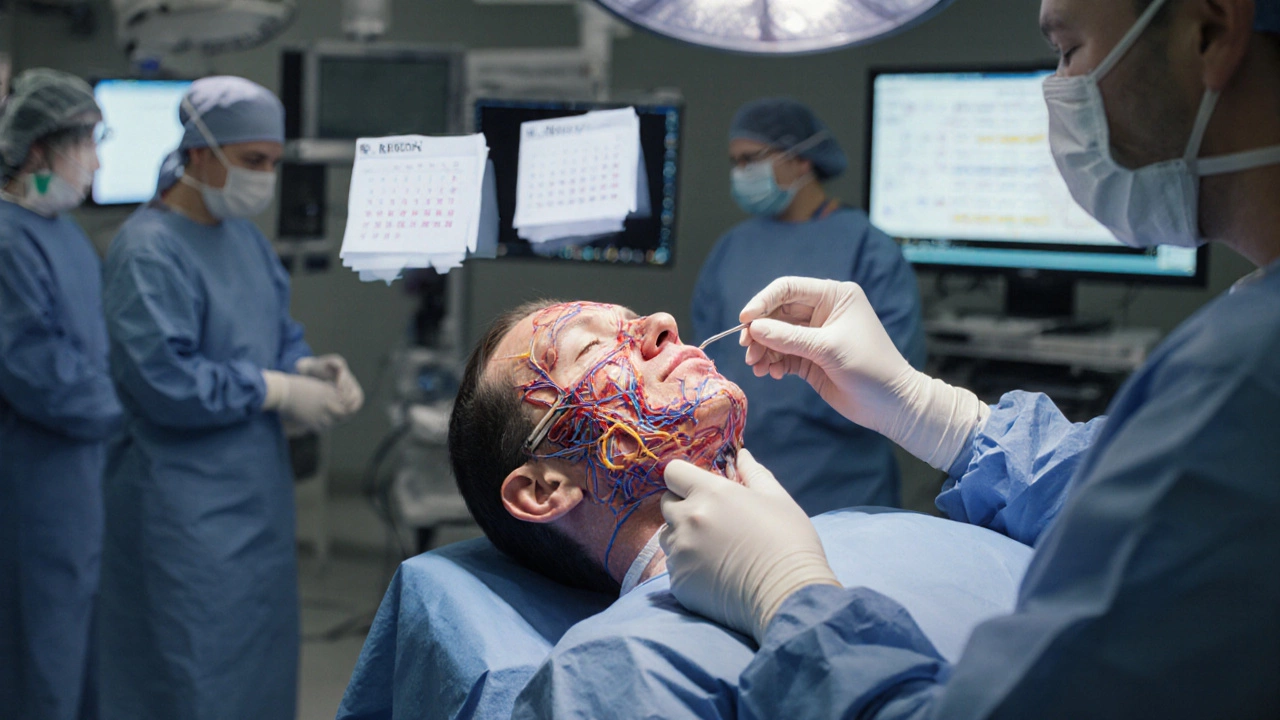
Which Surgery Has the Longest Recovery Time? Detailed Guide 2025
Explore which surgeries demand the longest recovery time, from full facial transplants to multi‑organ transplants, and learn practical tips to manage the prolonged rehab.
View MoreLatest Posts