Cancer Survival Rates: What They Mean and How They Affect Your Choices
When people talk about cancer survival rates, the percentage of people alive a certain number of years after being diagnosed with cancer. Also known as 5-year survival rate, it's not a prediction for you—it's a way doctors and researchers measure how well treatments work across large groups. These numbers don’t say if you’ll live or die, but they do show which cancers are caught too late, which treatments are making a difference, and where progress is still needed.
Take pancreatic cancer, a type of cancer that starts in the pancreas and is often diagnosed after it has spread. It’s one of the most feared because survival rates are low—fewer than 12% of people live five years after diagnosis. Why? Mostly because symptoms show up late, and there’s no simple screening test like a mammogram or colonoscopy. Compare that to breast or prostate cancer, where survival rates often top 90% when caught early. That gap isn’t luck—it’s detection. And that’s why early detection, finding cancer before it spreads or causes serious symptoms is the biggest game-changer in survival.
Survival rates also reveal how much the system matters. In places with better access to screening, faster diagnosis, and newer drugs, numbers climb. In places where people delay care due to cost or fear, they drop. That’s why knowing your risk, listening to your body, and pushing for tests when something feels off isn’t just advice—it’s a survival tactic. You don’t need to be a doctor to spot warning signs like unexplained weight loss, persistent pain, or a cough that won’t quit. And you don’t need to wait for a crisis to ask: "Could this be cancer?"
What you’ll find in these articles isn’t just numbers on a chart. It’s real stories behind the stats: why pancreatic cancer scares people, how survival rates shift with new treatments, and what steps actually move the needle. Some posts look at the most lethal cancers, others at the quiet signs people ignore. Together, they show you how survival isn’t just about medicine—it’s about timing, awareness, and knowing when to speak up.
Which Cancer Is 100% Curable: Truth About Survival Rates and Treatments
While no cancer is guaranteed to be 100% curable, certain types like testicular and thyroid cancer have survival rates exceeding 99%. Learn which cancers respond best to treatment.
View More
Which cancer has the lowest survival rate? Here's what the data shows
Pancreatic cancer has the lowest survival rate of any major cancer, with only 13% of patients surviving five years. Learn why it's so deadly, who's at risk, and what's changing in treatment.
View More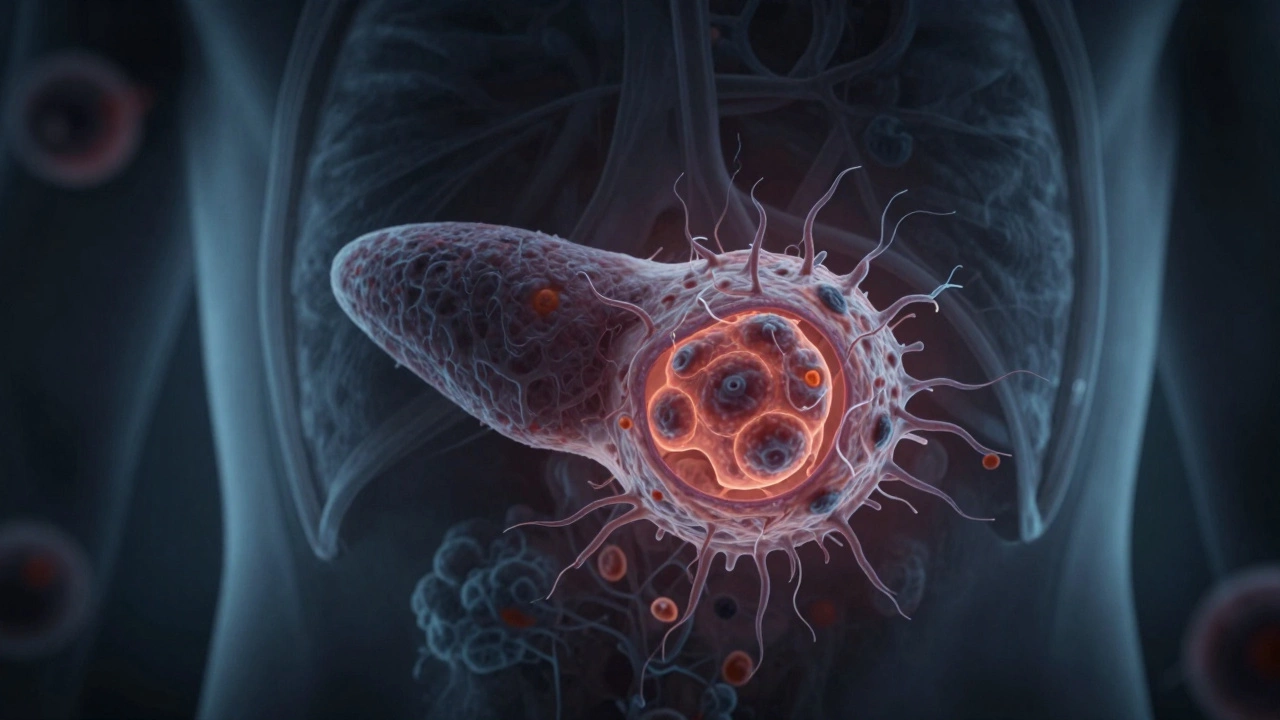
Which Cancer Has the Shortest Life Expectancy?
Pancreatic cancer has the shortest life expectancy of any major cancer, with most patients surviving only 3 to 6 months after diagnosis. Learn why it's so deadly and what can be done.
View More
What Cancer Is Hardest to Survive? The Statistics Behind the Deadliest Types
Pancreatic, glioblastoma, and lung cancers have the lowest survival rates due to late detection and aggressive biology. Learn why these cancers are so deadly and what’s being done to change the odds.
View MoreLatest Posts