Heart Surgery Risk & Survival Estimator
Patient Profile
Estimated Outcome
30-Day Survival Rate
Risk Assessment:
Select your profile and click calculate to see estimated risks based on national averages.
When a doctor says you need heart surgery, which is a medical procedure to repair or replace damaged parts of the heart, your first thought is often fear. You wonder if you will walk out of that operating room. The short answer is yes. For most people, modern cardiac surgery is highly survivable. But "survivable" doesn't just mean staying alive during the operation. It means getting through the immediate risks, recovering at home, and living a normal life afterward.
The numbers are actually quite reassuring. In developed healthcare systems, the mortality rate for routine cardiac procedures like bypasses and valve replacements is often under 1%. That means more than 99 out of 100 patients survive their surgery. However, these averages hide important details. Your personal risk depends on your age, how sick your heart is right now, and whether you have other health issues like diabetes or lung disease. Let’s break down what really determines your odds.
Understanding Survival Rates by Procedure Type
Not all heart surgeries carry the same weight. The type of operation matters immensely when calculating survival chances. We generally group these into three categories: routine, complex, and emergency.
| Procedure | Average Survival Rate (30-day) | Risk Level |
|---|---|---|
| Coronary Artery Bypass Grafting (CABG) | 98% - 99% | Low to Moderate |
| Aortic Valve Replacement | 97% - 98% | Moderate |
| Mitral Valve Repair | 96% - 97% | Moderate |
| Heart Transplant | 90% - 95% | High |
| Emergency Aortic Dissection Repair | 70% - 85% | Very High |
Coronary Artery Bypass Grafting (CABG), commonly known as bypass surgery, is one of the most performed operations worldwide. Surgeons take healthy blood vessels from your leg, arm, or chest and attach them to blocked arteries in your heart. Because this procedure is so standardized, surgical teams are extremely efficient. The risk of dying during or immediately after a standard elective CABG is very low. Most centers report mortality rates below 1.5%.
Valve surgeries, such as replacing the aortic valve or repairing the mitral valve, also have excellent outcomes. These are usually planned in advance when symptoms become manageable but not yet critical. This planning allows surgeons to optimize your health before the cut, boosting your survival odds significantly compared to emergency cases.
On the higher-risk end, you find heart transplants and repairs for aortic dissections. A transplant involves major immunosuppression and complex anatomy, while an aortic dissection is a tear in the body's main artery-a true race against time. Even with top-tier care, these procedures carry inherent dangers that push survival rates lower than routine fixes.
Key Factors That Influence Your Personal Risk
You might be wondering why two people having the same surgery can have different risk profiles. Doctors use scoring systems like the STS Score (Society of Thoracic Surgeons) to predict individual outcomes. Several key factors drive these predictions.
- Age: Younger hearts generally handle stress better. Patients over 75 face higher risks due to reduced organ reserve and weaker bones, which can complicate recovery from sternotomy (opening the chest).
- Left Ventricular Ejection Fraction (LVEF): This measures how well your heart pumps blood. An LVEF below 30% indicates severe heart failure, which drastically increases surgical risk. If your pump function is poor, your body struggles to maintain stability during anesthesia.
- Comorbidities: Conditions like chronic kidney disease, diabetes, and peripheral vascular disease add layers of complexity. For instance, diabetic patients may heal slower and face higher infection risks.
- Urgency: Elective surgery (planned weeks ahead) is always safer than urgent or emergency surgery. When you wait until you crash, your organs are already stressed, leaving less margin for error.
If you have multiple risk factors, your surgeon will likely recommend aggressive pre-habilitation. This means improving your nutrition, quitting smoking, and controlling blood sugar levels before the operation date. Studies show that even small improvements in these areas can shift your risk category downward.
The Role of Surgical Technique: Open vs. Minimally Invasive
Traditionally, heart surgery meant cracking the breastbone. This approach, called median sternotomy, provides the surgeon with full access to the heart. While effective, it causes significant trauma to the chest wall, leading to longer pain periods and slower mobility restoration.
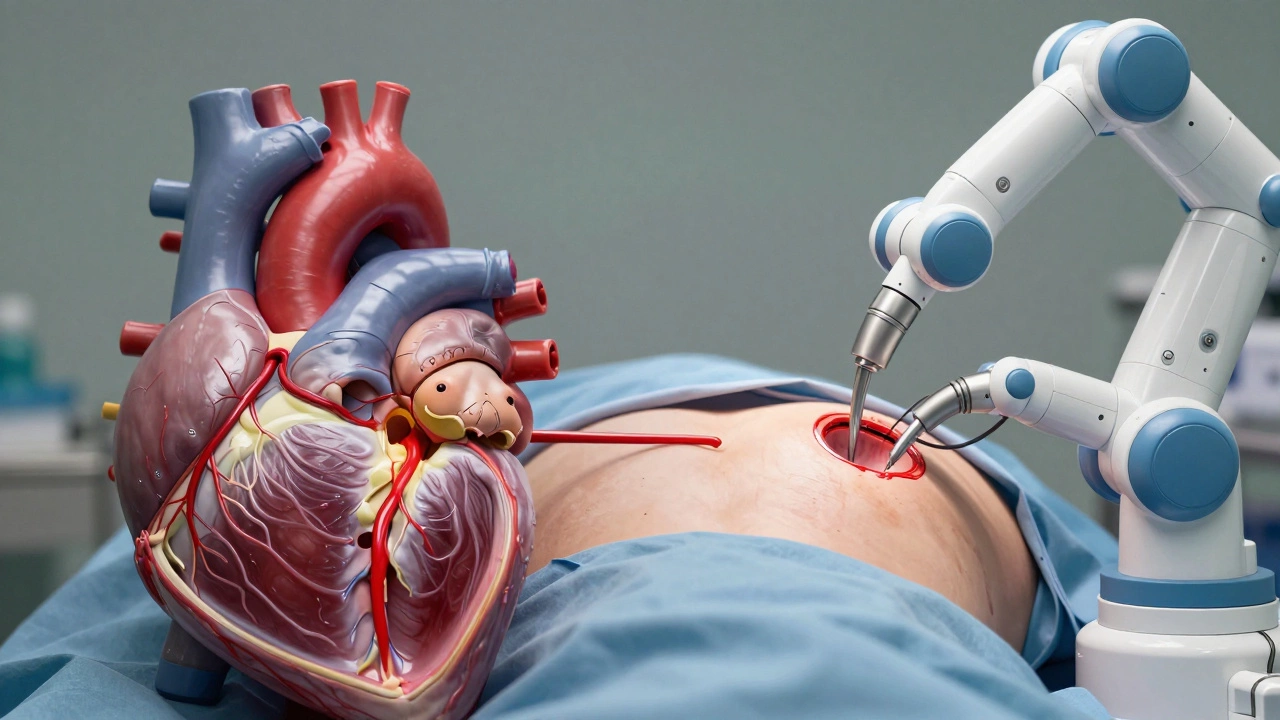
In recent years, minimally invasive heart surgery has gained ground. Techniques like robotic-assisted valve replacement or mini-thoracotomy allow surgeons to operate through small incisions between the ribs. These methods avoid breaking the sternum entirely.
Does minimally invasive mean safer? Not necessarily in terms of immediate survival. Large studies suggest that for complex cases, traditional open surgery remains the gold standard for completeness and safety. However, for straightforward valve repairs or specific graft placements, minimally invasive approaches offer faster recovery, less bleeding, and lower infection rates. Faster recovery indirectly improves long-term survival because patients regain strength sooner and reduce the risk of hospital-acquired complications like pneumonia or blood clots.
Your eligibility for minimally invasive techniques depends on your anatomy. Some hearts are simply too difficult to reach without opening the chest fully. Discuss both options with your surgeon to understand the trade-offs.
Navigating the Post-Operative Period
Surviving the operating room is only half the battle. The first 30 days post-surgery are critical. Most adverse events happen during this window, not during the procedure itself. Common challenges include atrial fibrillation (an irregular heartbeat), infections, and fluid retention.
Hospitals monitor you closely for these signs. You’ll spend several days in the intensive care unit (ICU) initially, then move to a step-down unit. During this time, nurses check your wound sites daily. Keeping the incision clean and dry is crucial. Any sign of redness, warmth, or drainage should be reported immediately.
Pain management plays a huge role in survival too. Adequate pain control allows you to breathe deeply and cough effectively. Deep breathing prevents lung collapse (atelectasis) and pneumonia, which are serious threats to weak patients. Don’t shy away from prescribed pain meds; being able to move and breathe is priority number one.

Long-Term Outlook and Quality of Life
Once you pass the initial recovery phase, the focus shifts to long-term durability. How long will the repair last? Will you need another surgery? For many patients, heart surgery offers a dramatic improvement in quality of life. People who were too breathless to climb stairs can suddenly return to hiking or gardening.
Bypass grafts don’t last forever. Saphenous vein grafts from the leg tend to narrow over 10-15 years, while internal mammary artery grafts from the chest often remain open for decades. This is why surgeons prefer using arterial grafts whenever possible. Valve replacements also have lifespans. Mechanical valves last a lifetime but require daily blood thinners. Biological valves wear out after 15-20 years but don’t require anticoagulants.
Living longer isn’t just about the hardware. It’s about lifestyle changes. Quitting smoking, managing cholesterol with statins, and maintaining a healthy weight are non-negotiable. Without these habits, new blockages can form, undoing the benefits of the surgery.
Choosing the Right Surgeon and Hospital
Experience matters. Data consistently shows that high-volume surgeons and hospitals perform better. Look for centers that perform hundreds of cardiac procedures annually. These teams have refined protocols for everything from anesthesia to wound care. They encounter complications regularly and know exactly how to handle them.
Ask your surgeon about their personal volume for your specific procedure. A general cardiothoracic surgeon might do ten valve repairs a year, while a specialist might do fifty. Higher volume correlates with lower mortality and fewer reoperations. Don’t hesitate to seek a second opinion if you feel uncertain. Getting comfortable with your care team reduces anxiety, which positively impacts healing.
What is the average life expectancy after heart bypass surgery?
Many patients live 10 to 15 years or more after coronary artery bypass grafting (CABG). With proper medication and lifestyle changes, some individuals live normal lifespans comparable to those who never had heart disease. The key factor is preventing new blockages from forming in native arteries or grafts.
Is heart surgery safe for elderly patients over 80?
Yes, but risks are higher. Age alone doesn't disqualify you. Doctors assess "biological age" rather than chronological age. If you are otherwise fit and active, you may tolerate surgery well. However, recovery takes longer, and complications like cognitive decline or frailty are more common in this group.
How long does it take to recover from open heart surgery?
Initial hospital stay lasts 4 to 7 days. Full recovery typically takes 6 to 8 weeks. You can expect fatigue and mild pain for several months. Cardiac rehabilitation programs starting within weeks of discharge significantly improve recovery speed and strength.
What are the most common complications of heart surgery?
Common issues include atrial fibrillation (irregular heartbeat), infection at the incision site, bleeding requiring transfusion, and temporary memory confusion. Serious but rare complications include stroke, kidney failure, or heart attack during surgery.
Can I go home the same day after heart surgery?
Generally no. Open heart surgery requires overnight monitoring in the ICU. However, some minimally invasive procedures, like certain catheter-based valve replacements (TAVR), may allow discharge within 24 to 48 hours depending on patient stability.