Anti-Aging Treatment Finder
Answer three simple questions to get personalized treatment recommendations tailored to your needs.
You wake up, look in the mirror, and notice something new. Maybe it’s a deeper line around your mouth, or perhaps your skin just looks... tired. It happens to everyone, but that doesn’t make it any less annoying. You want to fix it. The problem is, the beauty industry throws thousands of products at you, from $10 creams to $5,000 surgeries, leaving you confused about what actually works.
Here is the hard truth: there is no single "magic bullet" for anti-aging the process of slowing down or reversing visible signs of aging on the skin. The best treatment depends entirely on what you are trying to fix-wrinkles, sagging, spots, or texture. If you try to treat sagging with a cream, you will waste money. If you try to treat sunspots with surgery, you are overkill. Let’s break down exactly what works for each specific problem so you can stop guessing and start seeing results.
The Foundation: What Actually Works Daily
Before you spend a dime on lasers or fillers, you need to get your daily routine right. If you skip this step, expensive procedures won’t last. Think of your daily routine as the foundation of a house; if it’s cracked, the fancy roof doesn’t matter much.
The gold standard here is Retinoids, specifically prescription-strength Tretinoin or over-the-counter Retinol. These are vitamin A derivatives that speed up cell turnover. They tell your skin cells to act younger by boosting collagen production and fading dark spots. Studies consistently show that consistent use of retinoids reduces fine lines and improves skin texture over 3-6 months. Start low and slow, though. Using a strong concentration too fast leads to peeling and redness, which makes you look older, not younger.
Then there is Sunscreen, a topical product that protects skin from ultraviolet radiation. This isn’t optional. Up to 80% of visible facial aging comes from sun exposure. If you aren’t wearing SPF 30+ every single day, even when it’s cloudy, you are undoing all your other efforts. Look for broad-spectrum formulas that protect against both UVA (aging) and UVB (burning) rays.
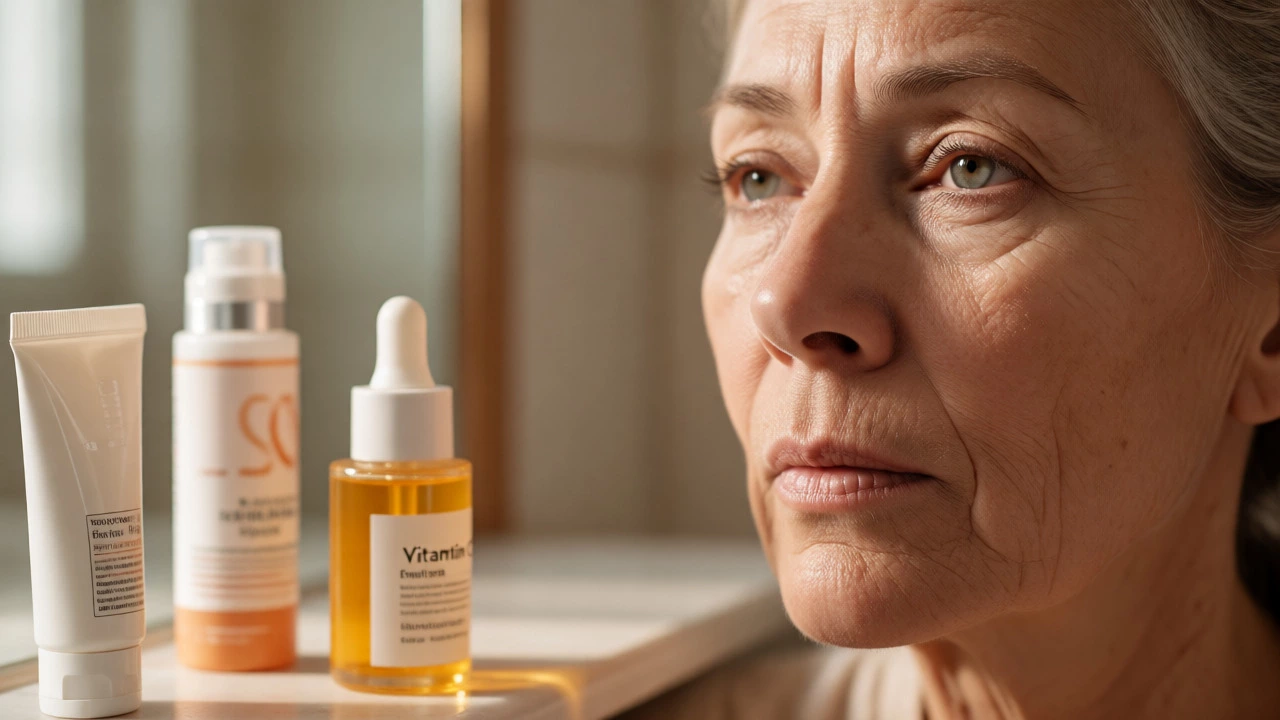
Finally, add an antioxidant serum like Vitamin C in the morning. It fights free radicals caused by pollution and sunlight. While it won’t erase deep wrinkles, it brightens the complexion and prevents future damage. Combine these three-sunscreen, antioxidants, and retinoids-and you have a solid base before considering anything else.
Treating Wrinkles and Fine Lines
If your main concern is static wrinkles-those lines that stay visible even when you aren’t moving your face-you have two primary options depending on severity.
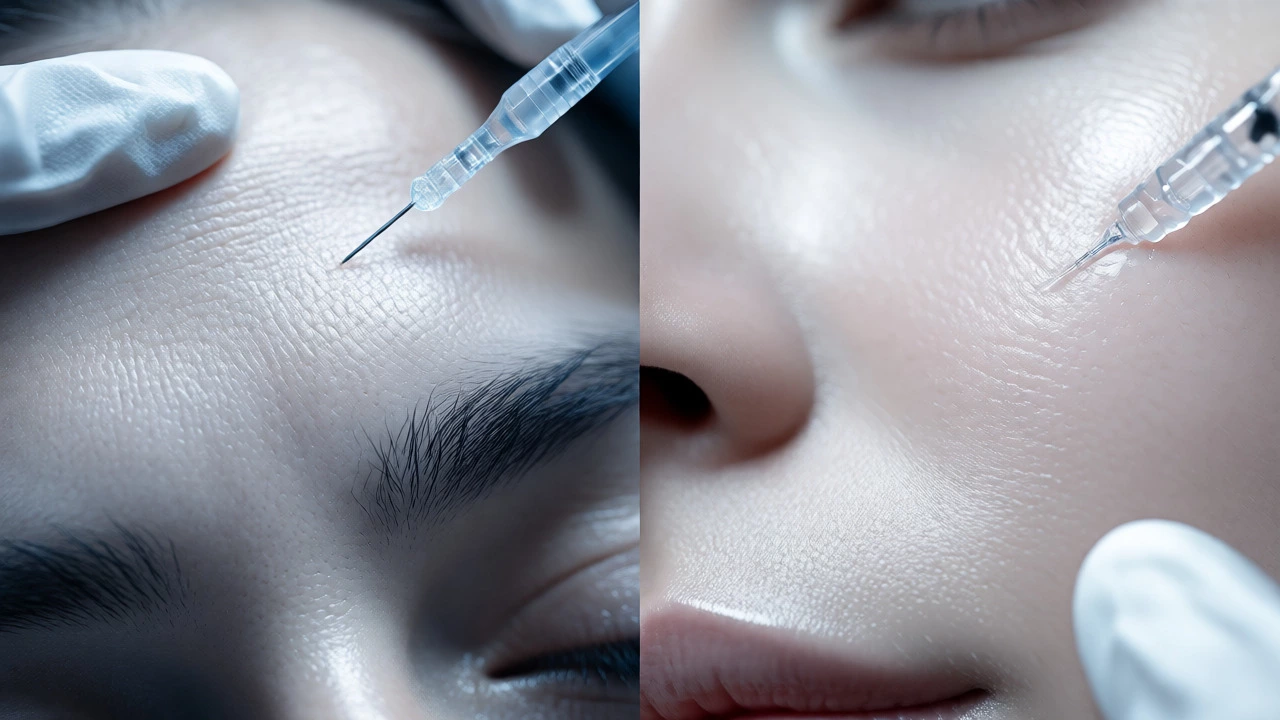
For moderate wrinkles, Botox (Botulinum Toxin) is often the go-to. It works by temporarily paralyzing the muscles that cause dynamic wrinkles, like frown lines between the eyebrows or crow’s feet. It doesn’t fill the wrinkle; it stops the muscle from creating it. Results appear in 3-7 days and last 3-4 months. It’s quick, relatively painless, and highly effective for expression lines. However, it does nothing for skin quality or sagging.
For deeper, static wrinkles that don’t disappear when your face is at rest, you might need volume restoration. This is where dermal fillers come in. Fillers inject hyaluronic acid or calcium hydroxylapatite under the skin to plump up lost volume. Common areas include nasolabial folds (smile lines) and marionette lines. Unlike Botox, fillers address structural loss. But be careful: overfilling can lead to a puffy, unnatural look. Less is more.
Fighting Sagging and Loss of Volume
Gravity wins eventually. As we age, our bones shrink, fat pads slide down, and ligaments loosen. Creams cannot lift skin. Only energy-based devices or surgery can physically tighten tissue.
Ultherapy uses focused ultrasound energy to heat deep layers of skin, stimulating collagen production and lifting tissues. It’s non-invasive, requires no downtime, and results build up over 3-6 months. It’s great for mild to moderate sagging along the jawline and neck. However, it hurts during the procedure, and results vary significantly based on how much natural collagen you have left.
For more significant laxity, radiofrequency microneedling (like Morpheus8) combines needles with heat to remodel tissue. It tightens skin and improves texture simultaneously. Downtime is minimal-usually just redness for a few days-but multiple sessions are needed.
If you have severe jowls or excess skin, surgical facelifts remain the most effective option. Modern techniques focus on repositioning underlying structures rather than just pulling skin tight, leading to more natural results. Recovery takes weeks, not days, but the effect lasts years.
Correcting Pigmentation and Texture
Aging skin often looks uneven due to sun damage, resulting in brown spots, broken capillaries, and rough texture. This is where resurfacing treatments shine.
Chemical peels use acids to exfoliate the top layers of skin. Light peels require no downtime but offer subtle improvements. Medium-depth peels, like those using trichloroacetic acid (TCA), remove damaged outer layers, revealing smoother, fresher skin underneath. You’ll peel for several days afterward, but the glow is worth it for many.
Lasers are another powerful tool. Fractional CO2 lasers ablate tiny columns of skin, triggering rapid healing and collagen remodeling. They are excellent for scars, deep wrinkles, and pigmentation. However, they involve significant downtime (redness and swelling for 1-2 weeks). Non-ablative fractional lasers offer less dramatic results with shorter recovery times, making them suitable for maintenance.
| Treatment Type | Best For | Downtime | Duration of Results | Cost Range* |
|---|---|---|---|---|
| Topical Retinoids | Fine lines, texture, prevention | None (initial irritation) | Maintained with use | $20 - $100/month |
| Botox | Dynamic wrinkles (forehead, eyes) | None | 3 - 4 months | $10 - $20/unit |
| Dermal Fillers | Volume loss, deep folds | Minimal (bruising possible) | 6 - 18 months | $600 - $1,200/syringe |
| Ultherapy | Mild to moderate sagging | None | 1 year+ | $2,000 - $4,000 |
| CO2 Laser Resurfacing | Pigmentation, deep wrinkles, scars | 1 - 2 weeks | Years | $3,000 - $6,000 |
*Costs are estimates and vary widely by location and provider expertise.

The Role of Lifestyle and Internal Health
You can buy the best serums in the world, but if you smoke, drink heavily, or sleep poorly, your skin will suffer. Smoking restricts blood flow, starving skin of oxygen and nutrients. It also breaks down collagen and elastin faster than almost any other factor. Quitting smoking is arguably the most effective anti-aging intervention available.
Sleep matters too. During deep sleep, your body produces growth hormones that repair tissues. Chronic stress raises cortisol levels, which degrades collagen. Managing stress through exercise, meditation, or hobbies isn’t just good for your mind; it visibly helps your face.
Diet plays a supporting role. Diets high in sugar lead to glycation, a process where sugar molecules attach to proteins like collagen, making them stiff and brittle. Reducing refined sugars and increasing antioxidants through fruits, vegetables, and healthy fats supports skin resilience from the inside out. Hydration keeps skin looking plump, though water alone won’t cure wrinkles.
How to Choose Your Path
So, what is the best treatment? It’s a combination tailored to your specific concerns and budget.
- If you’re in your late 20s or early 30s: Focus on prevention. Sunscreen, Vitamin C, and a gentle retinol are your best friends. Consider light chemical peels once a season.
- If you’re in your 40s: You likely see volume loss and dynamic wrinkles. Add Botox for expression lines and consider starting preventative fillers or Ultherapy if sagging begins.
- If you’re in your 50s and beyond: Structural changes are prominent. Consult a dermatologist or plastic surgeon. You might benefit from a combination approach: fillers for volume, lasers for texture, and potentially a mini-facelift for significant laxity.
Always consult with a board-certified dermatologist or plastic surgeon. Avoid places pushing one-size-fits-all packages. Ask to see before-and-after photos of patients with similar skin types and ages to yours. Be wary of providers who promise miracle results without discussing risks or downtime.
Is Botox better than fillers for aging?
They treat different problems. Botox relaxes muscles to prevent wrinkles from forming, ideal for forehead lines and crow's feet. Fillers add volume to restore lost fullness, ideal for smile lines and hollow cheeks. Many people need both for comprehensive rejuvenation.
Can creams really reverse aging?
Creams can improve texture, brightness, and fine lines, especially those containing retinoids, peptides, and antioxidants. However, they cannot lift sagging skin or restore significant volume loss. Procedures are necessary for structural changes.
What is the most effective home treatment?
Consistent use of prescription Tretinoin or high-quality Retinol combined with daily broad-spectrum sunscreen is the most proven home regimen. Adding Vitamin C serum in the morning provides additional protection against environmental damage.
How long do laser treatments last?
Results from ablative lasers like CO2 can last several years because they trigger long-term collagen remodeling. Non-ablative lasers typically require maintenance sessions every 6-12 months to sustain optimal results.
Are natural remedies effective for aging skin?
Natural oils like rosehip or argan can moisturize and provide some antioxidants, but they lack the potency of clinical ingredients like retinoids or vitamin C. They work well as complementary moisturizers but rarely deliver significant anti-aging results on their own.