
Herb Interaction Safety Checker
Check Your Herb Combinations
Select the herbs you're considering taking together. This tool will alert you to dangerous combinations based on medical research and real-world case studies.
Many people turn to herbs for better sleep, digestion, energy, or stress relief. But what you don’t know can hurt you. Taking the wrong herbs together - or mixing them with prescription meds - can lead to serious side effects, including bleeding, liver damage, or dangerously low blood pressure. This isn’t theoretical. In Bangalore, a 62-year-old man ended up in the ER after combining ashwagandha, turmeric, and blood thinners. He didn’t realize these herbs could interact. You shouldn’t have to learn the hard way.
Herbs That Thin Blood - Don’t Mix Them
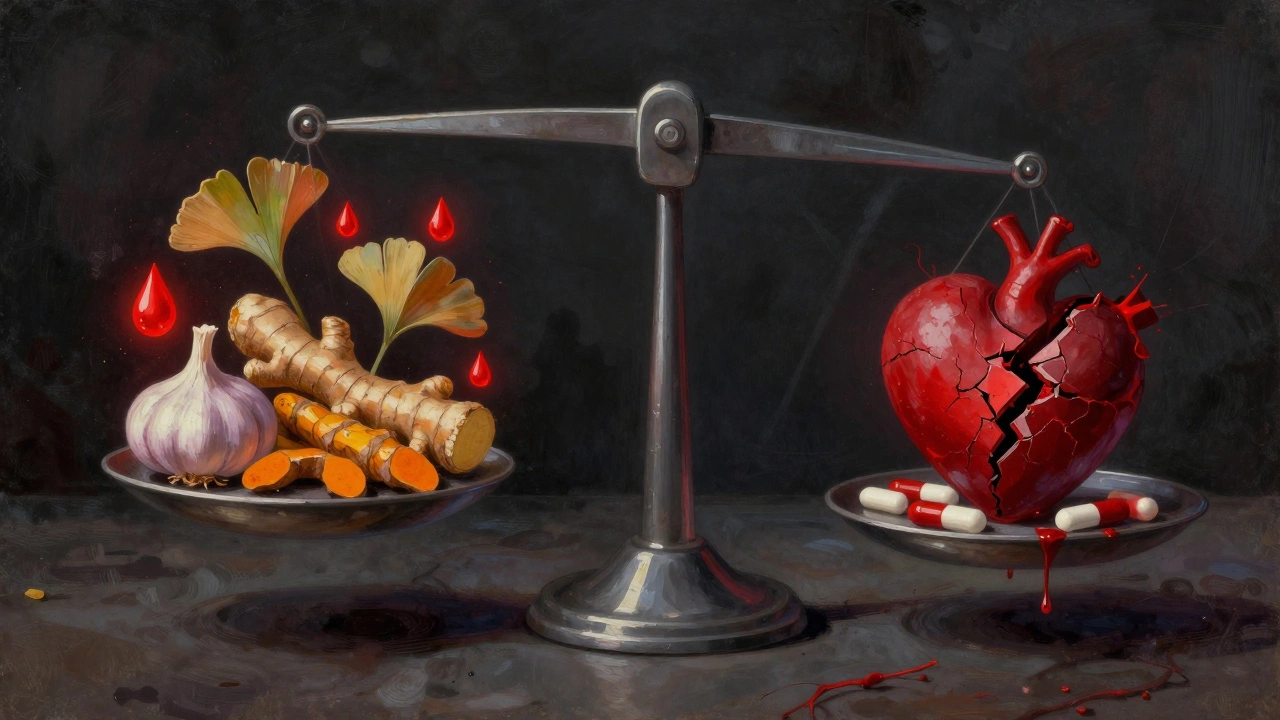
Several popular herbs act as natural blood thinners. Individually, they’re often safe. Together, they can turn your blood into water. This is especially dangerous if you’re on warfarin, aspirin, or clopidogrel.
- Garlic - Lowers platelet stickiness. One study showed it increased bleeding time by up to 25% in surgical patients.
- Ginger - Blocks thromboxane, a compound that helps blood clot. Regular use can raise bruising risk.
- Turmeric (curcumin) - Inhibits platelet aggregation. High doses over weeks can mimic the effect of low-dose aspirin.
- Ginkgo biloba - One of the most documented herb-drug interactions. It’s linked to brain bleeds after minor head injuries.
- Dong quai - Used in traditional Chinese medicine for women’s health. It’s a strong anticoagulant and shouldn’t be taken with any other blood thinner.
If you’re scheduled for surgery, stop these herbs at least two weeks before. Even dental work can trigger unexpected bleeding if you’re taking two or more of these together.
Herbs That Lower Blood Pressure - Stack Them, and You Risk Collapse
High blood pressure is common. Many people reach for herbs like hawthorn, garlic, or celery seed thinking they’re safer than pills. But stacking them can crash your blood pressure.
Take hawthorn and garlic together? That’s like doubling your dose of lisinopril. Add in magnesium supplements or blood pressure meds? You could feel dizzy, faint, or even pass out. In 2024, a study in the Journal of Clinical Hypertension tracked 87 patients who combined hawthorn, garlic, and black cohosh. Nearly 30% had systolic pressure drop below 90 mmHg - a medical red flag.
Even if you’re not on meds, don’t combine more than one of these:
- Hawthorn - Dilates blood vessels. Works slowly but steadily.
- Garlic - Also lowers blood pressure through nitric oxide release.
- Celery seed - Used in Ayurveda for hypertension. Strong diuretic effect.
- Black cohosh - Often taken for menopause, but also vasodilating.
- Green tea extract - High-dose supplements, not brewed tea, can lower BP significantly.
Check your blood pressure before and after starting any new herb. If you feel lightheaded when standing up, stop immediately.
Herbs That Affect the Liver - The Silent Killer Combo
Your liver processes everything you take. But some herbs are hard on it. And when you mix them, your liver gets overwhelmed.
In 2023, India’s National Institute of Medical Statistics reported 142 cases of herb-induced liver injury. Over 60% involved combinations of three or more herbs. The worst offenders:
- Green tea extract - High-dose capsules (not tea) are linked to acute liver failure. Doses over 800 mg daily are risky.
- Comfrey - Contains pyrrolizidine alkaloids. Banned in many countries. Causes irreversible liver scarring.
- Kava - Used for anxiety. Withdrawn in Europe and Canada due to liver toxicity. Even moderate use with alcohol is dangerous.
- Black cohosh - Multiple case reports of hepatitis after long-term use.
- Skullcap - Often adulterated with germander, which is toxic to the liver.
Never take more than one liver-stressing herb at a time. And if you’re on statins, acetaminophen, or any medication metabolized by the liver - skip these entirely. Get a liver function test if you’ve been using multiple herbs for more than three months.
Herbs That Alter Hormones - The Hidden Endocrine Disruptors
Some herbs mimic or block hormones. Alone, they might help. Together, they can throw your endocrine system into chaos.
Women taking black cohosh for hot flashes shouldn’t also take:
- Red clover - Contains phytoestrogens. Can interfere with tamoxifen in breast cancer survivors.
- Flaxseed - Also estrogenic. High doses may affect thyroid function.
- Chasteberry (vitex) - Regulates prolactin. Can clash with birth control pills or hormone replacement therapy.
Men taking saw palmetto for prostate health should avoid:
- Stinging nettle - Often paired with saw palmetto, but both affect testosterone metabolism. Could lower DHT too much, leading to fatigue or low libido.
- Pygeum - Also used for prostate. No proven benefit over saw palmetto alone, but increases risk of hormonal imbalance.
These aren’t just theoretical risks. In 2022, a 48-year-old woman in Pune developed gynecomastia after combining red clover, flaxseed, and chasteberry for three months. Her doctor found estrogen levels 3x higher than normal.
Herbs That Affect the Nervous System - Overdose Risk
Herbs like valerian, kava, and passionflower calm the nervous system. But combining them can cause excessive drowsiness, slowed breathing, or even coma.
Don’t mix:
- Valerian - Works on GABA receptors, like benzodiazepines.
- Kava - Also affects GABA. High risk of sedation.
- Passionflower - Mild sedative, but adds up fast.
- Skullcap - Sometimes sold as a calming tea. Can be contaminated with toxic plants.
- California poppy - Often used in sleep blends. Contains alkaloids that depress CNS.
One 55-year-old woman in Hyderabad took valerian, passionflower, and a melatonin supplement every night. She woke up unable to move her legs. Her neurologist said it was severe CNS depression from herb stacking. She needed a week in the hospital.
If you’re taking prescription sleep aids, antidepressants, or anti-anxiety meds - avoid these herbs completely. Even one of them can be enough.
What About Ashwagandha? It’s Safe, Right?
Ashwagandha is popular. But it’s not harmless. It lowers cortisol, boosts testosterone, and may reduce anxiety. But it also:
- Interacts with thyroid meds (can raise T3/T4 levels)
- Can lower blood sugar - dangerous with insulin or metformin
- Stimulates immune system - risky for autoimmune patients
- Increases sedation when taken with valerian or alcohol
It’s fine alone. But if you’re taking it with turmeric, ginger, and holy basil for inflammation? You’re stacking immune-modulators, blood thinners, and blood sugar reducers. That’s a recipe for trouble.

How to Stay Safe: A Simple Checklist
You don’t need to become a pharmacologist. Just follow this:
- Write down every herb, supplement, and tea you take daily.
- Check each one against the lists above. If it’s on a “don’t mix” list, stop combining it with others.
- Don’t take more than one herb from the same category (e.g., one blood thinner, one sedative).
- Always tell your doctor what you’re taking - even if they don’t ask.
- Stop all herbs two weeks before any surgery or dental procedure.
- Get liver and blood tests if you’ve been on multiple herbs for over 3 months.
There’s no such thing as a completely safe herb. Only safe combinations - and knowing what not to mix.
When to See a Doctor
Call your doctor immediately if you experience:
- Unexplained bruising or bleeding
- Dizziness, fainting, or rapid heartbeat
- Yellowing of skin or eyes
- Severe fatigue or confusion
- Difficulty breathing or swallowing
These aren’t side effects - they’re warning signs. Herbs aren’t always gentle. Your body doesn’t know the difference between a pill and a plant when it comes to chemistry.
Can I take turmeric and ginger together?
You can, but only if you’re not on blood thinners like warfarin or aspirin. Together, turmeric and ginger both reduce platelet function. If you’re healthy and not on meds, a small amount in food is fine. But if you’re taking supplements, stick to one - not both. And never take them with garlic or ginkgo.
Is ashwagandha safe with thyroid medication?
No. Ashwagandha can increase thyroid hormone levels (T3 and T4). If you’re on levothyroxine, this can push your levels into the hyperthyroid range. Symptoms include rapid heartbeat, weight loss, and anxiety. Get your TSH and free T4 checked if you’re taking both.
Can I take herbal supplements before surgery?
Stop all herbal supplements at least two weeks before any surgery - even minor ones like a tooth extraction. Herbs like garlic, ginger, ginkgo, and turmeric can cause dangerous bleeding during or after the procedure. Tell your surgeon exactly what you take, even if you think it’s harmless.
Do herbal interactions happen with food too?
Yes. Grapefruit juice blocks enzymes that break down many drugs - and some herbs. St. John’s wort can make birth control pills fail. Even green tea can reduce iron absorption from meals. Herbs don’t just interact with pills - they interact with your whole diet.
Are organic or ‘natural’ herbs safer?
No. ‘Natural’ doesn’t mean safe. Kava, comfrey, and green tea extract are all natural - but they’ve caused liver failure. Many herbal products are contaminated with heavy metals or unlabeled pharmaceuticals. Always buy from reputable brands with third-party testing (USP, NSF, or ConsumerLab).
Next Steps: What to Do Today
Take five minutes right now. Write down every herb, supplement, and herbal tea you take daily. Cross-reference them with the lists above. If you’re taking more than one from the same risky group - stop one. Talk to your doctor or pharmacist before making changes. Your body doesn’t care if it’s a pill or a plant. It only responds to chemistry. Be smart. Stay safe.