Open Heart Surgery Myths Checker
Myth Verification Tool
Check your understanding of breast changes during open heart surgery. Select true or false for each statement based on the article.
Myth: The breasts are cut during open heart surgery.
Myth: Breast size increases surgical risks.
Myth: Breastfeeding is impossible after open heart surgery.
Myth: Permanent breast sensation loss is common after surgery.
Myth: Chest swelling affects breast tissue directly.
Results
0 out of 5 correct
When someone undergoes open heart surgery, the focus is on the heart - but the chest area, including the breasts, plays a key role in how the procedure is done. Many people wonder: do the breasts get cut? Are they moved? Do they change after surgery? The answer isn’t as scary as it sounds, but it’s important to understand what actually happens.
How Is the Chest Opened During Heart Surgery?
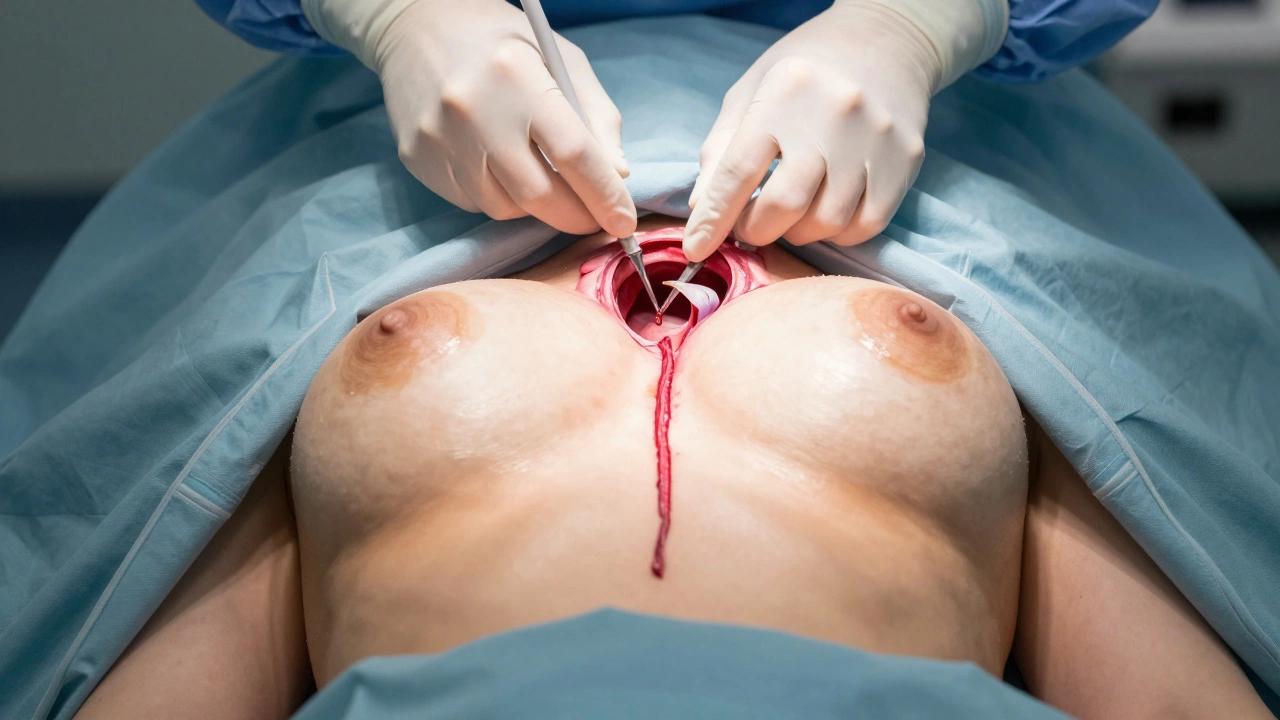
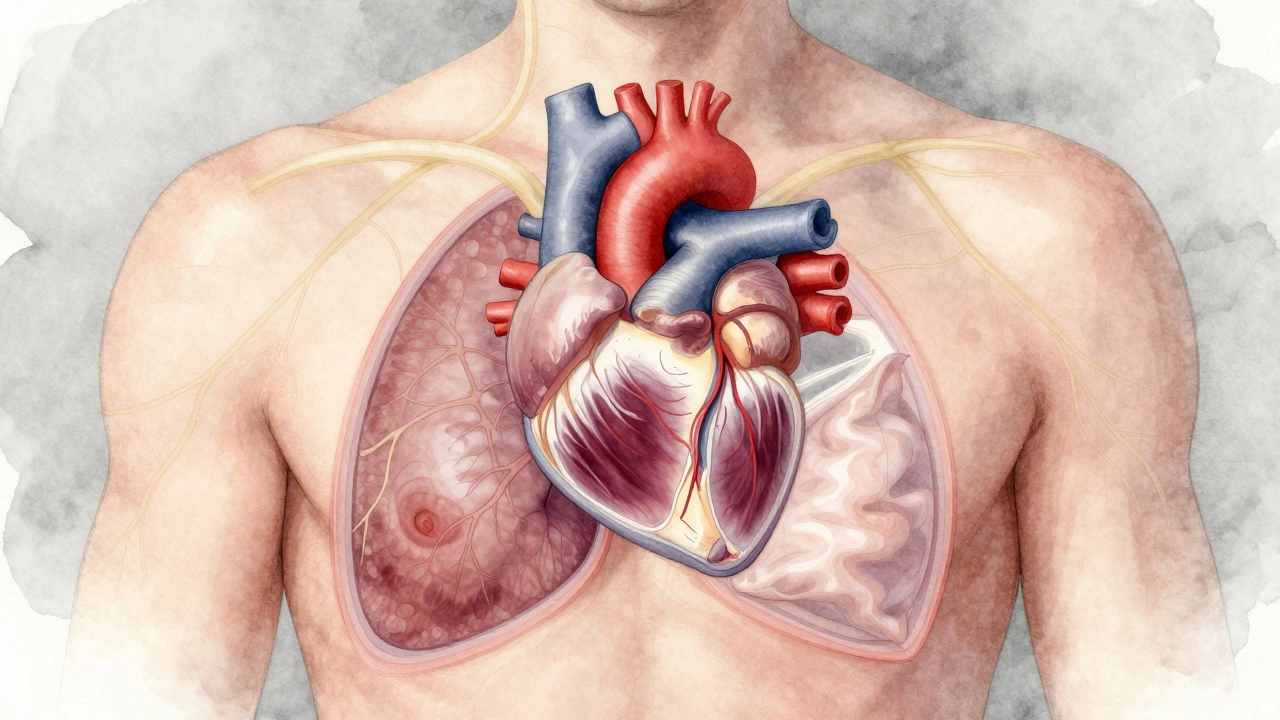
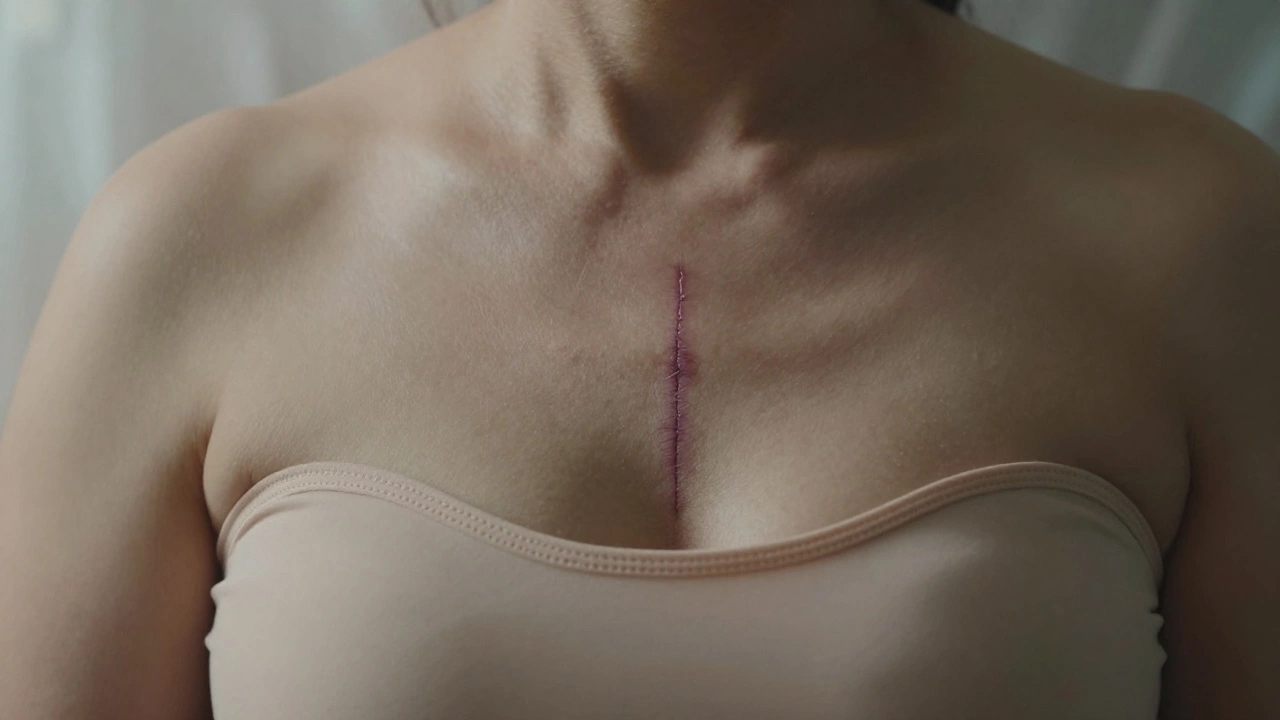
Open heart surgery requires direct access to the heart. To get there, surgeons make a single, vertical cut down the center of the chest - called a median sternotomy. This cut goes through the sternum (breastbone), which is then split open like a book. The ribs are gently spread apart to give the surgical team room to work. This is where the breasts come into the picture.
Both men and women have breasts, but the tissue is structured differently. In women, breasts are made of glandular tissue, fat, and connective tissue that sits on top of the chest wall. During surgery, the breasts are not removed, cut, or damaged. Instead, they are gently pushed aside or repositioned to give the surgeon clear access to the sternum and heart underneath. Think of it like moving a pillow out of the way so you can reach something behind it.
The incision line runs right down the middle, between the breasts. For women with larger breasts, the tissue may be taped or held back with sterile drapes. In men, the breasts are flatter and less in the way, but the same principle applies: they’re moved aside, not touched.
Why Don’t Surgeons Cut Through the Breasts?
There’s no medical reason to cut into breast tissue during open heart surgery. The heart lies deep behind the sternum, not under the breast tissue. Cutting through breasts would increase the risk of infection, bleeding, and long-term complications like scarring or loss of sensation - without any benefit to the surgery itself.
Surgeons are trained to work around anatomy, not through it. The goal is to get to the heart with the least amount of disruption to surrounding tissue. This is why the incision is made precisely along the midline, avoiding the lateral breast tissue entirely. Even in patients with very large breasts, the surgical team uses positioning, retraction, and draping to keep the tissue out of the way.
What About Breast Sensation After Surgery?
Some patients - especially women - notice changes in breast sensation after open heart surgery. This isn’t because the breasts were cut, but because of the nerves that run through the chest wall.
The intercostal nerves, which run between the ribs, can be stretched or irritated when the ribs are spread open. These nerves also send signals to the skin over the breasts. After surgery, some people report numbness, tingling, or increased sensitivity in the chest area, including near the breasts. This is temporary in most cases. Studies show that about 30% of patients experience some change in sensation, but over 80% of those cases return to normal within 6 to 12 months.
It’s rare for sensation to be permanently affected. If it does happen, it’s usually mild and doesn’t interfere with daily life. There’s no evidence that breast cancer screening or breastfeeding is affected by open heart surgery.
Does Breast Size Affect the Surgery?
Yes, but not in the way most people think. Larger breasts can make it slightly harder for surgeons to see the sternum clearly. That’s why positioning matters.
During surgery, the patient is placed on their back, and the surgical team may use special pads or rolls under the shoulders to tilt the chest slightly upward. This lifts the breast tissue away from the surgical field. In some cases, surgeons will use a self-retaining retractor - a device that holds tissue in place - to keep everything stable.
For patients with very large breasts, the team might take a few extra minutes to ensure proper exposure. But this doesn’t mean the surgery takes longer overall. The procedure time is determined by the heart condition being treated, not by breast size.
There’s no data showing that breast size increases complication rates. A 2023 study of over 5,000 open heart surgery patients found no link between breast size and infection, bleeding, or wound healing issues.
What About Post-Surgery Care for the Breasts?
After surgery, patients are encouraged to move gently to prevent blood clots and promote healing. This includes deep breathing and light arm movements. These motions can feel strange at first, especially if the chest feels tight.
There’s no need to avoid touching or washing the breasts. Normal hygiene is fine. Some women worry about wearing a bra - but in fact, a soft, supportive bra can help reduce discomfort. Many hospitals recommend a front-closing, non-underwire bra for the first few weeks.
Swelling in the chest area is common. It’s not the breasts themselves that swell - it’s the underlying tissue and fluid buildup from the surgery. This usually goes down within a few weeks. Ice packs (used gently over the chest, not directly on the skin) can help with discomfort, but always check with your care team first.
Myths vs. Reality
- Myth: The breasts are cut or removed during open heart surgery. Reality: No part of the breast tissue is cut. The incision stays on the sternum.
- Myth: Large breasts make surgery riskier. Reality: Breast size doesn’t increase surgical risk. It just requires minor adjustments in positioning.
- Myth: You can’t breastfeed after open heart surgery. Reality: Breastfeeding is safe and possible. The milk ducts and mammary glands are untouched.
- Myth: Scarring on the breasts is common. Reality: The scar is on the sternum, between the breasts. It rarely affects breast skin.
What to Expect During Recovery
Recovery from open heart surgery takes time - usually 6 to 12 weeks for full healing. During that time, you might notice:
- A tight feeling across the chest, especially when breathing deeply
- Mild swelling under the breast area
- Temporary numbness or tingling near the incision
- Changes in how your bra fits
All of these are normal. Your body is healing from a major procedure. The chest wall, ribs, and muscles underneath the skin are repairing themselves. The breasts are just along for the ride.
Most people return to their normal routines - including exercise, sleeping positions, and clothing choices - within a few months. If you’re worried about how your body looks or feels, talk to your surgeon. There’s no shame in asking.
Final Thoughts
Open heart surgery is a life-saving procedure. The breasts don’t play a starring role - but they’re part of the landscape that surgeons navigate. They’re not harmed, not cut, and not removed. They’re simply moved aside so the heart can be reached.
If you’re preparing for surgery, know this: your body is being treated with precision, not brute force. The medical team is trained to protect every part of you, not just the heart. What happens to your breasts? Nothing dramatic. Just careful, thoughtful, standard care.
Do surgeons cut through the breasts during open heart surgery?
No, surgeons do not cut through the breasts. The incision is made along the center of the sternum, between the breasts. Breast tissue is gently moved aside to allow access to the heart, but it is not cut, damaged, or removed during the procedure.
Can breast size affect the success of open heart surgery?
Breast size does not affect the success of the surgery. While larger breasts may require slight adjustments in positioning or draping to give the surgeon better access, studies show no increase in complications like infection, bleeding, or poor healing based on breast size alone.
Will I lose sensation in my breasts after surgery?
Some patients experience temporary numbness or tingling in the chest area, including near the breasts, due to stretched or irritated nerves during surgery. This usually resolves within 6 to 12 months. Permanent loss of sensation is rare and typically mild if it occurs.
Can I still breastfeed after open heart surgery?
Yes, breastfeeding is completely safe after open heart surgery. The milk ducts and mammary glands are not affected by the procedure, since the incision is made on the sternum, not through breast tissue. There is no evidence that surgery impacts milk production or infant feeding.
How long does it take for chest discomfort to go away?
Chest tightness and discomfort typically improve over 6 to 12 weeks. Swelling and numbness may last longer, but most patients return to normal activities within 3 months. Pain management and gentle movement help speed recovery.