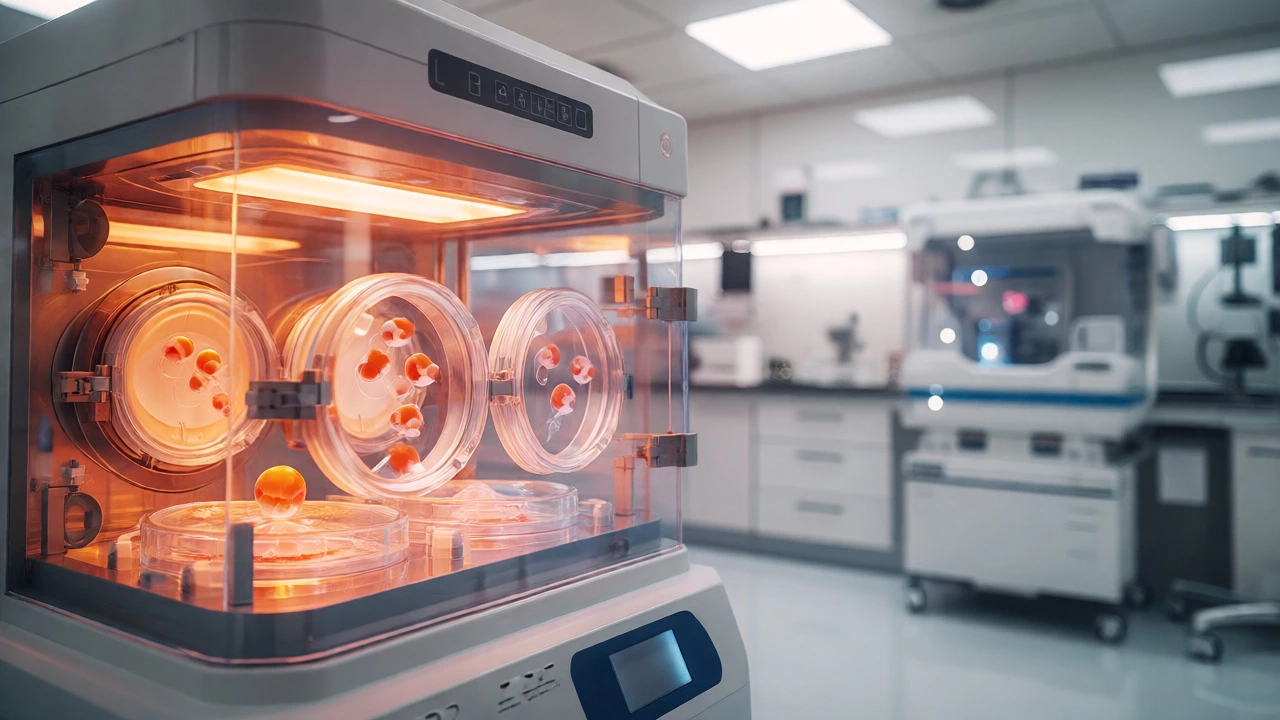
IVF Risk & Development Checker
Are you concerned about the health outcomes of a child conceived via In Vitro Fertilization? This tool helps separate myth from reality by analyzing specific factors like maternal age, embryo transfer type, and underlying conditions. Enter your scenario below to see estimated risk profiles compared to natural conception.
Enter Your Scenario
Fill out the form on the left to generate a personalized risk profile.
There is a persistent myth that children born via In Vitro Fertilization (IVF) are somehow "fragile" or fundamentally different from those conceived naturally. But the reality is far more nuanced. While IVF has helped millions of families grow since the first baby was born in 1978, it does come with specific medical considerations that parents should understand. The question isn't whether IVF children face negative consequences, but rather what those risks are, how common they are, and whether they persist into adulthood.
If you are considering fertility treatment or already have an IVF child, you likely want clear, evidence-based answers without the fear-mongering. Let’s break down the actual data on health outcomes, developmental milestones, and long-term risks associated with assisted reproduction.
Understanding the Core Concerns
When we talk about the "negative consequences" of an IVF child, we are usually referring to three distinct areas: perinatal complications (issues during birth), childhood health markers, and long-term adult health. It is crucial to separate correlation from causation. Many risks attributed to IVF are actually linked to the underlying infertility issues of the parents or multiple births, rather than the laboratory procedure itself.
For instance, multiple pregnancies, which were common in early IVF cycles due to transferring multiple embryos, significantly increase the risk of preterm birth and low birth weight. Modern practices now favor single embryo transfer, drastically reducing these risks. However, some studies suggest that even singleton IVF pregnancies carry a slightly higher risk of certain complications compared to spontaneous conceptions.
Perinatal Risks: Birth Weight and Gestational Age
The most well-documented risks for IVF children occur before and during birth. Research consistently shows that babies conceived through assisted reproductive technologies (ART) are more likely to be born prematurely or with low birth weight. According to data from the Centers for Disease Control and Prevention (CDC), singleton infants born via ART have a roughly 30-40% higher risk of being born preterm compared to naturally conceived singletons.
Why does this happen? It’s not necessarily the IVF lab work. Often, the maternal factors that required IVF-such as advanced maternal age, uterine abnormalities, or hormonal imbalances-are themselves risk factors for premature delivery. Additionally, the hormonal stimulation used to produce eggs may affect the placenta's development. This can lead to conditions like preeclampsia or gestational diabetes, which indirectly impact the baby’s growth.
| Outcome Metric | Natural Conception | IVF Singleton | Note |
|---|---|---|---|
| Preterm Birth Risk | Baseline | +30-40% | Risk drops with Single Embryo Transfer |
| Low Birth Weight | Baseline | +50-60% | Often linked to prematurity |
| Birth Defects | ~3% | ~3.5-4% | Slight increase, often confounded by parental age |
| Cesarean Delivery | Baseline | Higher Rate | Due to older maternal age and monitoring |
Childhood Health and Developmental Milestones
Once the baby is home, parents often worry about cognitive and physical development. Here is the good news: large-scale longitudinal studies show that IVF children reach major developmental milestones-like walking, talking, and reading-at the same rate as their naturally conceived peers. A landmark study published in Pediatrics tracked over 100,000 children and found no significant difference in school performance or social integration between IVF and non-IVF kids.
However, there are subtle differences in health profiles. Some research indicates a slightly elevated risk of minor congenital anomalies, such as heart defects or cleft lip/palate. These are generally correctable with standard pediatric care. More concerning is the potential link to rare genetic disorders known as imprinting disorders, such as Beckwith-Wiedemann syndrome. While the absolute risk remains very low (less than 1 in 10,000), it is statistically higher in ART-conceived children than in the general population.
It is also worth noting that IVF children are more likely to be monitored closely during infancy simply because they are considered "precious pregnancies." This increased surveillance can sometimes create a perception of fragility that doesn’t match the clinical reality. Most IVF toddlers are robust, active, and completely healthy.

Long-Term Adult Health Implications
What happens when IVF babies grow up? Since the first IVF baby, Louise Brown, was born in 1978, we now have adults who were conceived via IVF. Early concerns focused on cancer risk and cardiovascular health. Current evidence suggests that IVF-conceived adults do not have a significantly higher overall mortality rate compared to naturally conceived adults.
That said, some studies point to specific metabolic changes. For example, research from Scandinavia has suggested that young adults conceived via ART may have slightly higher blood pressure and altered glucose metabolism. These findings are still being debated, as lifestyle factors and socioeconomic status play huge roles here. It is too early to definitively say that IVF causes hypertension, but it is a area of ongoing investigation.
Fertility in the next generation is another topic of interest. Boys conceived via IVF, particularly those whose fathers had severe male factor infertility, may inherit similar sperm quality issues. This isn't a consequence of the IVF procedure itself, but rather the transmission of genetic traits related to reproductive health. Girls conceived via IVF appear to have normal menstrual cycles and fertility rates, though more long-term data is needed.
The Role of Parental Factors vs. Technology
A critical distinction often missed in public discourse is the role of parental biology. Infertility itself is associated with certain health risks. Women who require IVF often have endometriosis, polycystic ovary syndrome (PCOS), or diminished ovarian reserve. Men with infertility may have lower sperm DNA integrity. These underlying conditions can influence the child’s health independent of the IVF technique.
Furthermore, the stress of undergoing fertility treatment can affect pregnancy outcomes. High cortisol levels in mothers during difficult treatments might contribute to preterm labor. Therefore, attributing all "negative consequences" solely to the laboratory manipulation of eggs and sperm is misleading. The context of the family formation matters just as much as the method.
Mitigating Risks: How Modern IVF Is Safer
If you are worried about these risks, take comfort in how far technology has come. The risks mentioned above are largely based on historical data from the 1990s and early 2000s. Today’s IVF protocols are designed to minimize these very issues.
- Single Embryo Transfer (SET): By transferring only one high-quality embryo, clinics have reduced multiple births to under 5%, eliminating the biggest driver of preterm birth and low birth weight.
- Elective Single Embryo Transfer: Combined with vitrification (flash freezing), this allows for better timing of transfers, aligning them with the body’s natural cycle for better implantation.
- Genetic Screening: Preimplantation Genetic Testing for Aneuploidies (PGT-A) helps select chromosomally normal embryos, reducing miscarriage rates and potentially lowering the risk of certain genetic anomalies.
- Lifestyle Optimization: Clinics now emphasize weight management, smoking cessation, and nutrition before starting treatment, addressing modifiable risk factors upfront.
In Bangalore, where I live, many leading fertility centers now adopt strict SET policies and comprehensive preconception care. This shift has dramatically improved safety profiles for both mother and child.
Psychological and Social Considerations
Beyond physical health, there are psychological aspects to consider. Some IVF children report feeling pressure to "justify" their existence, especially if they know their birth involved significant financial and emotional investment. This is not a medical consequence, but a social dynamic that parents should navigate with care.
Open communication about their origins can help. Studies show that children who are told about their IVF conception in an age-appropriate way tend to have positive self-esteem and strong family bonds. Secrecy, on the other hand, can lead to confusion or identity issues later in life.
Are IVF babies less intelligent than naturally conceived babies?
No, extensive research shows no significant difference in intelligence or cognitive development between IVF and naturally conceived children. Any minor variations observed in early studies were often linked to socioeconomic factors or multiple births, which are less common now.
Do IVF children have a higher risk of cancer?
Current large-scale studies indicate that the overall cancer risk for IVF children is similar to that of the general population. There is a slight statistical increase in rare embryonal tumors, but the absolute risk remains extremely low.
Is the risk of birth defects higher with IVF?
There is a marginal increase in the risk of major birth defects (around 3-4% compared to 3% in natural conception). However, this is largely attributed to parental age and underlying infertility conditions rather than the IVF procedure itself.
Can IVF cause autism or ADHD?
Some studies have reported a small association between ART and neurodevelopmental disorders like autism. However, recent research suggests this link is weak and likely explained by shared familial or environmental factors rather than the IVF process directly causing these conditions.
Will my IVF child have fertility problems later?
Sons born to fathers with severe male factor infertility may have a higher likelihood of experiencing similar fertility challenges. Daughters generally have normal fertility prospects. This is due to genetic inheritance, not the IVF technique.