Knee Range of Motion Calculator
Assess Your Knee Flexion
Enter your current knee bend measurement (in degrees) to see how it compares to functional movement goals.
Your Progress
Enter your measurement to see your range of motion percentage
Recommended Exercises
- - Start with 5-10 repetitions of heel slides
- - Add 3 minutes of heel props daily
Waking up after knee replacement surgery often brings a mix of relief and frustration. The pain from arthritis is gone, but your new knee feels like it’s made of concrete. You want to bend it, but it resists. You want to straighten it, but it locks up. This stiffness is one of the most common hurdles patients face during recovery. It can feel discouraging, but it is rarely permanent if you handle it correctly.
Understanding how to loosen up a stiff knee requires patience and the right approach. It isn’t just about forcing the joint to move; it is about managing swelling, strengthening the muscles around the joint, and following a consistent routine. Many people think they are doing enough because they are walking, but walking alone often does not restore the full range of motion needed for daily life.
Why Your Knee Feels Stiff After Surgery
To fix the problem, you first need to understand what is causing it. After Knee Replacement is a surgical procedure where damaged cartilage and bone are replaced with metal and plastic components, the body reacts to the trauma. This reaction involves inflammation and the formation of scar tissue. While scar tissue is necessary for healing, too much of it can restrict movement.
This condition is medically known as Arthrofibrosis is excessive scar tissue formation inside a joint that limits range of motion. It creates a physical barrier that prevents the knee from bending fully or straightening out. Swelling is another major culprit. When fluid accumulates in the joint space, it creates pressure that makes movement painful and difficult. Additionally, the muscles surrounding the knee, specifically the Quadriceps is the large muscle group at the front of the thigh responsible for extending the knee and Hamstrings is the muscle group at the back of the thigh that helps bend the knee, weaken significantly due to disuse and surgical trauma. Weak muscles cannot support the joint properly, leading to a protective stiffness.
The Importance of Range of Motion
Your goal is to regain a functional range of motion (ROM). This is measured in degrees. A straight leg is 0 degrees. Bending the knee increases this number. For basic walking, you need about 70 to 80 degrees of flexion. However, to sit comfortably in a standard chair, get in and out of a car, or climb stairs, you ideally need 110 to 120 degrees.
Extension is equally critical. Being able to fully straighten the leg ensures you walk without a limp. If your knee stays bent even slightly when standing, it puts extra strain on your hip and back. The early weeks post-surgery are the golden window for achieving these numbers. After three months, the tissues become more rigid, making gains much harder to achieve.
Safe Exercises to Improve Flexion
Flexion refers to bending the knee. You should perform these exercises multiple times a day, not just once during a physio session. Consistency beats intensity in this phase.
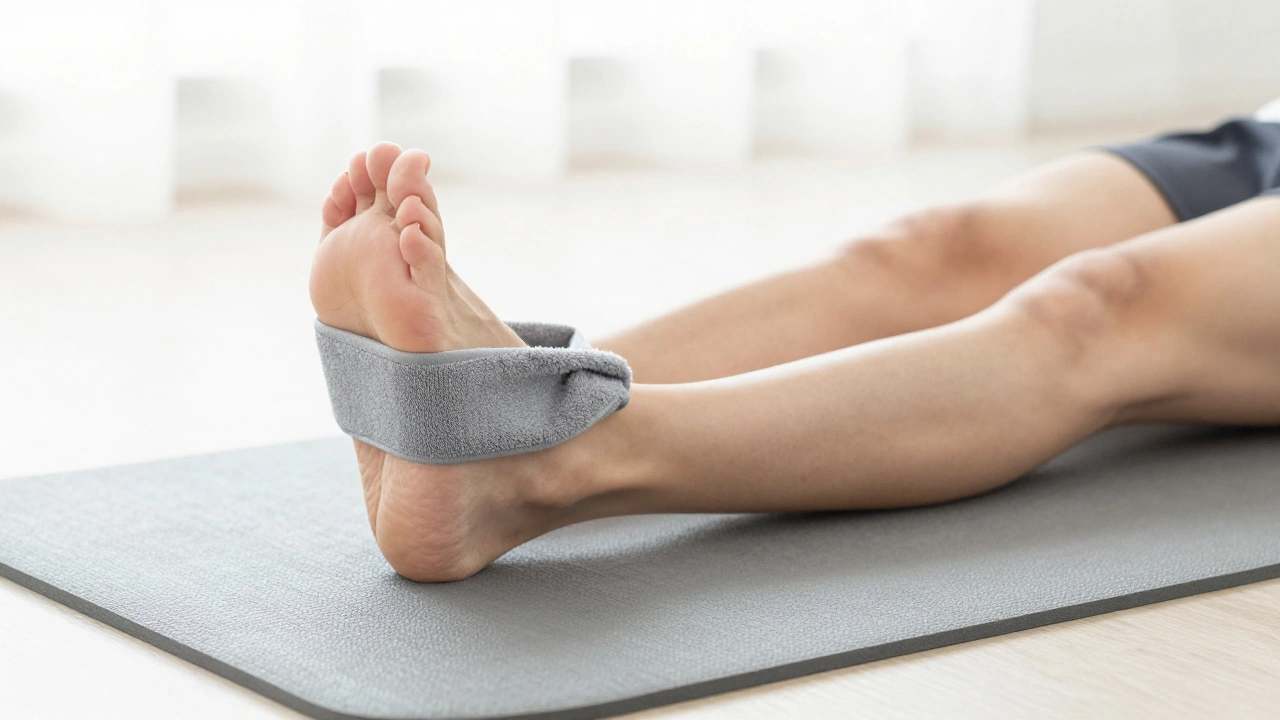
- Heel Slides: Lie on your back with your legs straight. Slowly slide your heel toward your buttocks using a towel or strap if needed. Hold the bend for 5 seconds, then slide back. Repeat 10 times.
- Seated Knee Bends: Sit in a sturdy chair with your feet flat. Slowly lift one foot and slide it backward under the chair, bending the knee. Use your other hand to gently push the knee down if needed. Do not force it to the point of sharp pain.
- Wall Slides: Lie on your back with your heel resting against a wall. Let gravity help your knee bend as you slide your heel down the wall. You can use a strap around your foot to pull it closer to you.
- Prone Hangs: Lie on your stomach with your legs hanging off the edge of the bed. Let gravity bend your knee. You can hold a small weight on your ankle for extra assistance, but only if approved by your surgeon.
Exercises to Restore Extension
Extension means straightening the leg. Many patients focus too much on bending and forget to straighten. This leads to a flexion contracture, where the knee cannot fully extend.
- Heel Props: Lie on your back and place a rolled towel or pillow under your ankle, leaving your heel off the edge. Let your knee rest and gravity pull it straight. Hold for 5 to 10 minutes.
- Prone Extension: Lie on your stomach with your leg hanging off the bed. Gently push the heel down toward the floor to straighten the knee. Hold for 30 seconds.
- Quad Sets: Sit or lie down with your leg straight. Tighten the muscle at the top of your thigh (quadriceps) and push the back of your knee down into the bed. Hold for 5 seconds. This wakes up the muscle without moving the joint.
Managing Pain and Swelling
Pain is a signal, but it is not always a stop sign. Distinguishing between good pain and bad pain is essential. Good pain feels like a stretch or a deep ache during exercise. Bad pain is sharp, stabbing, or persists long after you stop moving. You should aim to work within the zone of good pain.
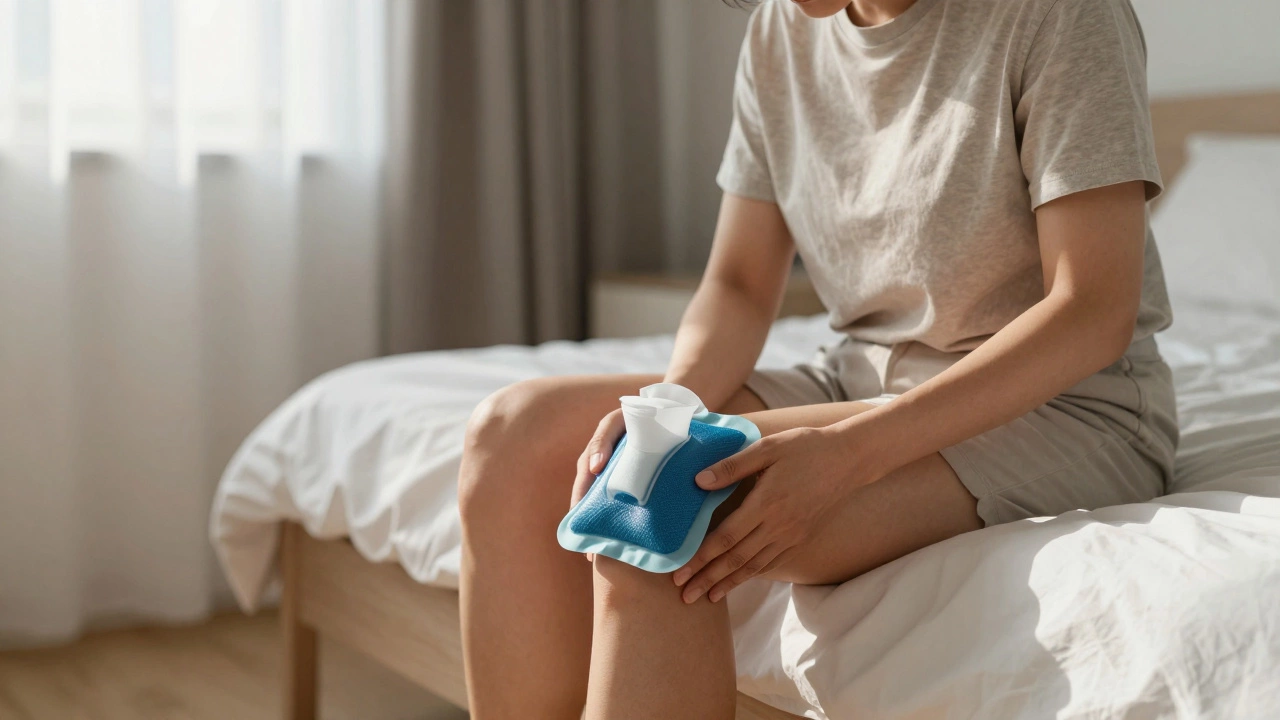
Swelling management is non-negotiable. If the knee is swollen, the muscles will tighten up to protect it. The RICE protocol remains the gold standard: Rest, Ice, Compression, and Elevation.
| Therapy Type | Best Used For | Duration | Timing |
|---|---|---|---|
| Cold Therapy | Reducing acute swelling and inflammation | 15-20 minutes | Immediately after exercise or surgery |
| Heat Therapy | Loosening tight muscles and scar tissue | 15-20 minutes | Before exercises to warm up the joint |
Ice is your best friend in the first few weeks. Use a cold pack or ice machine for 20 minutes at a time. Heat is useful later in recovery, specifically before stretching, to make the tissues more pliable. Never apply heat immediately after surgery if the wound is still healing or if there is active swelling.
Tools That Help Recovery
Sometimes, manual effort isn't enough. Several tools can assist in the process of loosening the joint.
Continuous Passive Motion (CPM) Machines: These are devices that gently move your leg through a range of motion while you rest. They are often used in hospitals immediately after surgery. While some surgeons prefer them for the first few days, evidence suggests they are most effective when combined with active therapy.
Knee Braces: A hinged knee brace can provide stability while allowing controlled movement. Some braces have stops that prevent you from bending or straightening beyond a safe limit, protecting the new implant while you regain strength.
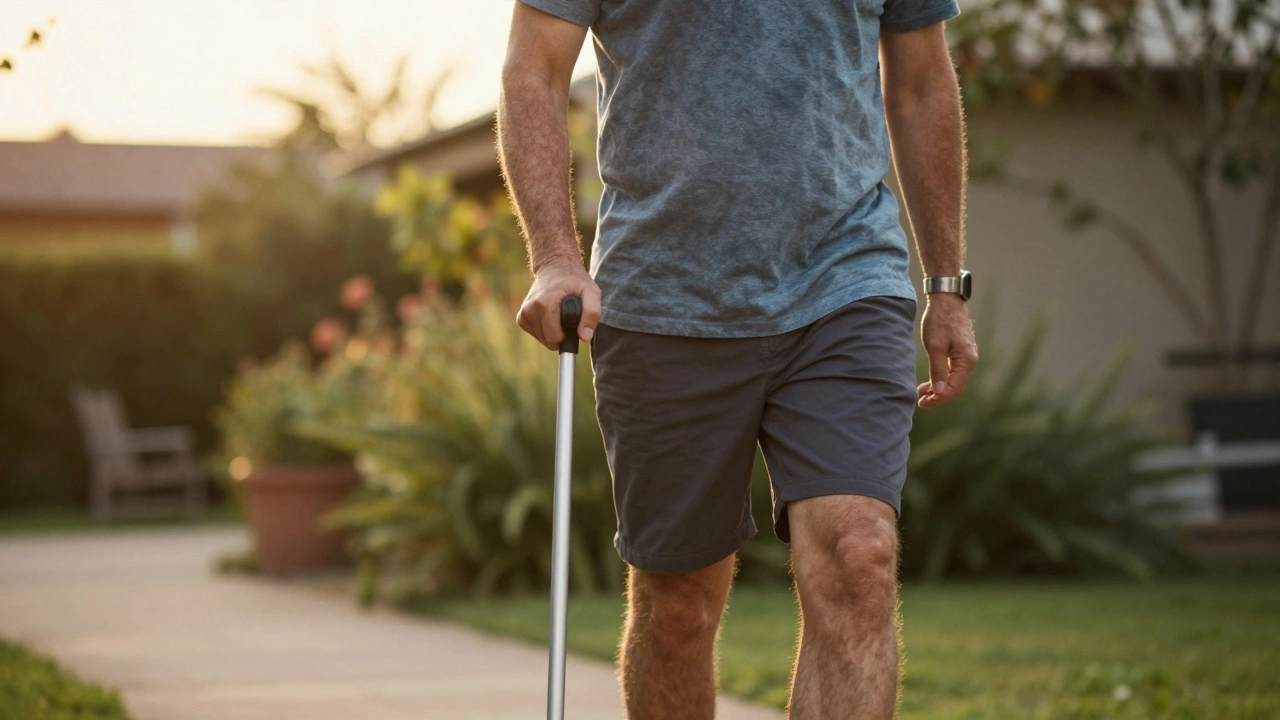
Assistive Devices: A walker or crutches help you move without putting full weight on the leg too soon. As you gain confidence, transition to a cane, and then to nothing. Using a device that is too supportive for too long can lead to muscle atrophy and stiffness.
Recovery Timeline: What to Expect
Recovery is not linear. You will have good days and bad days. Here is a general timeline for regaining mobility after knee replacement.
- Weeks 1-2: Focus on reducing swelling and achieving 90 degrees of flexion. Walking with assistance is the primary goal.
- Weeks 3-6: Transition to full weight bearing. You should aim for 110 degrees of flexion. Stiffness is common in the mornings.
- Months 2-3: Most of the swelling should be gone. You should be able to straighten the leg fully. Strengthening exercises become more intense.
- Months 4-6: Fine-tuning the range of motion. Activities like squatting or kneeling may still be uncomfortable but are usually possible.
- 6 Months to 1 Year: Continued improvement in muscle strength and endurance. The knee may feel "settled" by this point.
When to Call Your Doctor
There are specific signs that indicate you need professional intervention beyond standard home exercises. If you experience a sudden increase in pain that medication does not fix, contact your surgeon immediately. Fever, redness spreading from the incision site, or excessive drainage are signs of infection and require urgent care.
If your knee feels warm to the touch and you cannot bend it past 60 degrees after the first month, you may be developing arthrofibrosis. In some cases, a procedure called manipulation under anesthesia (MUA) is required to break up the scar tissue. This is a minor procedure where the surgeon bends the knee while you are asleep. It is effective but must be done within a specific window of time after surgery.
Physical therapy is crucial. If you are not seeing progress after three weeks of consistent home exercises, ask for a referral to a specialized Physical Therapist is a healthcare professional who helps restore movement and function through exercise and manual therapy. They can use manual manipulation techniques to break up adhesions that you cannot reach on your own.
How long does knee stiffness last after surgery?
Significant stiffness usually improves within the first 3 to 6 months. However, minor stiffness can persist for up to a year as the tissues fully heal and strengthen. Consistent exercise is the key to reducing this duration.
Is it normal to have a stiff knee in the morning?
Yes, morning stiffness is very common due to fluid accumulation while lying down. Gentle movement and heat application before getting out of bed can help loosen the joint.
Can I force my knee to bend?
You should not force the knee to the point of sharp pain. Aggressive forcing can damage the new implant or cause excessive swelling. Push to the point of a strong stretch, hold, and release.
What is the best time to do knee exercises?
Spread your exercises throughout the day. Doing them when the knee is warm, such as after a warm shower or applying heat, is often more effective than trying to stretch a cold joint.
Will I ever be able to kneel again?
Many patients can kneel after 6 to 12 months, but it may feel uncomfortable initially. It is important to use padding and listen to your body. Some surgeons advise against kneeling on the operated knee indefinitely.