Herbal Supplement Timeline Estimator
Select your goal and the type of herb you are taking to see realistic expectations for onset time and full benefit.
Initial Effects
--
When you might first notice subtle changes.Full Therapeutic Benefit
--
When consistent use typically yields maximum results.Progress Tracking Guide
Bioavailability Tips for Your Form:
You pop a capsule of Ashwagandha in the morning, and by lunch, you’re checking your pulse. Did it work? Why don’t I feel different yet? It’s one of the most common frustrations with herbal supplements: we expect them to act like pharmaceuticals. We want immediate relief, a quick fix, a tangible shift within hours. But here is the reality check: most herbs are not painkillers. They are biological modulators. They don’t just block a signal; they retrain your system.
If you are wondering how long does it take herbs to start working in your body, the honest answer isn’t a single number. It depends entirely on what you are treating, the form of the herb, and your own metabolic baseline. Some acute issues respond in days. Chronic imbalances can take months. Understanding this timeline saves you from quitting too early or taking too much too soon.
The Acute vs. Chronic Divide
Think of herbal medicine in two buckets: acute support and chronic modulation. This distinction dictates your patience level.
Acute herbs are designed for immediate physiological responses. Think of ginger for nausea or peppermint oil for an active headache. These work through direct chemical interactions-like blocking serotonin receptors or relaxing smooth muscle tissue. You might feel effects within 30 minutes to 2 hours. If you drink strong ginger tea while feeling sick, the warming sensation and settling of the stomach often happen before the liquid even cools down.
On the other end of the spectrum are chronic modulators. These include adaptogens like Rhodiola Rosea or nervines like Passionflower. They don’t force a reaction; they nudge your hormones and nervous system toward balance over time. Your body needs weeks to adjust its feedback loops. Taking a daily dose of Valerian root for insomnia won’t knock you out tonight if you’ve never taken it before. It typically takes 2 to 4 weeks of consistent use for GABA receptor sensitivity to change enough to notice deeper sleep.
| Herb Category | Examples | Initial Effects | Full Therapeutic Benefit |
|---|---|---|---|
| Carminatives & Digestive Aids | Ginger, Peppermint, Fennel | 15-60 minutes | N/A (Symptomatic relief) |
| Sedatives & Nervines | Valerian, Chamomile, Lavender | 30-90 minutes (acute anxiety) | 2-4 weeks (sleep architecture) |
| Adaptogens | Ashwagandha, Holy Basil, Ginseng | Subtle energy shifts (days) | 4-8 weeks (stress resilience) |
| Hormonal Regulators | Chasteberry, Black Cohosh | Minimal immediate effect | 2-3 months (cycle normalization) |
Bioavailability: The Hidden Bottleneck
It’s not just about how long the herb sits in your gut; it’s about how much actually gets into your bloodstream. This is called bioavailability, and it varies wildly based on preparation.
A raw dried leaf steeped in water for five minutes releases only a fraction of its active compounds. Compare that to a standardized extract or a tincture. Tinctures (alcohol-based extracts) bypass some digestive breakdown and absorb quickly under the tongue or through the stomach lining. They hit faster than capsules but still follow the general rules of their specific herb type.
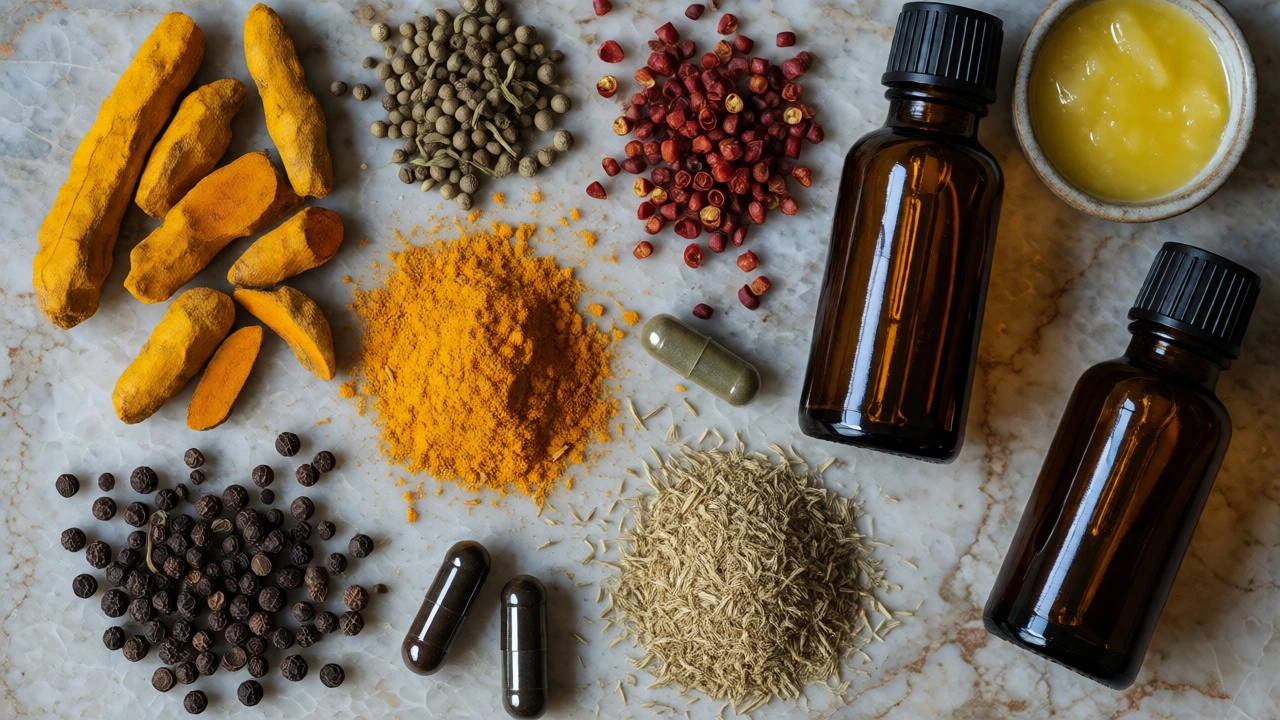
Lipid-soluble herbs need fat to be absorbed. Turmeric, for instance, has poor absorption on its own. Pairing it with black pepper (piperine) and a fatty meal can increase bioavailability by up to 2,000%. If you take turmeric capsules on an empty stomach with water, you’re wasting most of the curcumin. You’ll wait longer to see anti-inflammatory benefits because less of the compound is reaching your cells.

Your Body’s Unique Metabolic Clock
Two people can take the same dose of St. John’s Wort and experience vastly different timelines. Why? Individual physiology plays a massive role.
- Gut Health: If you have low stomach acid or dysbiosis, breaking down plant cell walls takes longer. Probiotics or digestive enzymes can speed up nutrient release.
- Liver Enzyme Activity: Your liver processes everything. People with fast metabolizers (high CYP450 enzyme activity) clear herbs quicker, potentially requiring higher doses or more frequent dosing to maintain therapeutic levels.
- Severity of Imbalance: If your cortisol is sky-high due to chronic stress, it takes longer for Ashwagandha to bring it down to normal range than it would for someone with mild stress.
Age matters too. Older adults often have slower gastric emptying rates. An elderly person might feel the sedative effects of Chamomile later than a teenager would, simply because the tea stays in the stomach longer before moving to the small intestine where absorption happens.
Tracking Progress: How to Know It’s Working
Because herbs work subtly, you might miss the signs if you aren’t paying attention. Subjective feelings are unreliable. You need data points.
Start a simple log. Don’t just write "felt good." Write specifics. For sleep aids, track time to fall asleep and number of awakenings. For mood support, rate your anxiety on a scale of 1-10 at noon and 6 PM. For digestion, note bloating levels after meals.
Here is a practical rule of thumb for different goals:
- Digestive Issues: Give it 3 days. If no change in bloating or bowel regularity, reassess the dosage or form.
- Mood and Anxiety: Wait 2 weeks. Early changes might look like slightly better tolerance to stress rather than pure happiness.
- Hormonal Balance: Commit to 3 months. Menstrual cycles or thyroid adjustments operate on long feedback loops. One month is rarely enough to judge efficacy.
- Immune Support: Look for reduced frequency of colds over a season (3-6 months), not instant protection.
Common Pitfalls That Delay Results
Most people quit herbs prematurely because they make three critical errors.
First, inconsistent dosing. Herbs build up in tissues. Skipping days resets the accumulation process. If you take Echinacea sporadically during cold season, it won’t prevent infections effectively. Consistency is non-negotiable for systemic herbs.
Second, ignoring interactions. Grapefruit juice inhibits certain liver enzymes, which can keep herbs in your system longer or shorter than intended. Coffee can bind to minerals in herbal teas, reducing absorption. If you drink four cups of coffee a day, you might be negating the calming effects of Magnesium-rich herbs like Oat Straw.
Third, expecting linear progress. Healing isn’t a straight line up. You might feel great for three days, then have a setback. This doesn’t mean the herb stopped working. It means your life circumstances changed. Stick with the protocol unless you experience side effects.
When to Stop or Switch
How do you know if an herb just isn’t right for you? There are two scenarios.
Scenario A: No change after the expected timeframe. If you’ve taken Lion’s Mane for cognitive focus for 8 weeks with zero noticeable difference in mental clarity or memory recall, it likely isn’t effective for your specific neurochemistry. Try a different mechanism, like Bacopa Monnieri, which works differently on acetylcholine.
Scenario B: Negative side effects. Mild detox symptoms (headaches, slight fatigue) can last 3-5 days as your body adjusts. But persistent nausea, rashes, or increased anxiety means stop immediately. Herbs are powerful drugs; they can aggravate conditions if mismatched.
Remember, herbal medicine is personalized. What works for your friend’s insomnia might do nothing for yours. Experiment safely, track objectively, and give your body the time it needs to respond.
Do herbal supplements work faster than prescription drugs?
Generally, no. Prescription drugs are isolated, high-potency chemicals designed for rapid, targeted action. Herbal supplements contain whole-plant complexes with lower concentrations of active compounds. While some acute herbs (like peppermint for gas) can work quickly, most therapeutic herbs require cumulative dosing over weeks to achieve results comparable to pharmaceuticals.
Can I take multiple herbs at once?
Yes, but caution is required. Combining herbs can create synergistic effects (working better together) or antagonistic effects (canceling each other out). Start with one new herb at a time so you can identify which one causes any side effects or positive changes. Consult a healthcare provider if you are on medication, as herbs like St. John's Wort interact significantly with many drugs.
Does the form of the herb matter for onset time?
Absolutely. Liquids (tinctures, teas) are absorbed faster than dry capsules or tablets because they don't require disintegration in the stomach. Powders mixed into food fall somewhere in between. Extracts standardized for active ingredients often show more predictable timing than raw dried herbs.
Why did my herbal supplement stop working?
This is known as tachyphylaxis or tolerance. Your body may have adapted to the herb, especially if it affects neurotransmitters. Cycling herbs (taking breaks, e.g., 5 days on, 2 days off) can help reset sensitivity. Alternatively, your underlying condition may have progressed beyond what the current dose can manage.
Is it safe to take herbs for a long time?
Many herbs are safe for long-term use, but not all. Some, like Kava or Comfrey, carry risks of liver toxicity with prolonged use. Others, like Ashwagandha, are generally considered safe for months but should be monitored. Always research specific safety profiles and consult a professional for long-term protocols.