Dental Implant Food Trap Risk Calculator
Use this tool to evaluate why food might be getting stuck around your dental implant and determine if you need to adjust your cleaning routine or see a dentist.
Assessment Questions
Answer the questions on the left to receive personalized advice regarding food trapping risks.
You just sat down for a nice meal. The steak was tender, the salad fresh. But halfway through, you feel it-that annoying pressure between your teeth. You run your tongue over the spot and realize something is stuck. If this happens with natural teeth, you grab some floss and move on. But when it happens around a dental implant, panic can set in. Is the implant failing? Did you break the seal? Does food actually get under dental implants?
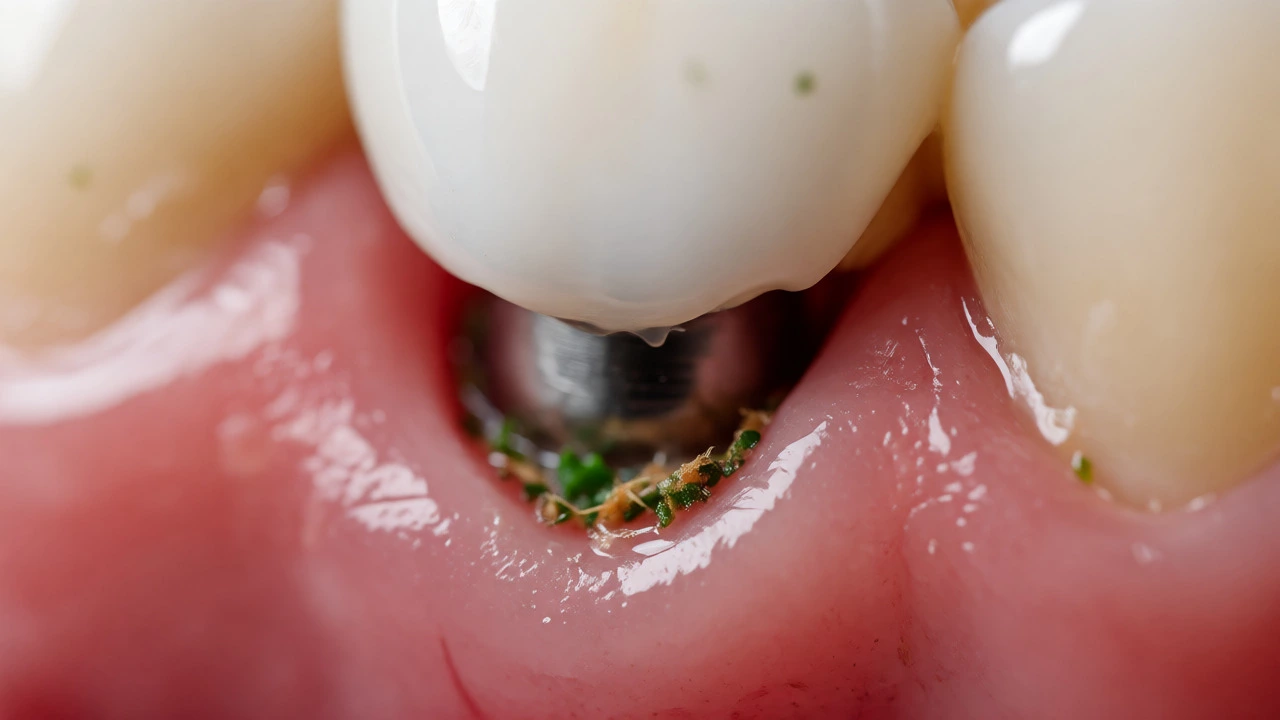
Here’s the short answer: Yes, food can and often does get trapped around dental implants. In fact, it’s one of the most common complaints from patients in the first year after surgery. But before you rush back to your dentist thinking the worst, understand that "under" is a misleading word. Food doesn’t usually slip underneath the titanium post embedded in your jawbone. Instead, it gets trapped in the space between the implant crown (the visible tooth) and the surrounding gum tissue or adjacent teeth.
The Anatomy of the Problem
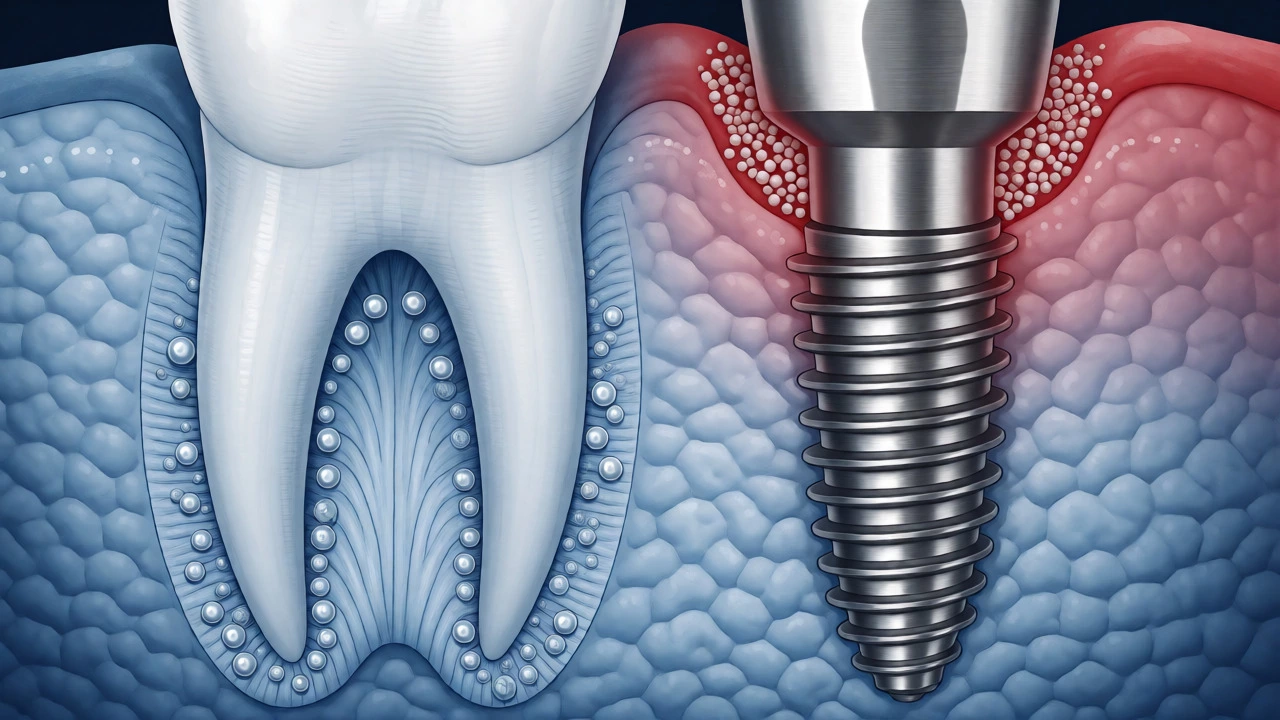
To understand why food traps happen, you need to look at how an implant differs from a natural tooth. A natural tooth has a periodontal ligament-a tiny shock absorber that connects the root to the bone. This ligament creates a tight biological seal against bacteria and debris. An dental implant is different. It is a screw made of titanium or zirconia that fuses directly to the bone through a process called osseointegration. There is no ligament. Instead, the soft tissue attaches directly to the metal surface via hemidesmosomes.
This direct attachment is weaker than the ligament seal of a natural tooth. It means the barrier against food and bacteria is more vulnerable. When you chew, especially sticky foods like caramel or fibrous ones like spinach, particles can push into the gingival sulcus-the small pocket between the gum and the implant abutment. Because there’s no ligament to bounce back, the tissue doesn’t retract as easily, leaving room for debris to linger.
| Feature | Natural Tooth | Dental Implant |
|---|---|---|
| Attachment Mechanism | Periodontal Ligament (Shock Absorber) | Osseointegration (Direct Bone Fusion) |
| Gum Seal Strength | Strong, flexible biological seal | Weaker, static epithelial attachment |
| Sensitivity to Pressure | High (can sense bite force) | Low (no proprioception feedback) |
| Food Trapping Risk | Moderate | Higher due to lack of ligament rebound |
Why Does Food Get Stuck Around Implants?
If your implant was placed correctly, why is your dentist’s work letting food in? Several factors contribute to this issue, and identifying them helps you fix it.
1. Improper Contouring of the Crown
The shape of your implant crown matters immensely. If the contact point where the crown touches the neighboring tooth is too high or too low, it creates a gap. A "open contact" allows food to jam straight into the gum line. Conversely, if the emergence profile (the angle at which the crown exits the gum) is too flat, it fails to guide food away from the tissue during chewing. This is often a fabrication error rather than a placement error, but it requires adjustment.
2. Gum Recession
Over time, gums can recede, exposing more of the implant abutment. This is particularly common if you have thin gum biotype or brush too aggressively. As the gum line moves down, the pocket depth increases. Deeper pockets mean more space for food to hide. Unlike natural teeth, you cannot regenerate the lost attachment around an implant easily. Once the seal breaks, it tends to stay broken unless surgically corrected.
3. Poor Oral Hygiene Habits
Many patients treat implants like regular teeth but clean them worse. They avoid flossing around the implant because they fear damaging it. Or they use standard string floss, which shreds against the rougher surface of the implant abutment, leaving fibers behind. These fibers act as nets, catching more food particles. If you aren’t using interdental brushes or water flossers, you are likely creating a trap.
4. Adjacent Tooth Issues
Sometimes the problem isn’t the implant itself. If a neighboring natural tooth has drifted, developed a cavity, or has an old filling that has chipped, it changes the geometry of the space. The implant might be perfectly fine, but the shifting neighbor opens up a new channel for food entry.
The Real Danger: Peri-Implantitis
So, food gets stuck. Big deal, right? Not exactly. When food remains trapped, it feeds the bacteria living in your mouth. Specifically, anaerobic bacteria thrive in these dark, moist pockets. Their waste products trigger inflammation in the gum tissue. This condition is called peri-implant mucositis. Think of it as gingivitis, but for implants. It causes redness, swelling, and bleeding when you touch the area.
If you ignore the mucositis, the inflammation spreads deeper. It starts attacking the bone supporting the implant. This advanced stage is known as peri-implantitis. It is essentially gum disease for implants. Unlike natural teeth, which can survive moderate bone loss, implants rely on rigid fixation. Significant bone loss leads to mobility and eventual failure. Studies suggest that peri-implantitis affects up to 20% of implant patients within ten years. Food trapping is a primary accelerant for this process.
You don’t want to wait until your implant feels loose. By then, the damage is severe. Early intervention is key. If you notice bad breath that won’t go away, a metallic taste, or pus discharge near the implant site, these are red flags that food debris is causing infection.
How to Clean Effectively
Cleaning around an implant requires different tools than cleaning natural teeth. Standard floss often fails here. Here is what actually works:
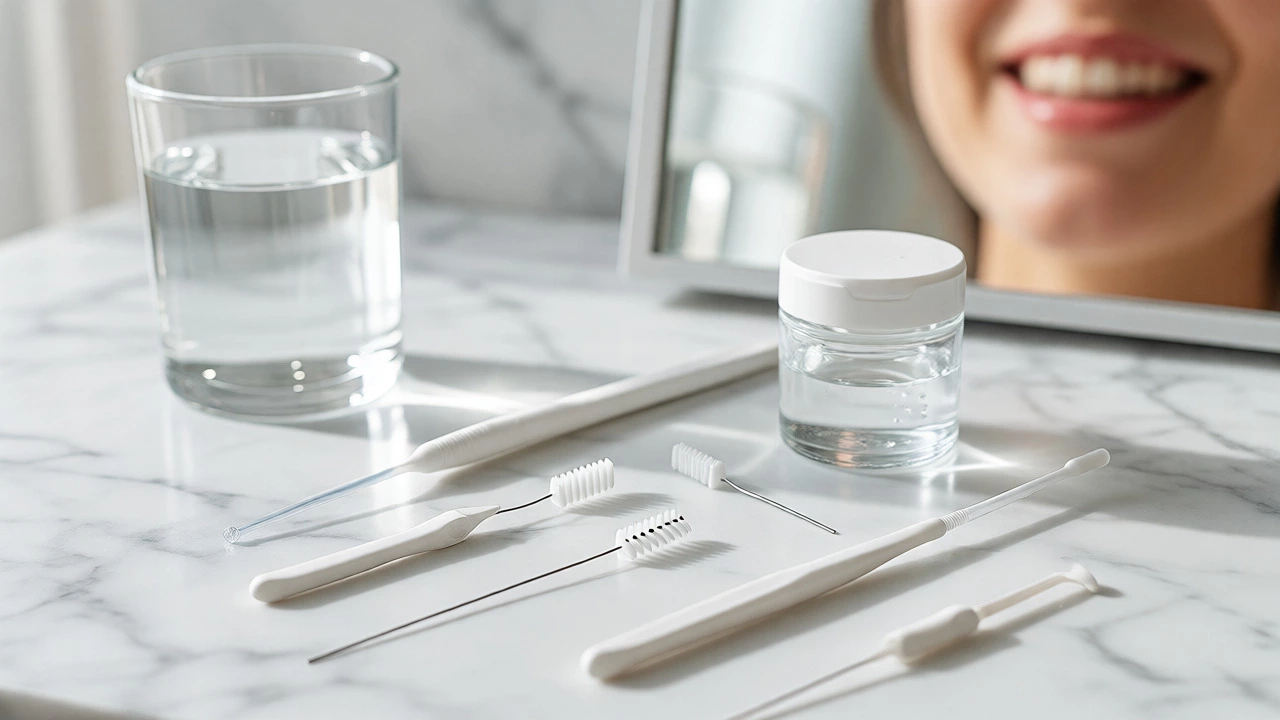
- Interdental Brushes: These are small, cone-shaped brushes designed to fit between teeth and around implant posts. They physically sweep out debris without shredding. Choose a size that slides in with slight resistance. If it’s too loose, it won’t clean; if it’s too tight, you might irritate the gum.
- Water Flossers: Devices like Waterpik use a pressurized stream of water to flush out pockets. This is highly effective for implants because it reaches areas bristles can’t. Use a low-pressure setting initially to avoid forcing water deep into the tissue, which can cause discomfort.
- Soft Picks: For larger gaps, rubber picks can dislodge food gently. Avoid hard plastic picks that can scratch the implant surface or traumatize the gum.
- Antimicrobial Rinses: Chlorhexidine or essential oil rinses help reduce bacterial load. However, long-term chlorhexidine use can stain teeth, so rotate it with alcohol-free alternatives.
A critical mistake many make is using abrasive toothpaste. Whitening pastes often contain silica particles that are too coarse for the smooth titanium or ceramic surfaces of implants. Scratches on the implant surface become hiding spots for bacteria. Stick to non-abrasive, low-fluoride or specialized implant-care toothpastes.
When to See Your Dentist
Not every instance of trapped food signals disaster. Sometimes, eating a piece of popcorn hull or a seed will cause temporary irritation. If you remove it promptly and rinse well, the tissue heals quickly. However, persistent issues require professional attention.
Visit your dentist if:
- The same spot always traps food, regardless of what you eat.
- You experience pain or sensitivity when biting down.
- The gum around the implant bleeds consistently during brushing.
- You notice a change in the fit of your crown (it feels high or loose).
Your dentist may need to re-contour the crown, adjust the bite, or perform a deep cleaning (debridement) around the implant. In some cases, if the gum recession is severe, a soft tissue graft might be necessary to restore the seal.
Prevention Strategies
You can minimize food trapping by being proactive. First, commit to a daily routine that includes interdental cleaning. Don’t skip it because you’re tired. Second, monitor your diet. While you don’t need to ban all crunchy foods, be cautious with very sticky candies or tough meats immediately after getting a new implant. Third, schedule regular check-ups every six months. Professional monitoring catches early signs of peri-implantitis before symptoms become obvious to you.
Finally, listen to your body. If a specific food consistently causes trouble, note it. Over time, you’ll learn which textures interact poorly with your specific anatomy. Adjusting your chewing technique-chewing slowly and deliberately-also reduces the force that packs food into those vulnerable spaces.
Can food permanently damage my dental implant?
Food itself rarely damages the titanium structure. However, if left untreated, trapped food leads to bacterial growth and peri-implantitis. This infection destroys the surrounding bone, which can ultimately cause the implant to fail and fall out. So, while the food doesn't break the screw, the resulting disease can destroy the foundation.
Is it normal for gums to bleed around implants?
Occasional minor bleeding might occur if you are new to cleaning around the implant or have been neglecting the area. However, consistent bleeding is not normal. It indicates inflammation (mucositis). If you bleed every time you brush or floss, you need to improve your hygiene technique or see your dentist for a professional cleaning.
Should I stop flossing if food gets stuck?
No, stopping makes it worse. The goal is to remove the food. If standard floss shreds or hurts, switch to interdental brushes or a water flosser. Gentle, consistent cleaning prevents the buildup that causes pain. Aggressive scrubbing should be avoided, but thorough cleaning is mandatory.
How long does it take for gums to heal after food irritation?
If the irritation is mild and caused by a one-time incident, gums typically recover within 24 to 48 hours once the debris is removed and the area is kept clean. If the tissue remains swollen or painful after two days, it suggests an underlying issue like an ill-fitting crown or developing infection that needs professional evaluation.
Can I use mouthwash instead of cleaning between teeth?
Mouthwash is an adjunct, not a replacement. It kills bacteria but does not physically remove food particles or plaque biofilm from between the teeth and implant. You must mechanically disrupt the plaque with brushes, floss, or water jets. Mouthwash helps control the smell and bacterial count afterward.