
International Travel Coverage Estimator
Scenario Details
Estimated Cost Breakdown
Enter your details to see how much you might pay out-of-pocket.
You pack your passport, your toothbrush, and that one sweater you always forget. Then you pause at the door. Do you need your Medicare card, a federal health insurance program for people aged 65 and older or those with certain disabilities in the United States? It feels like common sense to grab it. After all, it’s your lifeline back home. But when you step onto an airplane bound for another country, that little red, white, and blue card suddenly stops working.
Here is the hard truth: standard Medicare does not cover you internationally. If you get sick or injured while visiting Europe, Asia, or even Canada, Medicare will likely refuse to pay the bill. Carrying the card won’t hurt, but relying on it could cost you thousands of dollars. This guide breaks down exactly what Medicare covers abroad, what it doesn’t, and how to protect yourself financially while exploring the world.
The Short Answer: Why Your Card Is Useless Abroad
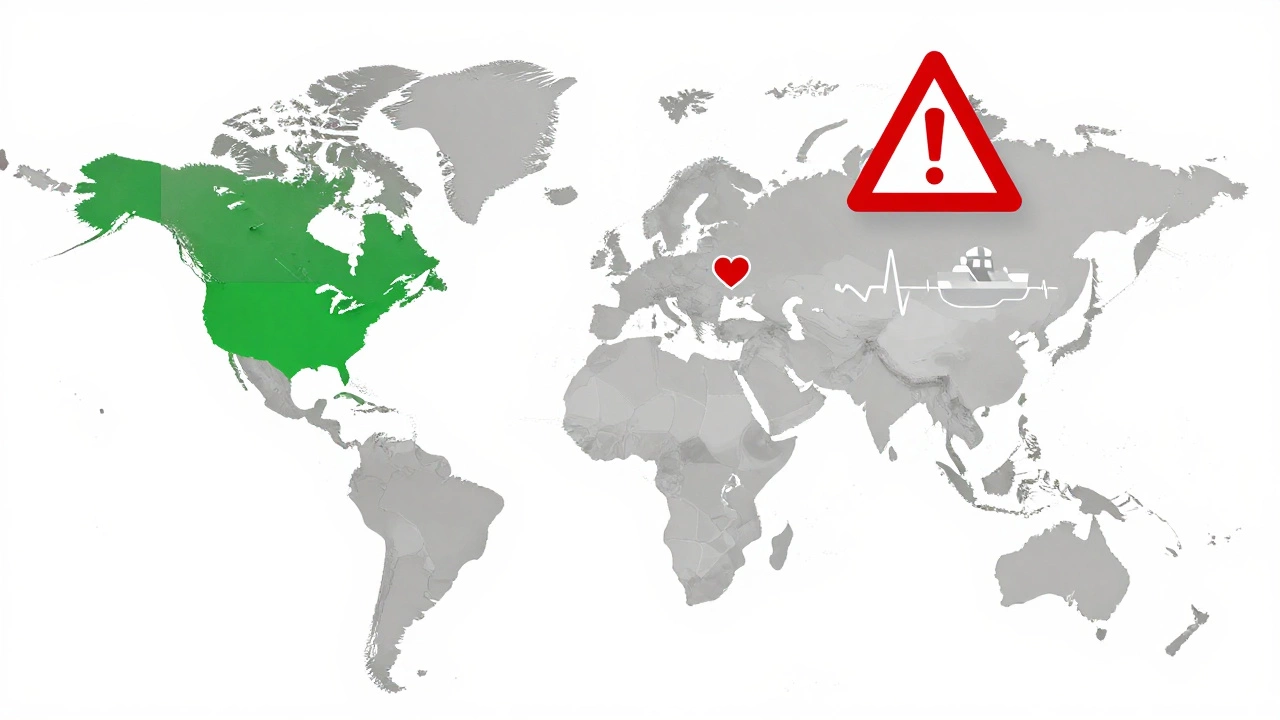
Most travelers assume their domestic health insurance travels with them. That is a dangerous assumption. Original Medicare consists of Part A (hospital insurance) and Part B (medical insurance). These parts are designed specifically for care provided within the United States, its territories (like Puerto Rico or Guam), and American Samoa.
If you are walking through the streets of Paris and twist your ankle, or if you develop pneumonia in Tokyo, Medicare considers this "outside its jurisdiction." They will not send you a bill, and they will not reimburse you. You are personally responsible for every dollar of the medical bill. In countries with public healthcare systems, tourists might be charged high rates because they are not enrolled in the local system. In private hospitals, costs can skyrocket quickly.
So, why carry the card at all? You should bring it as a form of identification and proof of insurance status. Some foreign providers may ask for it to understand your baseline coverage before you buy supplemental insurance. Also, if you have a Medigap policy (discussed below), your provider will need to see your Medicare card to process any potential claims. But never treat it as an active payment method overseas.
The Rare Exceptions: When Medicare Actually Pays
It isn’t entirely black and white. There are very specific, narrow scenarios where Medicare might pick up the tab. These exceptions are rare and come with strict conditions. Understanding them prevents false hope.
| Scenario | Condition | Coverage Type |
|---|---|---|
| Crossing into Canada/Mexico | No closer U.S. hospital available; emergency situation | Part A (Hospital only) |
| Cruises | Within 6 hours of a U.S. port; emergency occurs | Part A & B |
| Foreign Country Transit | En route to Alaska via Canada; no delay; emergency occurs | Part A & B |
Let’s look at the first scenario closely. If you live near the Canadian border and have a heart attack, but the closest hospital is across the border, Medicare Part A may cover the stay. However, you must prove that no U.S. facility was closer or able to provide timely care. This is difficult to document in the heat of an emergency. For most vacationers flying internationally, this exception does not apply.
Cruise ships present another unique case. If you are on a cruise and fall ill, Medicare only covers you if the ship is within six hours of a U.S. port. Once you are out in the open ocean or docked in a foreign port beyond that window, you are on your own. Many cruises stop in multiple countries, making this coverage virtually non-existent for most itineraries.
The Real Solution: Medigap Plans C, D, F, G, M, and N
If you want true peace of mind, you need to look at Medigap plans, also known as Medicare Supplement Insurance, which help pay for out-of-pocket costs like copayments and deductibles. Specifically, certain Medigap plans offer "foreign travel emergency" coverage.
Not all Medigap plans include this benefit. Only plans labeled C, D, F, G, M, and N offer it. If you have Plan A, B, K, L, or a high-deductible plan, you do not have this protection. This is a critical distinction that many seniors miss during enrollment.
How does this coverage work? It typically kicks in after you pay a $250 deductible. Medicare then pays 80% of the bill for medically necessary emergency care. This coverage lasts for up to 60 days per trip. However, there is a lifetime cap of 50% of your annual deductible. Let’s break that down with numbers. If your annual deductible is $1,660 (a common figure), your lifetime maximum benefit would be $830. Yes, you read that right. Eight hundred and thirty dollars. For a minor infection, this helps. For major surgery or a long ICU stay, this amount vanishes instantly.
Because of this low cap, Medigap foreign travel coverage is a safety net, not a full shield. It helps with small emergencies but leaves you exposed to catastrophic costs. You still need additional insurance for serious incidents.
Why You Must Buy Travel Health Insurance
Since Medicare falls short, the standard advice from financial planners and travel experts is clear: buy a dedicated travel health insurance policy. This is separate from your Medicare card and your Medigap plan. It is a short-term policy designed specifically for international trips.
These policies vary widely in price and coverage. A basic plan might cost $50 for a two-week trip, while comprehensive coverage for a three-month sabbatical could run $500 or more. Look for policies that cover:
- Emergency Medical Expenses: High limits (at least $100,000) for hospital stays and surgeries.
- Medical Evacuation: The cost to fly you home or to a specialized facility. This alone can cost $50,000 to $150,000 without insurance.
- Trip Interruption: Reimbursement for non-refundable flights and hotels if you get sick before leaving.
- Pre-existing Conditions: Ensure the policy covers your chronic issues like diabetes or hypertension. Many cheap policies exclude these.
When comparing policies, ignore the marketing fluff. Look at the exclusions section. Does it cover adventure sports? Does it cover treatment for pre-existing conditions if you purchase the policy within 14-21 days of booking your trip? These details save you money later.
Special Considerations for Medical Tourism
Your question touches on medical tourism, a growing trend where patients travel abroad for elective procedures like dental work, joint replacements, or cosmetic surgery. The rules here are different. If you are traveling specifically for medical care, Medicare generally does not cover the procedure itself, regardless of where you go.
However, if you experience an unexpected complication during your medical tourism trip, standard travel insurance might deny the claim because you were seeking elective care. You need a specialized medical tourism insurance policy. These policies are designed to cover complications arising from planned procedures abroad. They often include follow-up care once you return home, which is crucial for recovery.
Before booking a surgery in Thailand or Mexico, verify three things: the surgeon’s credentials, the hospital’s accreditation (look for JCI certification), and your insurance coverage for post-operative care in the U.S. Without this triad, you risk both health and financial ruin.
Practical Steps Before You Fly
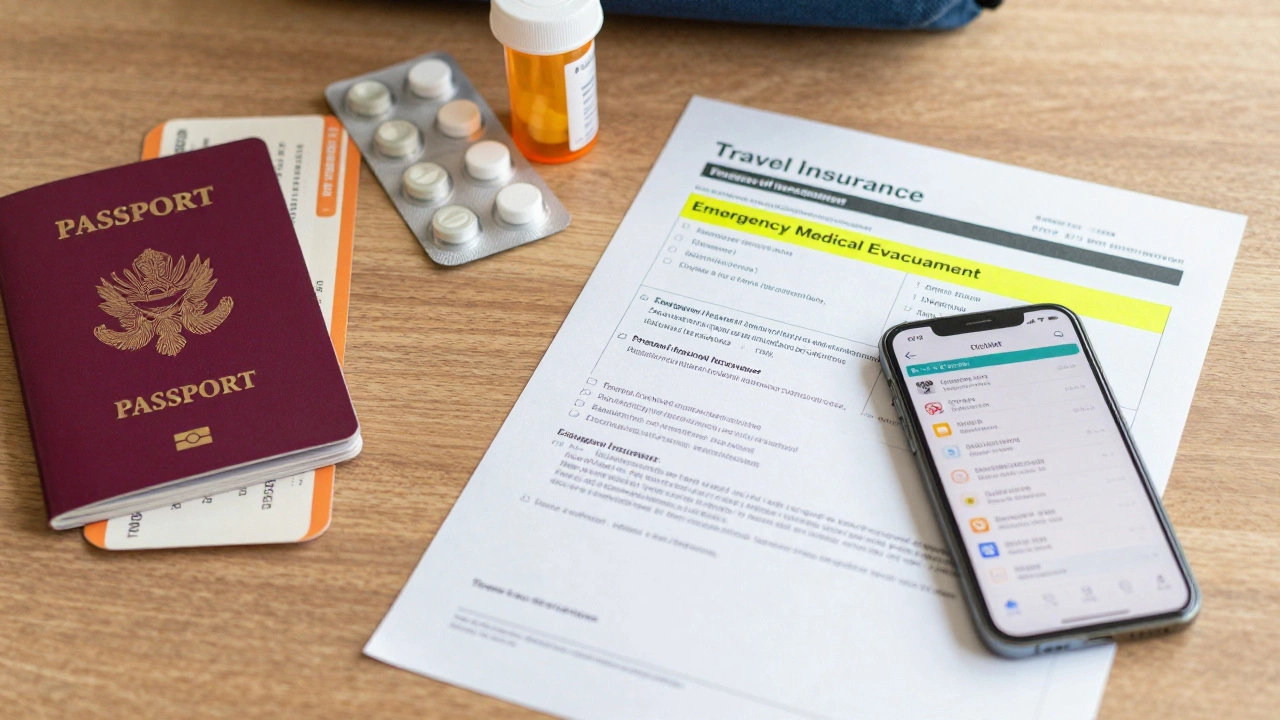
Knowing the theory is one thing; acting on it is another. Here is your checklist for traveling safely with Medicare.
- Check Your Medigap Plan: Call your insurer and ask if your plan includes foreign travel emergency coverage. Ask about the deductible and lifetime cap.
- Purchase Travel Insurance: Buy a policy that complements your Medigap coverage. Focus on high medical evacuation limits.
- Carry Your Cards: Bring your physical Medicare card and Medigap card. Take photos of them and store them in the cloud.
- Know Your Network: If you have a Medicare Advantage plan (Part C), check if they have any international partnerships. Most do not, but some large insurers offer limited global access cards.
- Prepare Medication: Bring enough prescription medication for the entire trip plus extra. Carry prescriptions in their original bottles with pharmacy labels. Check if your medications are legal in your destination country; some common U.S. drugs are banned elsewhere.
- Research Local Healthcare: Identify the nearest English-speaking hospital in each city you visit. Save their addresses and phone numbers offline.
Don’t wait until you are at the airport to buy insurance. Pre-existing conditions are often excluded if you buy the policy too close to your departure date. Purchase coverage as soon as you book your flight.
Medicare Advantage vs. Original Medicare Abroad
A common point of confusion is whether Medicare Advantage, also known as Part C, private plans that replace Original Medicare offers better international coverage. Generally, it does not. Most Medicare Advantage plans strictly limit coverage to the U.S. Some plans offer limited emergency coverage abroad, but it is rarely comprehensive. Always call your specific plan provider. Do not assume your PPO or HMO works globally just because it has a wide network at home.
In fact, switching from Original Medicare + Medigap to Medicare Advantage solely for perceived international benefits is usually a bad move. You lose the flexibility of seeing any doctor in the U.S., and you gain little to nothing for travel. Stick with Original Medicare and a robust travel insurance policy for the best balance of domestic freedom and international protection.
Will Medicare pay for an ambulance ride abroad?
Generally, no. Standard Medicare does not cover ambulance services outside the U.S. Unless you fall under the rare border exceptions mentioned earlier, you will be billed directly by the ambulance provider. This is why medical evacuation coverage in a travel insurance policy is essential, as it covers transport to adequate medical facilities.
Can I use my Medicare card in Canada?
You can use it as ID, but it will not pay for care. Canada has its own provincial health plans. As a visitor, you are considered uninsured. Hospitals will charge you for all services. While the costs may be lower than in the U.S., they are still significant. Rely on travel insurance for any medical needs in Canada.
Does travel insurance cover pre-existing conditions?
Some do, but not all. To get coverage for pre-existing conditions, you usually need to purchase the travel insurance shortly after booking your trip (within 10-21 days). You must also meet other criteria, such as being medically stable. Read the fine print carefully. If you buy insurance last minute, pre-existing conditions are almost always excluded.
What happens if I lose my Medicare card while traveling?
Contact Medicare immediately at 1-800-MEDICARE. They can issue a replacement card, but it takes time. For immediate needs, use the digital version in the Medicare app if you have it set up. Foreign providers may accept a photo of the card along with your passport as temporary proof of identity and insurance status.
Is it worth buying Medigap just for foreign travel coverage?
No. The lifetime cap on foreign travel coverage in Medigap plans is too low to be useful for serious emergencies. Medigap is valuable for reducing out-of-pocket costs in the U.S., but for international travel, a standalone travel insurance policy provides much higher limits and broader protection for the same or lower cost.