Dental Implant Timeline Estimator
Select your scenario below to estimate how long you might be in the chair versus how long you need to wait for healing.
Your Estimated Timeline
Surgery Time
--
Total Treatment
--
Notes will appear here.
You’re sitting in the chair, mouth open, wondering if you’ll make it to your lunch meeting. The dentist is holding a drill, and the question on everyone’s mind is simple but stressful: how long does it take a dentist to put in an implant? The answer isn’t one-size-fits-all. For a straightforward single-tooth replacement with healthy bone, the actual surgical placement often takes less than an hour. But if you need a bone graft or are replacing multiple teeth, that timeline stretches out significantly.
Most people confuse the surgery time with the total treatment time. They hear "three months" and panic, thinking they’ll be in pain for three months straight. That’s not how it works. You spend maybe 45 minutes in the chair for the surgery itself. The rest of the time? You’re living your life, just waiting for biology to do its job. Let’s break down exactly what happens at each stage so you know what to expect before you book that appointment.
The Actual Surgery Time: What Happens in the Chair
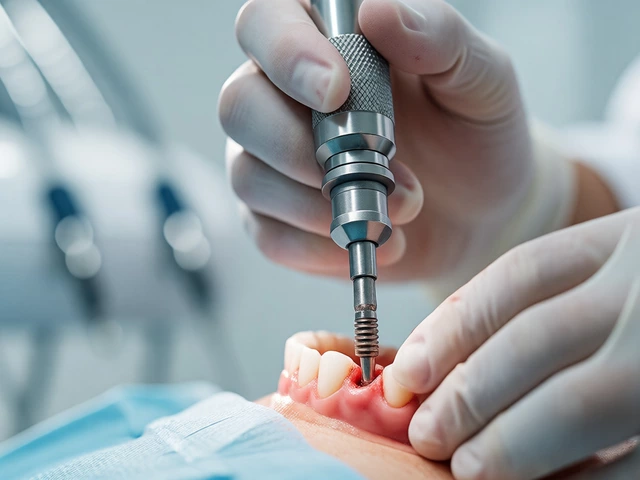
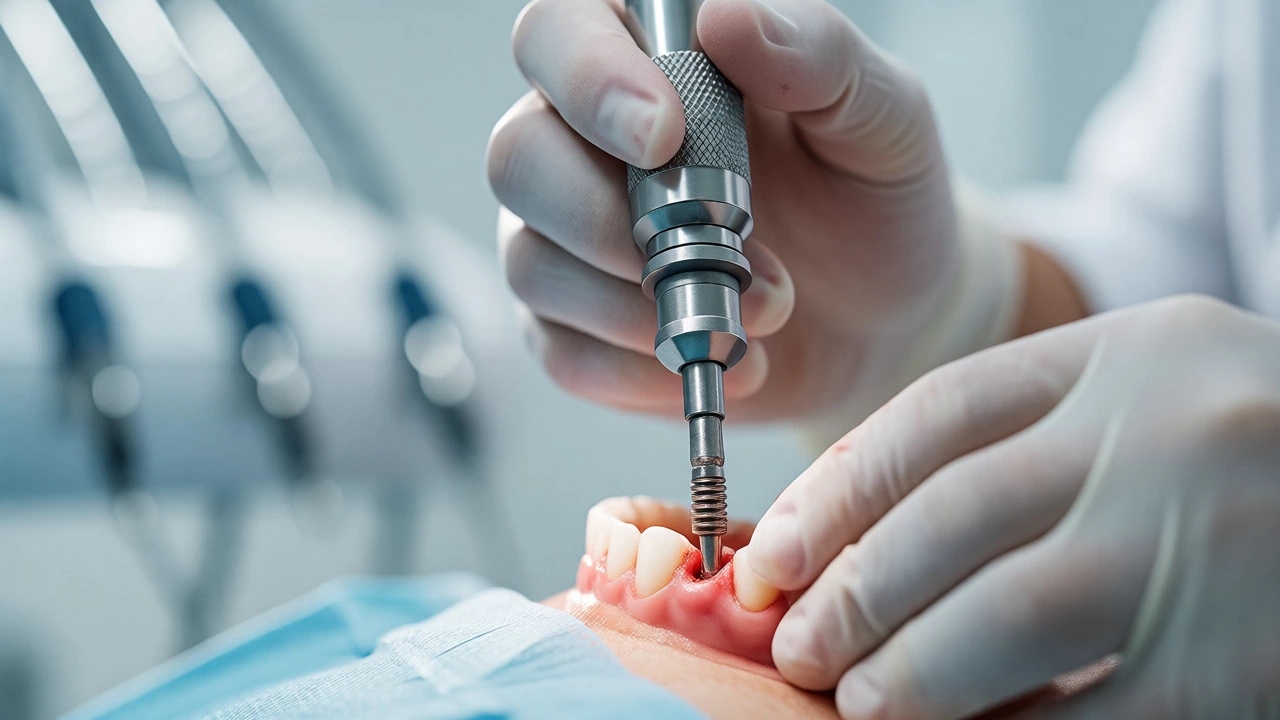
When we talk about "putting in an implant," we mean the surgical phase where the titanium post is inserted into your jawbone. This is the part that feels scary because of the tools involved, but it’s surprisingly quick. For a standard dental implant placement involving one tooth, most experienced oral surgeons finish in 30 to 60 minutes. Yes, really. If you’ve had a root canal, you know that procedure can take just as long, if not longer.
Why is it so fast? Because the process is highly standardized. The surgeon makes a small incision in the gum, drills a precise hole into the bone, and screws in the implant fixture. It’s mechanical work. Once the implant is stable-measured by torque resistance-the gum tissue is stitched back up. That’s it. You walk out with a temporary crown or a healing abutment, depending on your case.
However, complexity changes the clock. If you need a sinus lift (common for upper back teeth) or a bone graft to build up thin ridges, add another 30 to 60 minutes. These aren’t optional extras; they’re necessary foundations. Skipping them leads to failure later. So, while the base surgery is under an hour, complex cases might keep you in the chair for two hours.
Total Treatment Duration: Why It Takes Months
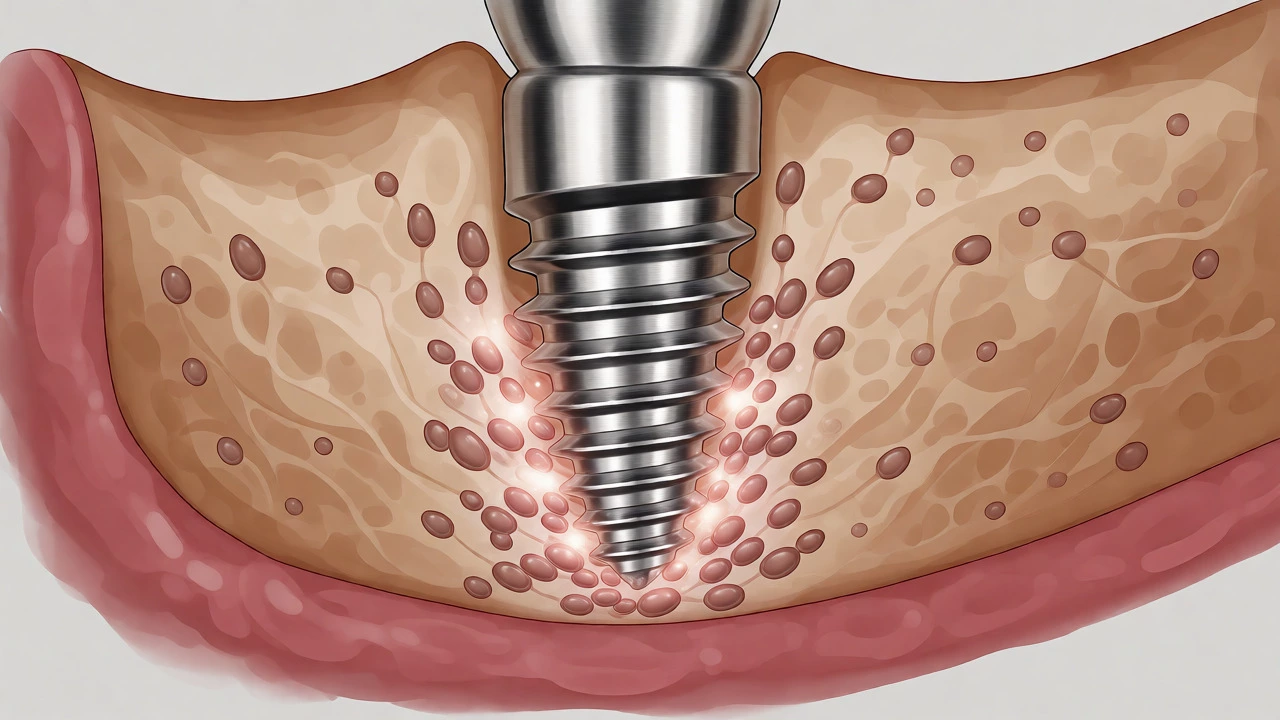
Here is the reality check: the surgery is quick, but the healing is slow. The entire journey from consultation to final crown typically spans 3 to 9 months. This gap exists because of osseointegration. This is the biological process where your jawbone fuses directly with the titanium surface of the implant. Without this fusion, the implant would just wobble like a loose screw.
Bone doesn’t grow overnight. It needs time to remodel around the foreign object. For the lower jaw, which is denser, osseointegration usually completes in 3 to 4 months. The upper jaw is softer and more porous, so it often requires 4 to 6 months. If you had a bone graft, you might wait 6 to 9 months before the implant is even placed, adding to the total timeline.
Think of it like setting concrete. You pour it in seconds, but you can’t drive a truck over it immediately. Your body is doing the same thing with your jawbone. Rushing this phase is the number one cause of implant failure. Patience here saves you money and pain later.
Factors That Speed Up or Slow Down Your Timeline
Not everyone heals at the same rate. Several variables dictate whether you’re looking at a 3-month or a 9-month project. Understanding these helps you set realistic expectations.
- Bone Density and Quality: Hard, dense bone integrates faster. Soft bone takes longer. A CT scan during your consultation tells your dentist exactly what you’re working with.
- Smoking Status: Nicotine constricts blood vessels, reducing oxygen supply to the gums. Smokers have a significantly higher failure rate and slower healing times. Many dentists require quitting smoking weeks before and after surgery.
- Systemic Health Conditions: Uncontrolled diabetes slows wound healing. Osteoporosis medications (bisphosphonates) can interfere with bone remodeling. Always disclose your full medical history.
- Oral Hygiene: Plaque buildup causes peri-implantitis (gum disease around the implant). Keeping the area clean prevents infection delays.
- Immediate Loading Protocols: Some advanced techniques allow for immediate placement of a temporary crown right after surgery. This doesn’t speed up osseointegration, but it means you don’t go home without teeth.
In Bangalore, where many patients seek care for both aesthetics and function, clinics often use guided surgery systems like NobelGuide or Co-Diagnosis. These digital planning tools reduce surgical time by pre-drilling holes based on 3D scans, making the procedure more predictable and sometimes quicker.
Comparing Single vs. Multiple Implant Timelines
Does getting four implants take four times as long as getting one? Not necessarily. There’s efficiency in numbers. If you’re getting a full arch restoration (like All-on-4), the surgery might take 2 to 3 hours, but you’re solving the problem for all teeth at once. Recovering from one major surgery is often easier than recovering from four separate minor surgeries spread over years.
| Scenario | Surgery Duration | Healing/Osseointegration | Total Treatment Time |
|---|---|---|---|
| Single Tooth Replacement (Healthy Bone) | 30-60 mins | 3-4 months | 4-5 months |
| Single Tooth + Bone Graft | 60-90 mins | 4-6 months (graft) + 3-4 months (implant) | 8-12 months |
| Multiple Implants (e.g., 2-4 posts) | 1-2 hours | 3-6 months | 4-7 months |
| All-on-4 / Full Arch Restoration | 2-4 hours | 3-6 months | 6-9 months |
Notice how the "Total Treatment Time" includes the initial consultation, imaging, and the fabrication of the final crown. Lab work for custom crowns adds 2 to 4 weeks at the end of the process. This is why you never see a dentist deliver a permanent crown on day one unless it’s a provisional (temporary) acrylic piece.

What You Can Do While Waiting
So, you’ve had the surgery. Now you’re in the "waiting room" phase of your own life. What should you actually do? First, manage your diet. Stick to soft foods for the first few days. Avoid chewing directly on the surgical site. Second, maintain hygiene. Use chlorhexidine rinses if prescribed, and gently brush surrounding areas. Third, attend follow-ups. Most dentists schedule a check-up at 2 weeks to remove sutures and monitor gum health.
If you experience severe pain, swelling that worsens after 3 days, or fever, call your dentist immediately. These could be signs of infection, which halts the timeline until resolved. Don’t ignore red flags hoping they’ll pass. Early intervention keeps your implant on track.
Also, consider your lifestyle adjustments. If you grind your teeth (bruxism), wear your night guard. Excessive pressure on a healing implant can disrupt integration. It’s a small habit that protects a significant investment.
Common Myths About Implant Timing
Let’s clear up some confusion. Myth #1: "The implant hurts for months." False. The surgery is done under local anesthesia or sedation. Post-op discomfort peaks in the first 48-72 hours and then fades. By week two, most patients report zero pain. The "months" refer to silent biological healing, not active suffering.
Myth #2: "I can get it done in one visit." Sometimes yes, sometimes no. "Same-day implants" exist, but they’re only suitable for specific cases with ample bone density. Even then, the permanent crown comes later. Don’t let marketing hype override clinical reality.
Myth #3: "It’s faster if I pay more." Money buys expertise and better materials, but it doesn’t buy faster bone growth. A top-tier specialist won’t rush osseointegration. They might offer better planning, though, which avoids complications that cause delays.
How long does the actual dental implant surgery take?
For a single tooth with adequate bone, the surgical placement of the titanium post typically takes 30 to 60 minutes. Complex cases requiring bone grafts or sinus lifts may extend this to 2 hours.
Why does dental implant treatment take several months?
The delay is due to osseointegration, the process where the jawbone grows around and bonds with the titanium implant. This biological fusion usually takes 3 to 6 months, ensuring the implant is stable enough to support chewing forces.
Can I leave the dentist with a new tooth the same day?
Yes, if you qualify for immediate loading. In these cases, a temporary acrylic crown is attached right after surgery. However, the final permanent ceramic crown is still placed after the healing period concludes.
Does smoking affect the dental implant timeline?
Yes, smoking restricts blood flow and slows down healing. Smokers often face extended recovery times and a higher risk of implant failure. Dentists may recommend quitting weeks before and after the procedure to ensure success.
What happens if my bone is too thin for an implant?
If your bone volume is insufficient, a bone graft is required. This adds 3 to 6 months to the timeline before the implant can even be placed. The graft must heal and mature into solid bone first.