Ayurvedic Belly Fat & Dosha Analyzer
Find Your Natural Balance
Answer these 4 questions to identify your dominant Dosha and get a customized Ayurvedic protocol for reducing abdominal fat.
Result Title
Description goes here.
Top Herbs
Key Strategy
Strategy goes here.
Staring at that stubborn pouch of fat around your midsection can be frustrating. You’ve tried the diets, you’ve hit the gym, but the scale barely moves. If you are looking for a natural approach, Ayurveda offers a different perspective. It doesn't just look at calories; it looks at your body's internal balance.
In Ayurveda, belly fat isn't just an aesthetic issue. It is often a sign of a deeper imbalance called Ama, which translates to toxic buildup in the gut. When your digestive fire, known as Agni, is weak, food doesn't break down properly. Instead of becoming energy, it turns into waste and stores itself as fat, especially around the abdomen.
The goal here isn't quick starvation. It’s about reigniting your metabolism and clearing out that toxicity. Let’s look at the specific herbs, teas, and daily habits that actually work.
Understanding Your Dosha and Belly Fat
Before picking an herb, you need to know who you are treating. Ayurveda classifies bodies into three types, or Doshas: Vata, Pitta, and Kapha. Each one stores fat differently.
- Kapha Dosha: This type tends to gain weight easily, especially around the middle. Kapha people often have a slow metabolism and crave heavy, sweet foods. For them, the strategy is heating and stimulating.
- Pitta Dosha: Stress and inflammation drive fat storage here. Pitta individuals might eat well but store fat due to high cortisol levels from burnout.
- Vata Dosha: Irregular eating habits lead to bloating and a distended belly rather than dense fat. Stability and warmth are key for this type.
Most people with significant belly fat issues fall into the Kapha category or have a mixed Kapha-Pitta imbalance. The remedies below focus heavily on balancing Kapha while supporting general digestion.
Top 5 Ayurvedic Herbs for Fat Loss
Not all herbs are created equal. Some cool the body down, which is great for inflammation but bad for melting fat. Others heat up the system, speeding up metabolism. Here are the most effective ones for targeting abdominal adipose tissue.
1. Triphala
If you only take one thing from this list, make it Triphala. It is a blend of three fruits: Amalaki (Indian gooseberry), Bibhitaki, and Haritaki. Think of it as a gentle broom for your intestines. It cleanses the gut lining without being harsh like chemical laxatives.
By improving bowel regularity, Triphala reduces bloating and helps eliminate Ama. Take half a teaspoon of powder in warm water before bed. It supports the liver, which plays a huge role in metabolizing fats.
2. Guggulu
Guggulu is a resin extracted from the Commiphora mukul tree. It has been used for centuries specifically for lipid management. Modern studies suggest it can help lower cholesterol and triglycerides while boosting thyroid function. Since a sluggish thyroid slows down fat burning, Guggulu acts as a metabolic kickstarter.
Look for formulations like Medohar Guggulu, which combines the resin with other fat-burning herbs. Always take this with warm milk or water, never cold.
3. Cinnamon (Dalchini)
We all know cinnamon, but Ayurveda uses it for its warming properties. It helps regulate blood sugar spikes. When your blood sugar crashes, you crave carbs, which turn straight into belly fat. By keeping glucose stable, cinnamon stops that cycle.
Add a stick of real Ceylon cinnamon to your morning tea. Avoid Cassia cinnamon if you are taking it daily in large amounts, as it contains coumarin, which can stress the liver over time.
4. Ginger (Adrak)
Fresh ginger is pure fire for your stomach. It stimulates saliva and gastric juices, ensuring food breaks down efficiently. Chewing on a small piece of fresh ginger root before meals can prevent the post-meal slump and reduce gas.
5. Fenugreek (Methi)
Fenugreek seeds are rich in soluble fiber, which forms a gel-like substance in the gut. This slows down digestion slightly, keeping you full longer and preventing overeating. Soak one teaspoon of seeds overnight and drink the water first thing in the morning.
| Herb | Primary Action | Best Time to Take | Caution |
|---|---|---|---|
| Triphala | Gut cleansing & detox | Night, before bed | May cause loose stools if dose is too high |
| Guggulu | Lipid lowering & thyroid support | After meals with warm liquid | Avoid during pregnancy |
| Cinnamon | Blood sugar regulation | Morning with tea/coffee | Use Ceylon variety for long-term use |
| Ginger | Digestive stimulation | Before meals | Can increase heartburn in Pitta types |
| Fenugreek | Satiety & insulin control | Morning, soaked overnight | May lower blood sugar too much if diabetic |
The Golden Tea: CCF (Cumin, Coriander, Fennel)
You don’t always need expensive powders. One of the most powerful tools in Ayurveda is a simple tea made from three common kitchen spices. This is often called CCF tea.
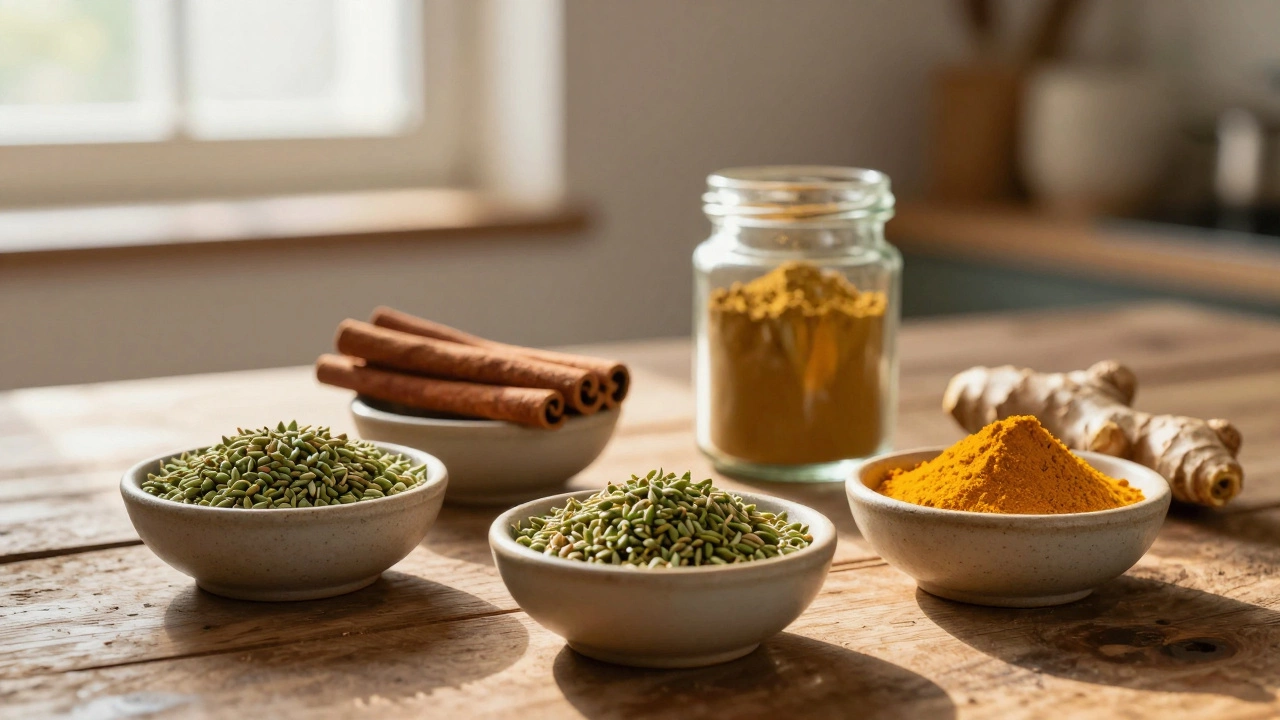
- Cumin (Jeera): Improves digestion and nutrient absorption.
- Coriander (Dhaniya): Cools the body and flushes out toxins through urine.
- Fennel (Saunf): Reduces bloating and soothes the stomach lining.
To make it, boil one teaspoon of each seed in two cups of water until it reduces to one cup. Strain and sip throughout the day. This tea balances the heating effect of cumin with the cooling nature of coriander and fennel, making it safe for almost everyone. It directly targets the water retention that makes bellies look larger than they are.

Dietary Rules: Eating for Agni
Herbs won’t work if you are constantly putting out your digestive fire with bad habits. Ayurveda has strict rules about how you eat, not just what you eat.
1. Warm vs. Cold Foods
Cold drinks and salads dampen Agni. Imagine pouring ice water onto a campfire-it sizzles and dies. Your stomach needs heat to digest. Drink warm water throughout the day. Eat cooked, steamed, or roasted vegetables instead of raw ones. Raw veggies are hard to break down and can ferment in the gut, creating gas and bloating.
2. The Largest Meal at Noon
Your digestive fire is strongest between 12 PM and 2 PM. This is when the sun is highest, and so is your metabolism. Make lunch your biggest meal. Dinner should be light and eaten at least three hours before bedtime. A heavy dinner late at night guarantees fat storage because your body goes into rest mode, not burn mode.
3. Avoid Food Combining Errors
Ayurveda warns against mixing incompatible foods. The classic offender? Milk and fruit. Fruit ferments quickly, while milk digests slowly. Together, they create Ama. Similarly, avoid mixing melons with other fruits or proteins. Keep meals simple: grains with vegetables, or protein with grains. Don’t mix everything on one plate.
Daily Routine: Dinacharya for Weight Loss
Your daily rhythm matters as much as your diet. Disrupted sleep disrupts hormones like leptin and ghrelin, which control hunger.
- Wake up early: Aim for before 7 AM. This aligns with the Vata time of day, which is good for elimination and movement.
- Tongue scraping: Remove the white coating on your tongue every morning. This removes bacteria and improves taste perception, reducing cravings for overly sweet or salty foods.
- Abhyanga (Self-Massage): Massage your belly clockwise with warm sesame oil before showering. This stimulates lymphatic drainage and peristalsis (gut movement). It also signals safety to the nervous system, lowering stress-induced cortisol.
- Yoga Poses: Incorporate poses that compress and release the abdomen. Try Pavanamuktasana (Wind-Relieving Pose) and Bhujangasana (Cobra Pose). These physically massage the internal organs and improve circulation to the area.

What to Avoid: The Ama Creators
To lose belly fat, you must stop feeding the problem. In Ayurveda, these foods are considered major contributors to Ama and Kapha accumulation:
- Refined Sugar: Creates immediate inflammation and insulin spikes.
- Dairy at Night: Heavy creams and cheeses slow down digestion significantly.
- Leftovers: Ayurveda prefers freshly cooked food. Leftovers lose their prana (life force) and become harder to digest.
- Processed Oils: Stick to ghee, coconut oil, or mustard oil. Avoid seed oils like soybean or corn oil, which are inflammatory.
Realistic Expectations and Timeline
Ayurveda is not a magic pill. It is a lifestyle shift. You might notice reduced bloating within a week of drinking CCF tea and eating warm foods. However, actual fat loss takes time. Give it at least 40 days-a traditional Ayurvedic cycle for habit formation-to see significant changes in your waistline.
If you have underlying conditions like PCOS, hypothyroidism, or diabetes, consult an Ayurvedic practitioner before starting strong herbs like Guggulu. They may need to adjust dosages based on your specific pulse diagnosis.
How long does it take for Ayurveda to reduce belly fat?
You may feel less bloated within 7-10 days by following dietary rules. Visible fat loss typically takes 40 to 90 days of consistent practice, including herbs, diet changes, and routine adjustments. Ayurveda works gradually to reset metabolism rather than dehydrate you quickly.
Is Triphala safe to take every day?
Yes, Triphala is generally safe for daily long-term use. It is mild and nourishing. However, start with a small dose (1/4 teaspoon) to assess tolerance. If you experience diarrhea, reduce the amount. Pregnant women should consult a doctor before using Triphala.
Can I drink cold water if I am trying to lose weight?
Ayurveda strongly advises against drinking cold water, especially with meals. Cold water extinguishes digestive fire (Agni), leading to poor digestion and toxin buildup. Sip warm or room-temperature water throughout the day to keep metabolism active.
Which yoga pose is best for belly fat?
While no single spot-reduces fat, Pavanamuktasana (Wind-Relieving Pose) and Naukasana (Boat Pose) are excellent. They strengthen core muscles, improve digestion, and stimulate abdominal organs. Combine these with cardiovascular exercise for best results.
Does Guggulu interact with other medications?
Yes, Guggulu can interact with blood thinners, diabetes medications, and thyroid drugs. Because it boosts thyroid activity and affects blood clotting, it is crucial to inform your healthcare provider if you are currently taking prescription medication.