Knee Health Risk Assessor
Answer these questions to assess your current knee health status and receive personalized recommendations based on expert guidelines.
You wake up with that familiar stiffness in your knee. It’s been bothering you for months, maybe even years. You’ve tried ice packs, heating pads, and over-the-counter painkillers. But the pain isn’t going away. In fact, it feels like it’s getting worse every time you take a step. Most people instinctively know one thing to do when something hurts: stop using it. We rest. We sit. We wait for it to heal. Resting is the number one mistake that makes bad knees significantly worse by causing muscle atrophy and joint instability. It sounds counterintuitive, but staying still is often the fastest way to accelerate knee damage and push yourself closer to needing a knee replacement is a surgical procedure to replace damaged knee joints with artificial implants.
Why "Resting" Your Knee Is Actually Destroying It
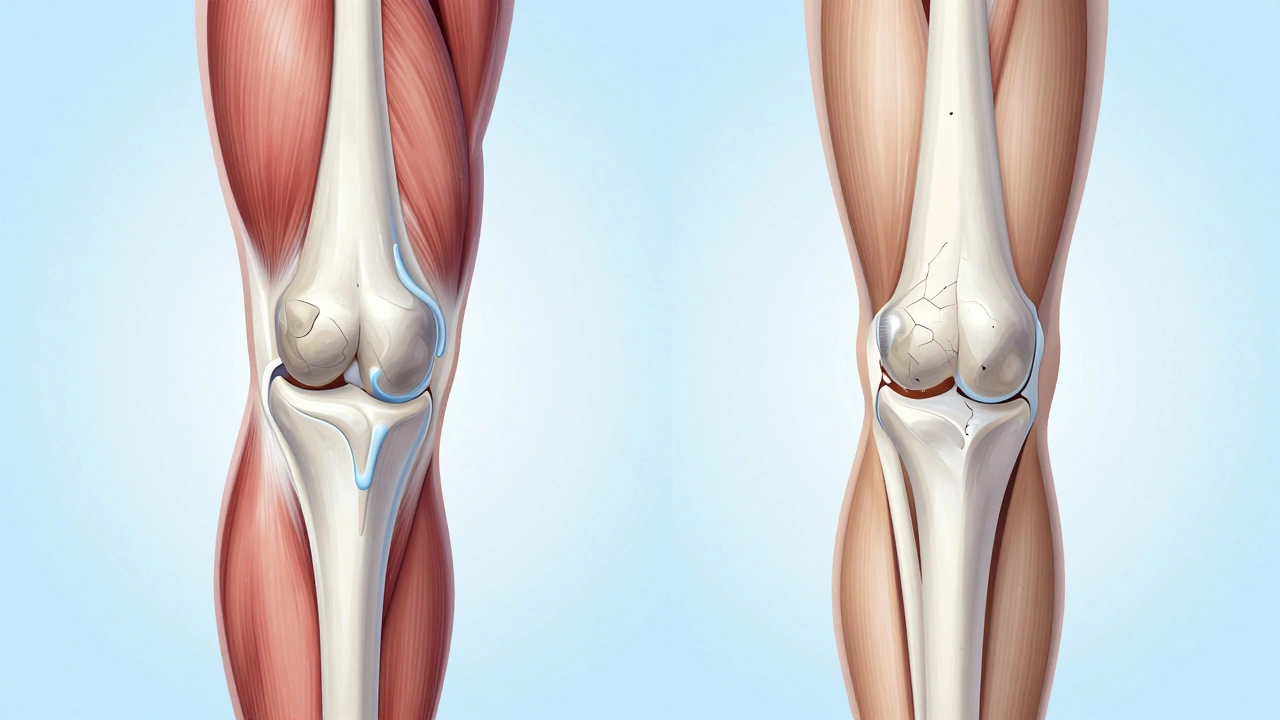
We have been conditioned to believe that pain equals damage. If it hurts, we assume we are tearing something further apart, so we must protect it by immobilizing it. This logic works for a broken bone or an acute sprain. It does not work for chronic knee conditions like osteoarthritis or meniscus degeneration. When you stop moving your knee because of pain, you trigger a biological process called disuse atrophy. Within just two weeks of reduced activity, your quadriceps muscles can lose up to 10% of their strength. The quadriceps are the primary shock absorbers for your knee joint. When they weaken, the load shifts directly onto the cartilage and bone. This increased pressure causes more inflammation, which leads to more pain, which leads to even less movement. It is a vicious cycle that orthopedic surgeons see every single day.
Think of your knee joint like a car engine. An engine needs oil to lubricate its parts. For your knee, that oil is synovial fluid. Synovial fluid is produced and distributed through movement. When you walk, squat, or bend your knee, you pump this nutrient-rich fluid into the cartilage. Cartilage has no blood supply; it relies entirely on this mechanical pumping action to stay healthy. If you stop moving, the cartilage starves. It becomes brittle, cracks, and wears down faster. So, by trying to "save" your knee from wear and tear, you are actually starving it of the nutrients it needs to survive.
The Hidden Culprit: Muscle Imbalance
It is not just about overall weakness. It is about balance. Your knee is stabilized by four main muscle groups: the quadriceps (front), hamstrings (back), glutes (hips), and calves. When knee pain starts, people naturally alter how they walk. This is called antalgic gait. You might lean to one side, shorten your stride, or avoid putting weight on the painful leg. This subtle shift changes which muscles get used. Usually, the outer thigh muscles tighten up while the glutes and inner thighs shut down. This imbalance pulls the kneecap out of its proper track. Instead of gliding smoothly in its groove, the kneecap grinds against the side of the femur. This grinding creates sharp, stabbing pains that make you want to rest even more. The more you rest, the worse the imbalance gets.
Consider the role of the hip muscles. Many people think knee pain is a knee problem. Often, it is a hip problem. Weak gluteus medius muscles cause the thigh bone to rotate inward when you walk. This internal rotation puts massive torque on the knee joint. If you only focus on stretching your hamstrings or icing your knee, you are ignoring the root cause. You need to strengthen the hips to stabilize the knee. Without strong hips, the knee acts as a hinge that takes all the rotational stress it was never designed to handle.
Signs You Are Making the Situation Worse
How do you know if you are resting too much? Look for these specific signs. First, notice if your knee feels unstable or "gives way" when you stand up from a chair. This indicates significant quadriceps weakness. Second, check if the pain is constant rather than just after activity. Constant ache suggests inflammation from lack of circulation and nutrient flow. Third, observe if you are avoiding stairs completely. While avoiding stairs temporarily is fine, long-term avoidance means your legs are losing the power needed for basic daily tasks. Fourth, look at swelling. If your knee swells up after sitting for a long time, it means the fluid is pooling because the muscle pump isn't working to circulate it back up the leg.
Another red flag is stiffness that lasts longer than 30 minutes in the morning. Normal stiffness goes away quickly. Prolonged stiffness indicates that the joint tissues are becoming rigid due to lack of movement. If you find yourself wearing a knee brace constantly, be careful. Braces provide temporary support, but they also signal your brain that the joint is weak. Over time, your muscles rely on the brace instead of engaging themselves. This dependency accelerates muscle loss. Use braces for specific activities, not as a permanent crutch for daily life.
Moving Safely: The Right Way to Exercise With Pain
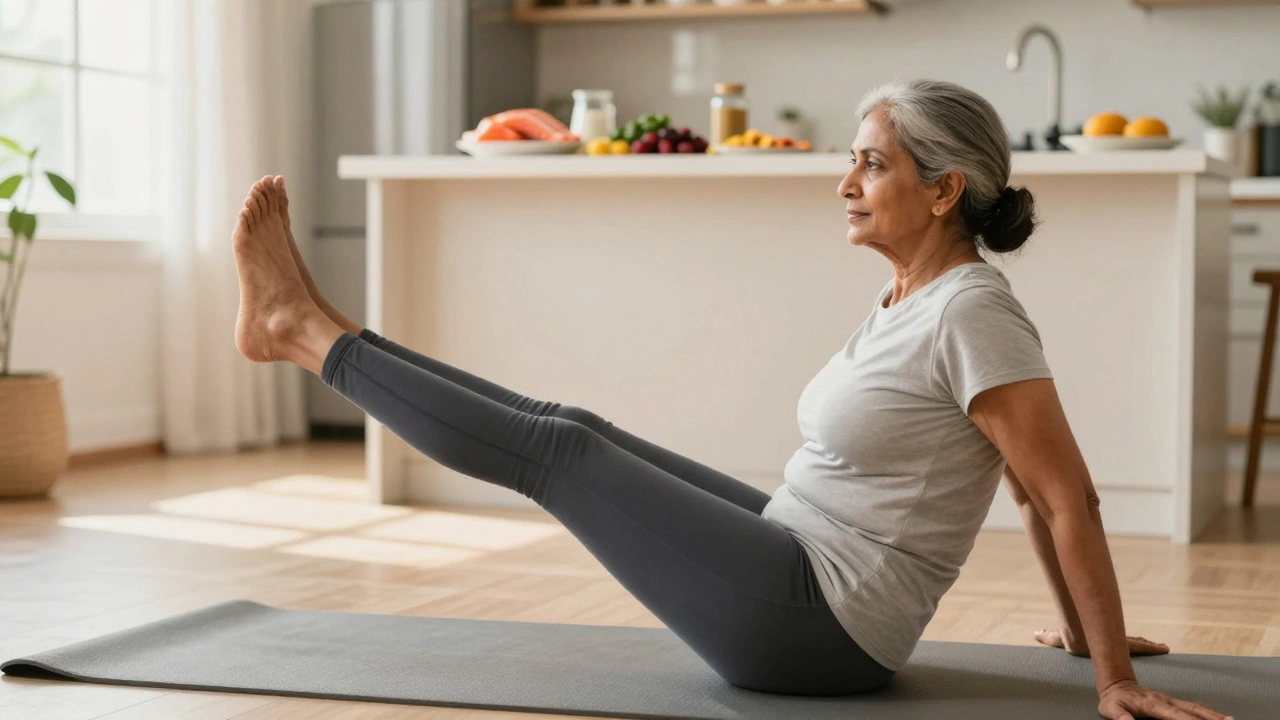
If resting is bad, does that mean you should run marathons? Absolutely not. The goal is controlled, low-impact movement. You need exercises that strengthen the muscles without pounding the joint. Here are three safe movements you can start today. First, try straight leg raises. Lie on your back with one leg bent and the other straight. Tighten the thigh muscle of the straight leg and lift it to the height of the bent knee. Hold for five seconds and lower slowly. This strengthens the quadriceps without bending the knee joint under load. Do 10 repetitions on each side.
Second, perform seated heel slides. Sit in a sturdy chair with your feet flat on the floor. Slowly slide one heel toward your buttocks until you feel a gentle stretch in the hamstring. Then slide it back out. This keeps the knee joint mobile and promotes synovial fluid distribution. Repeat 10 times per leg. Third, practice wall sits. Stand with your back against a wall and slide down until your knees are slightly bent. Hold for 10 to 20 seconds. This builds endurance in the quadriceps and glutes simultaneously. Start with small angles and gradually increase the depth as your strength improves.
| Exercise Type | Impact Level | Benefit | Risk |
|---|---|---|---|
| Straight Leg Raises | Low | Strengthens quads without joint compression | Minimal if done correctly |
| Running/Jogging | High | Cardiovascular health | Increases cartilage wear and inflammation |
| Swimming/Water Aerobics | Low | Full body movement with buoyancy support | None for most patients |
| Deep Squats | High | Builds functional strength | High shear force on meniscus if form is poor |
| Cycling (Stationary) | Low | Improves range of motion and circulation | Pain if seat height is incorrect |
When Movement Isn't Enough: Considering Surgery
There comes a point where exercise and lifestyle changes are no longer enough. If you have tried consistent physical therapy, lost weight if necessary, and modified your activities, but the pain still prevents you from sleeping or walking short distances, it may be time to consider total knee arthroplasty is the medical term for total knee replacement surgery. Modern knee replacements are highly successful. Advances in materials science have led to implants made from highly cross-linked polyethylene and ceramic coatings that last longer than previous generations. Most patients report a 90% reduction in pain within six months of surgery. The key is timing. Waiting too long can lead to severe deformity, making the surgery more complex and recovery harder. Getting it done when you are still somewhat active allows for a faster return to normal life.
Recovery from knee replacement is not passive either. You will be encouraged to walk the same day or the next day after surgery. Physical therapy begins immediately. The principles are the same as pre-surgery care: movement heals. You must engage your muscles to regain control of the new joint. Ignoring post-op exercises is just as dangerous as ignoring pre-op exercises. The artificial joint needs the surrounding muscles to function properly. Without them, you risk stiffness, instability, and even implant loosening over time.

Diet and Inflammation: The Internal Factor
Your diet plays a surprising role in knee health. Chronic inflammation is the fuel that keeps knee pain burning. Foods high in sugar, refined carbohydrates, and processed oils increase systemic inflammation. This makes your joints more sensitive to pain. On the other hand, an anti-inflammatory diet can help reduce swelling and improve mobility. Focus on omega-3 fatty acids found in fatty fish like salmon and mackerel. Include plenty of colorful vegetables, especially leafy greens and berries, which are rich in antioxidants. Turmeric and ginger have natural anti-inflammatory properties that can complement your pain management strategy. Losing even 10 pounds can reduce the load on your knees by 40 pounds with every step you take. Weight management is not just about aesthetics; it is a critical medical intervention for knee preservation.
Building a Long-Term Strategy
Fixing bad knees is not a quick fix. It requires a shift in mindset from protection to preparation. Stop asking, "What can I avoid doing?" and start asking, "What can I do safely to get stronger?" Listen to your body, but distinguish between sharp, injury-causing pain and the dull ache of muscle fatigue. If pain persists beyond 24 hours after exercise, you may have overdone it. Scale back the intensity, not the frequency. Consistency beats intensity every time. Ten minutes of gentle movement daily is far better than an hour of intense exercise once a week. Build a routine that includes strength training, flexibility work, and cardiovascular health. Protect your knees by empowering the muscles around them. Your future self will thank you for every step you take today.
Is it okay to walk if my knee hurts?
Yes, walking is generally beneficial for bad knees unless the pain is sharp and severe. Gentle walking promotes synovial fluid circulation and strengthens supporting muscles. Start with short distances on flat surfaces and use supportive footwear. If pain increases significantly during or after walking, reduce the distance and consult a physical therapist.
How long does it take for knee exercises to show results?
Most people begin to notice improvements in stability and reduced pain within 4 to 6 weeks of consistent exercise. Significant strength gains and functional improvements typically occur after 8 to 12 weeks. Patience is key, as muscle rebuilding and tissue adaptation take time. Consistency is more important than intensity.
Can knee replacement reverse muscle loss?
Knee replacement itself does not rebuild muscle, but it removes the pain barrier that prevents exercise. Post-surgery physical therapy is essential to regain strength. Most patients recover full function and strength within 3 to 6 months if they adhere strictly to their rehabilitation program. The surgery enables movement, but the patient must do the work to restore muscle mass.
What foods should I avoid to reduce knee inflammation?
Avoid foods that spike blood sugar and promote inflammation, such as sugary drinks, white bread, pastries, fried foods, and processed meats. Limit alcohol consumption, as it can exacerbate inflammation. Focus on whole foods, lean proteins, healthy fats, and plenty of fruits and vegetables to support joint health.
When should I see a doctor for knee pain?
See a doctor if your knee locks, gives way frequently, shows visible deformity, or if pain wakes you up at night. Also seek medical advice if home remedies and rest do not improve symptoms after two weeks, or if you experience sudden swelling and redness, which could indicate infection or gout.