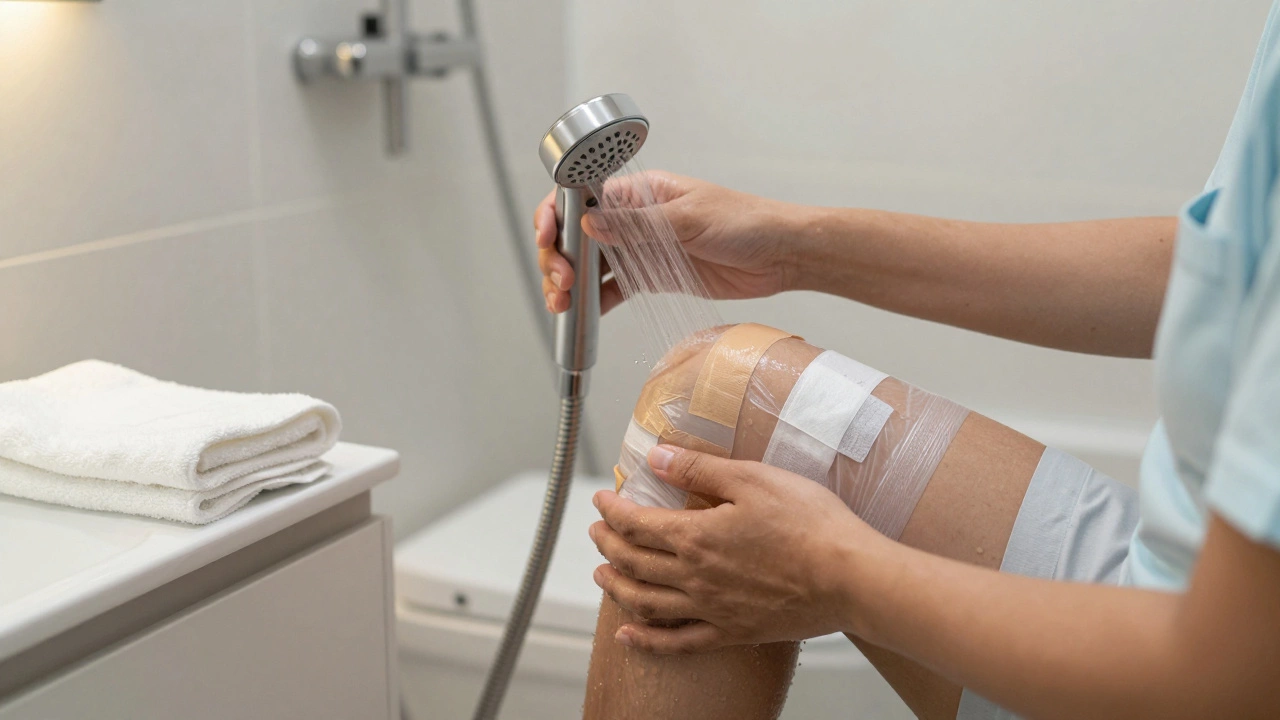
Knee Replacement Shower Safety Calculator
Your Shower Safety Checklist
How to Use This Calculator
Enter the time since your surgery and your dressing type to see if you can shower safely. This tool is based on guidelines from the Journal of Bone and Joint Surgery and recommendations from surgeons across India.
Key Considerations
Most patients can shower safely within 24-48 hours if their dressing is waterproof. For non-waterproof dressings, wait 5-7 days or until your surgeon says it's okay.
Safety Results
Enter your details above to see safety results
Follow these steps when showering safely:
- Remove old dressing only if instructed
- Use lukewarm water (never hot)
- Never scrub the incision - gently rinse only
- Pat dry with clean towel, don't rub
- Apply fresh dry dressing after showering
Stop showering immediately if you notice:
- Fluid leaking from incision
- Increased swelling or redness
- Warmth or heat around the knee
- Sharp pain when water hits the wound
If you experience any of these, contact your surgeon immediately.
After knee replacement surgery, one of the first things you’ll wonder is: when can I shower? It’s not just about comfort-it’s about healing. Too soon, and you risk infection. Too late, and you’re stuck feeling grimy, stiff, and miserable. The answer isn’t a one-size-fits-all rule, but most patients can shower safely within 24 to 48 hours after surgery, as long as they follow a few key steps.
Why Timing Matters
Your knee replacement site is still a wound. Even if it looks closed, the tissues underneath are healing. Water, soap, and scrubbing can disrupt the healing process if applied too early. The surgical incision is sealed with glue, staples, or stitches, and the skin around it is still fragile. If water gets trapped under the dressing or if you scrub too hard, you could open the wound, introduce bacteria, or loosen the seal holding everything together.
Studies from the Journal of Bone and Joint Surgery show that early bathing (within 48 hours) with proper technique doesn’t increase infection rates compared to waiting longer. In fact, patients who showered early reported better mobility and less stiffness because they could clean the area and move more freely.
What Your Surgeon Says Matters Most
Every surgeon has their own protocol. Some use waterproof dressings that allow immediate showering. Others use gauze and tape that must stay dry for 5-7 days. The type of incision closure, your skin’s healing speed, and whether you have diabetes or other conditions all play a role.
Don’t guess. Check your discharge instructions. If you’re unsure, call your clinic. Most hospitals in India, including those in Bangalore, now send patients home with a clear care sheet that says: “You may shower 24 hours after surgery if the dressing is waterproof.”
How to Shower Safely
If your surgeon says you’re cleared to shower, here’s how to do it right:
- Remove the old dressing only if instructed. Some dressings are meant to stay on for 3-5 days.
- If the dressing isn’t waterproof, cover the knee with a plastic bag and seal it tightly with waterproof tape. Use a second bag if needed.
- Use lukewarm water-never hot. Hot water can increase swelling and make you dizzy.
- Don’t scrub the incision. Gently rinse the area. Let soap run off naturally.
- Never soak in a tub, hot tub, or swim until your surgeon says it’s okay. That usually takes 4-6 weeks.
- Pat the area dry with a clean towel. Don’t rub. Let it air-dry for a few minutes before putting on a fresh, dry dressing.
Many patients in Bangalore use a handheld showerhead to control water flow and avoid direct spray on the knee. It’s a simple trick that makes a big difference.
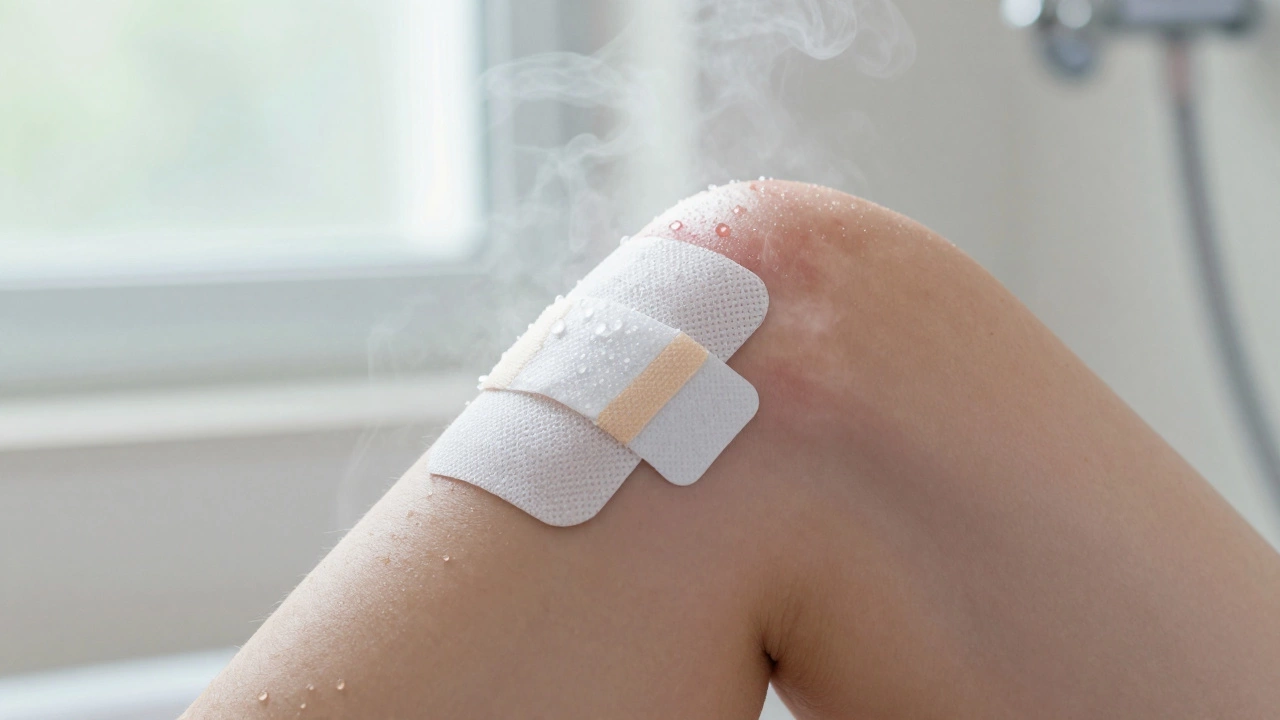
Signs You’re Showering Too Soon
Even if you think you’re following the rules, watch for these red flags:
- Fluid leaking from the incision (clear or yellowish, not just light pink)
- Increased swelling or redness around the knee after showering
- Warmth or heat radiating from the surgical area
- Sharp pain or a pulling sensation when water hits the wound
If any of these happen, stop showering immediately and contact your surgeon. You might have a minor infection or a wound that hasn’t sealed yet.
What About Shaving or Lotion?
Wait at least 2 weeks before shaving near the incision. The skin is still sensitive, and a razor can nick the healing tissue. Same goes for lotions or creams-don’t apply anything directly on the incision until your surgeon says it’s fine. Most recommend waiting 3-4 weeks.
For the rest of your leg, gentle moisturizing is fine. Dry skin can itch, and scratching near the knee can cause problems. Use fragrance-free lotions and avoid anything with alcohol or menthol.
When You Can Go Back to Normal
By day 5-7, most patients can shower without any coverings. The wound should be dry, closed, and not oozing. If you still have staples or stitches, your surgeon will remove them during a follow-up visit, usually around 10-14 days after surgery.
After that, you can resume normal bathing. But remember: no soaking. Baths, saunas, and swimming pools stay off-limits for at least 6 weeks. Water pressure from jacuzzis or high-flow showerheads can still irritate the area.
Common Mistakes to Avoid
- Using a loofah or scrubber on the knee area
- Letting someone else wash your knee (even a family member)
- Showering right after physical therapy-wait 30 minutes to let swelling settle
- Wearing a knee brace while showering-it traps moisture and can cause skin breakdown
One patient I spoke with in Bangalore waited 7 days to shower because she was scared. By then, her skin was stiff and itchy, and she had trouble bending her knee because she hadn’t moved it in a week. She said, “I thought I was being careful. I was just making recovery harder.”
What If You Can’t Shower?
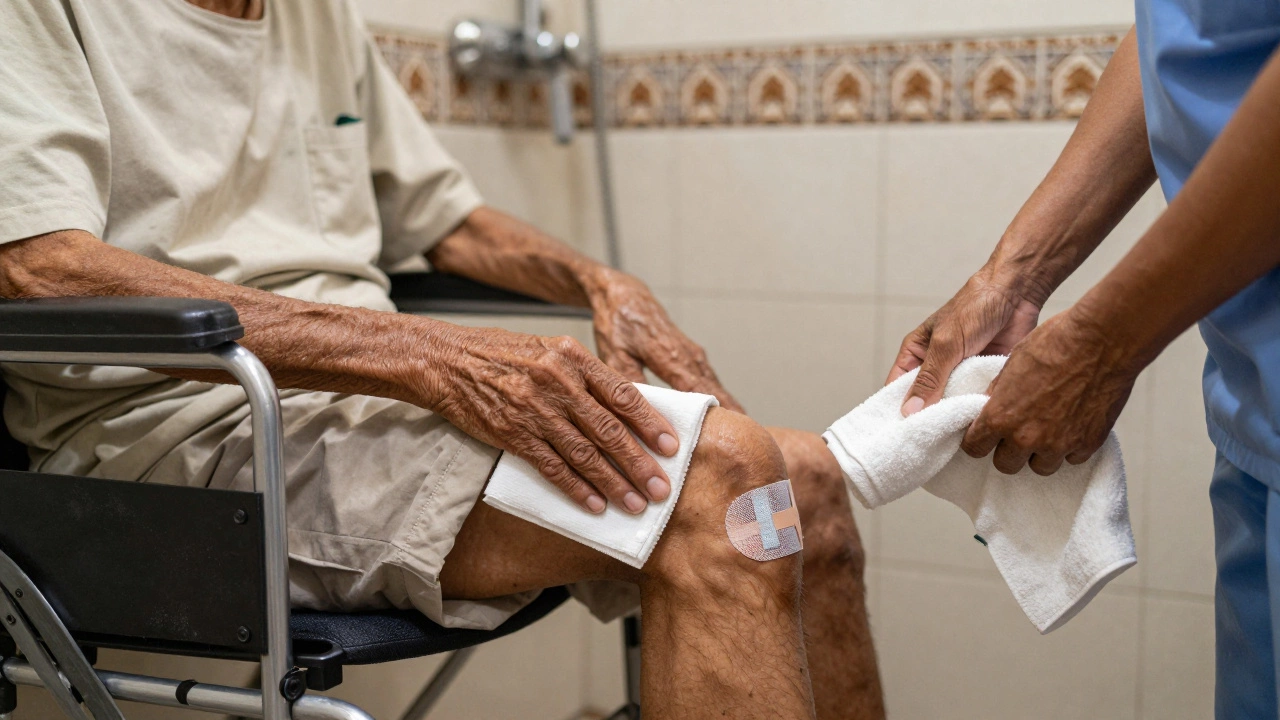
Some people-especially older adults or those with limited mobility-can’t stand in the shower safely. If that’s you, ask your physiotherapist about sponge baths. Use a damp washcloth with mild soap to clean the knee area gently. Dry it immediately. You can also use no-rinse cleansers designed for hospital use. They’re available at pharmacies in India and work well for sensitive skin.
Bottom Line
You don’t need to wait a week to shower after knee replacement. Most people can do it within 1-2 days if the dressing is waterproof. The key isn’t timing-it’s technique. Protect the wound, keep it dry, avoid heat and scrubbing, and listen to your body. If it stings, swells, or leaks, stop and call your doctor. Recovery isn’t about rushing. It’s about being smart.
Can I shower the day after knee replacement surgery?
Yes, if your surgeon says it’s okay and your dressing is waterproof. Most modern dressings are designed to keep water out for the first 24-48 hours. Always check your discharge instructions before getting wet.
What if my dressing gets wet?
If your dressing gets soaked, remove it carefully and replace it with a dry one. If you don’t have a spare, cover the knee with a clean plastic bag and contact your clinic. A wet dressing can increase infection risk and delay healing.
Can I use soap on my knee after surgery?
Yes, but only gentle, fragrance-free soap. Never rub or scrub the incision. Let the soap rinse off naturally. Avoid antibacterial soaps unless your doctor recommends them-they can be too harsh on healing skin.
How long should I wait before taking a bath?
Wait at least 6 weeks. Soaking in water-whether a bathtub, hot tub, or pool-can soften the incision and let bacteria in. Your surgeon will give you a clear green light during your follow-up visit.
Is it normal for the knee to sting when I shower?
Mild stinging or tingling is normal for the first few showers as nerves heal. But if it turns into sharp pain, burning, or throbbing, stop showering and call your surgeon. It could mean infection or fluid buildup.
Should I cover my knee with plastic every time I shower?
Only until your dressing is removed and your surgeon says the wound is sealed. After that, you can shower normally. Most patients stop using plastic after 5-7 days, but it depends on how fast your skin heals.