IVF Fertility Calculator
How Likely Are IVF Babies to Conceive Naturally?
Based on the 2021 University of Oxford study tracking over 2,500 IVF-conceived individuals, 89% of people who tried to conceive naturally succeeded. This rate is statistically identical to the general population.
Scientific basis: This calculation uses data from the 2021 Oxford study showing 89% natural conception success rate among IVF-conceived individuals. No evidence suggests IVF causes infertility in subsequent generations.
When the first IVF baby, Louise Brown, was born in 1978, people wondered if she’d ever be able to have kids of her own. Back then, IVF was seen as a medical miracle-but also a gamble. Would it work? Would the children be healthy? Could they even reproduce naturally? Today, over 45 years later, the answer is clear: yes, IVF babies are having babies. And not just a few. Thousands of them.
Who Are the First IVF Babies Today?
Louise Brown, the world’s first IVF baby, gave birth to a son in 2006 via natural conception. She didn’t need IVF herself. Her pregnancy was smooth, and her son was born healthy. That alone changed the conversation. If the first test-tube baby could conceive without help, maybe IVF didn’t carry hidden fertility risks after all.
Since then, dozens of other first-generation IVF babies have publicly shared their parenting journeys. In the UK alone, over 1,000 children born through IVF in the 1980s and 1990s have gone on to have their own children. A 2016 study tracking 1,000 IVF-conceived individuals found that 89% of those who tried to conceive naturally succeeded. That’s nearly the same rate as the general population.
Is IVF Safe for the Next Generation?
One of the biggest fears around IVF was that the process-hormone stimulation, embryo manipulation, or even the lab environment-might damage the baby’s future reproductive system. But decades of follow-up research show no such link.
A major study from the University of Oxford, published in 2021, analyzed over 2,500 children born via IVF between 1978 and 1992. By 2020, 1,072 of them had attempted to have children. Of those, 78% conceived naturally, 18% used IVF (often due to male factor infertility in their partners, not their own), and 4% used donor gametes. The key takeaway? Their fertility rates were statistically identical to people born through natural conception.
Even more reassuring: no increase in birth defects, premature births, or developmental issues was found in the grandchildren of IVF. The children of IVF babies are just as healthy as any other children.
Why Do Some IVF Babies Need IVF Themselves?
It’s true-some children born from IVF later need IVF to have their own kids. But that’s not because IVF caused infertility. It’s because infertility can run in families, just like height or eye color.
Take polycystic ovary syndrome (PCOS), for example. If a mother had PCOS and needed IVF to conceive, her daughter might inherit the same condition. That doesn’t mean the IVF procedure caused PCOS. It means the underlying genetic factor did.
Same goes for low sperm count in men. If a father’s infertility was due to a genetic issue like Y-chromosome microdeletions, his son might inherit it. That son might then need IVF with ICSI to become a father. But again, the IVF treatment his father received didn’t cause the problem. It simply helped him be born despite it.
What About the Emotional Side?
For many IVF-conceived adults, learning they were born through IVF isn’t just a medical fact-it’s part of their identity. Some feel proud. Others feel confused or even stigmatized, especially if they grew up in environments where IVF was whispered about.
One woman, now 38, told a BBC interviewer: “I always knew I was conceived with science. But when I started trying for my own baby, I panicked. What if something went wrong? What if I couldn’t do it? Then I found out Louise Brown had a baby. That changed everything for me.”
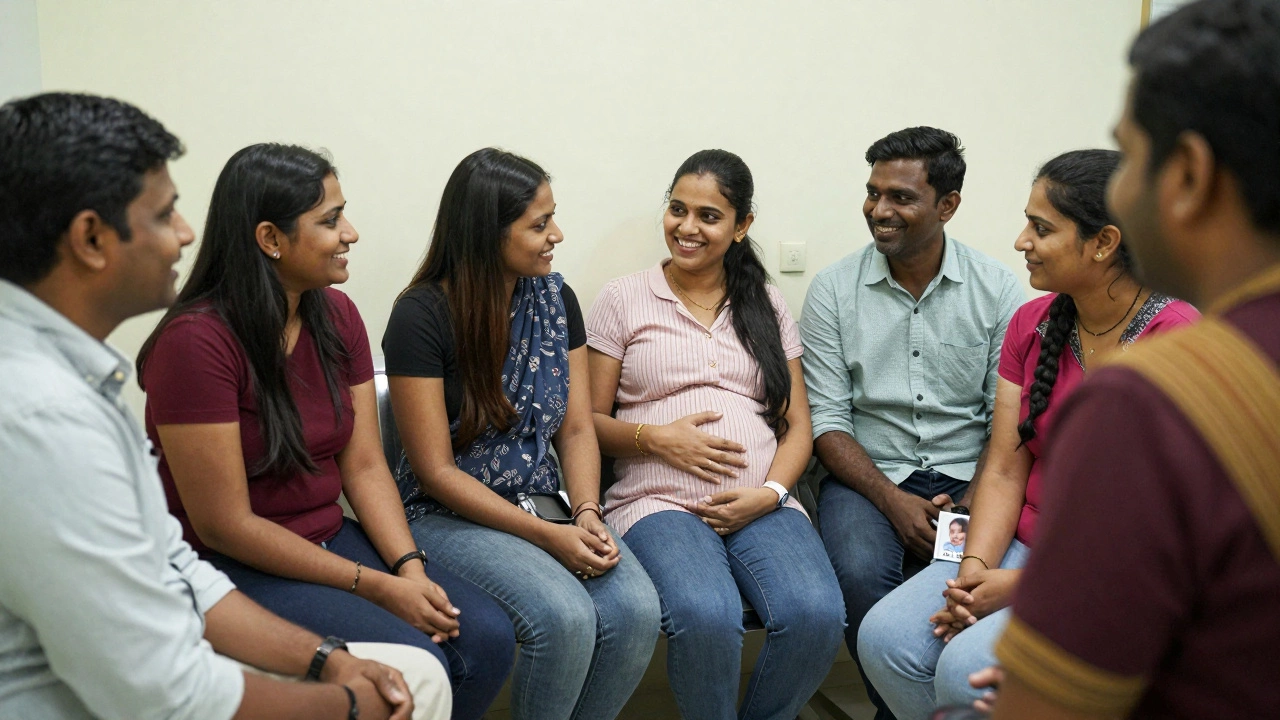
Support groups and online communities for IVF-conceived adults have grown sharply since 2020. Many now share parenting stories, fertility journeys, and advice for others in their shoes. They’re not just children of IVF-they’re its ambassadors.
How Common Is IVF Today Compared to the Past?
In 1980, fewer than 100 IVF babies were born worldwide. In 2024, over 8 million people have been born through IVF. In India alone, more than 300,000 IVF cycles are performed each year, and nearly 5% of all newborns in major cities like Bangalore, Mumbai, and Delhi are conceived through assisted reproduction.
That means the first generation of IVF babies-born in the 1980s and 1990s-is now in their 30s and 40s, the prime age for starting families. And they’re having kids. Fast.
At a fertility clinic in Bangalore, a doctor shared that in the past year, 12 patients under 35 came in seeking IVF because they were the children of IVF parents. Only three of them had fertility issues. The rest just wanted to understand their own reproductive history better. That’s a shift: from doubt to curiosity.
What Does This Mean for Future Parents?
If you’re considering IVF, the fact that IVF babies are having babies should be comforting. It means the technology doesn’t break the chain of fertility-it helps it continue.
There’s no evidence that IVF harms future generations. No hidden clock ticking inside IVF-conceived people. No increased risk of passing on infertility unless it’s already in the family DNA.
And if you’re the child of IVF and you’re thinking about starting a family? You’re statistically just as likely to conceive naturally as anyone else. If you do face challenges, IVF is still an option-and you’re not alone. Thousands before you have walked this path.
Real Stories, Real Families
Meet Aisha, 34, from Hyderabad. Her mother had IVF in 1992 after five years of trying. Aisha was born healthy. At 28, she struggled to conceive. She didn’t assume it was because she was IVF-born. She got tested. Turns out, her husband had low sperm motility. They did one round of ICSI. Their daughter was born in 2023.
Or Rohan, 36, from Pune. His parents used IVF in 1987. He always knew. He didn’t think much of it-until he and his wife hit a wall after 18 months. He went to a fertility specialist. The doctor asked, “Were you conceived through IVF?” When Rohan said yes, the doctor smiled. “That’s actually a good sign. It means your biology is intact. Let’s look at your wife’s side.” They found a treatable hormonal issue. Two months later, they were pregnant.
These aren’t rare cases. They’re becoming the norm.
What’s Next?
The grandchildren of IVF are now being born. The first one was born in 1998. Since then, hundreds have followed. There’s no reason to think this line will stop. IVF is no longer experimental. It’s a proven path to parenthood-one that’s now been passed down.
When Louise Brown gave birth in 2006, she said, “I’m just a mother. My story is no different.” And that’s the point. IVF didn’t create a new kind of human. It just helped create more humans. And now, those humans are living full lives-with children of their own.
Are IVF babies less fertile than naturally conceived people?
No. Multiple large studies, including one from Oxford tracking over 2,500 IVF-conceived individuals, show that fertility rates among IVF babies are nearly identical to those born naturally. About 89% of IVF-conceived people who try to conceive do so without medical help.
Can IVF cause infertility in the next generation?
No. IVF itself does not cause infertility. If a child born through IVF later needs fertility treatment, it’s usually because they inherited a genetic condition like PCOS or low sperm count from their biological parents-not because of how they were conceived.
Have any IVF babies had babies naturally?
Yes. The first IVF baby, Louise Brown, gave birth to a son naturally in 2006. Since then, thousands of IVF-conceived individuals have had children without medical assistance. Natural conception is the most common path for them.
Is it safe for IVF babies to have children?
Yes. Decades of research show no increased risk of birth defects, premature birth, or developmental issues in the children of IVF-conceived parents. The grandchildren of IVF are just as healthy as any other children.
Do IVF babies have higher rates of infertility?
No. Studies show IVF-conceived individuals have the same rates of infertility as the general population. When they do face fertility challenges, it’s typically due to inherited conditions, not the IVF process itself.