Recovery Support Assessment
How much support do you need?
Answer these questions to understand if you need a caretaker and what level of support is recommended.
After open-heart surgery, your body isn’t just healing-it’s rebuilding. The sternum was split, your heart was stopped, and your lungs were handled by a machine. You’re not just tired. You’re fragile. And that’s why so many people ask: Do you need a caretaker after open-heart surgery? The answer isn’t yes or no. It’s: How much help do you actually need?
What Happens in the First Week?
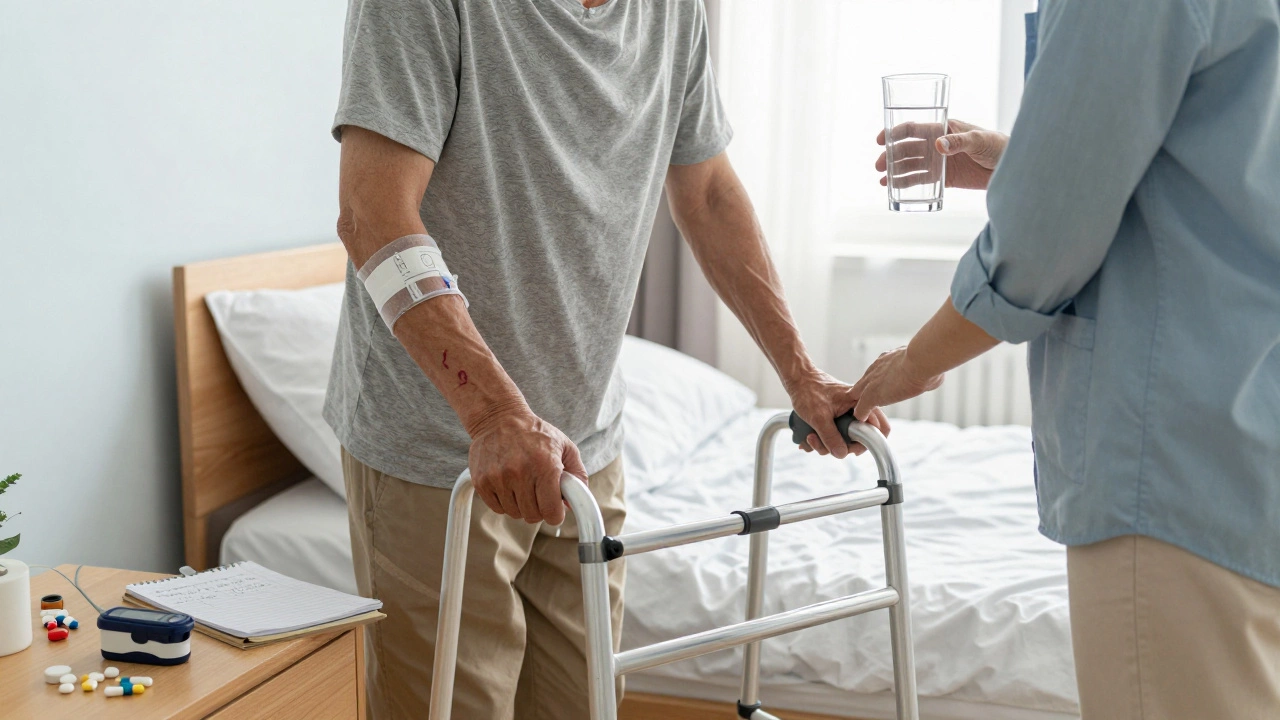
The first seven days after surgery are the most critical. You’ll be in the hospital for about 5 to 7 days, depending on complications. Even if you’re discharged feeling okay, you’re not ready to be alone. Simple tasks become impossible. Getting out of bed? Hard. Standing for more than a minute? Exhausting. Showering? Risky. Reaching for a glass of water? Painful. And that’s just the physical stuff.Then there’s the mental side. Medications like opioids, beta-blockers, and anticoagulants can fog your thinking. Many patients report confusion, memory lapses, or even mild hallucinations in the first few days. This isn’t rare. A 2024 study in the Journal of Cardiothoracic Surgery found that 38% of patients over 65 had noticeable cognitive changes within 72 hours of leaving the ICU. You might not realize you’re forgetting to take pills, or that you’re not drinking enough water. That’s where a caretaker helps.
What Does a Caretaker Actually Do?
A caretaker isn’t a nurse. You don’t need someone to change IVs or monitor heart rhythms. What you need is someone who can handle the daily stuff you can’t. Here’s what that looks like:- Preparing meals that are low-sodium and high-protein (no canned soup, no fried food)
- Reminding you to take your pills on time-warfarin, aspirin, statins, antibiotics
- Helping you walk around the house to prevent blood clots
- Monitoring for warning signs: swelling in the legs, chest pain, shortness of breath, fever above 101°F
- Driving you to follow-up appointments (you can’t drive for at least 4 weeks)
- Managing your wound care-keeping the incision clean, watching for redness or drainage
- Handling phone calls and visitors so you can rest
One woman I spoke with, Linda, 71, had her daughter stay with her for three weeks. "I didn’t realize how much I needed help until I tried to wash my own hair," she said. "I ended up falling in the shower. My daughter was there. That’s when I knew I wasn’t ready to be alone."
Who Can Be a Caretaker?
You don’t need to hire a professional. Many people rely on family or close friends. But not everyone is cut out for it. A caretaker needs to be:- Available for at least 4-6 weeks full-time
- Comfortable with medical routines (even if they’ve never done it before)
- Emotionally steady-you’ll be irritable, moody, or depressed. It’s normal. They need to handle it without taking it personally
- Willing to learn: They’ll need to know how to use a pulse oximeter, recognize signs of infection, and when to call the doctor
If you don’t have someone like that, professional home health aides are an option. Medicare may cover up to 35 hours per week of skilled nursing care for the first 30 days if your doctor certifies you need it. Private insurance often covers more. Costs vary: $20-$35/hour depending on your location. That’s $1,400-$2,500 for two weeks. It’s expensive, but it’s cheaper than a readmission.
When Can You Go It Alone?
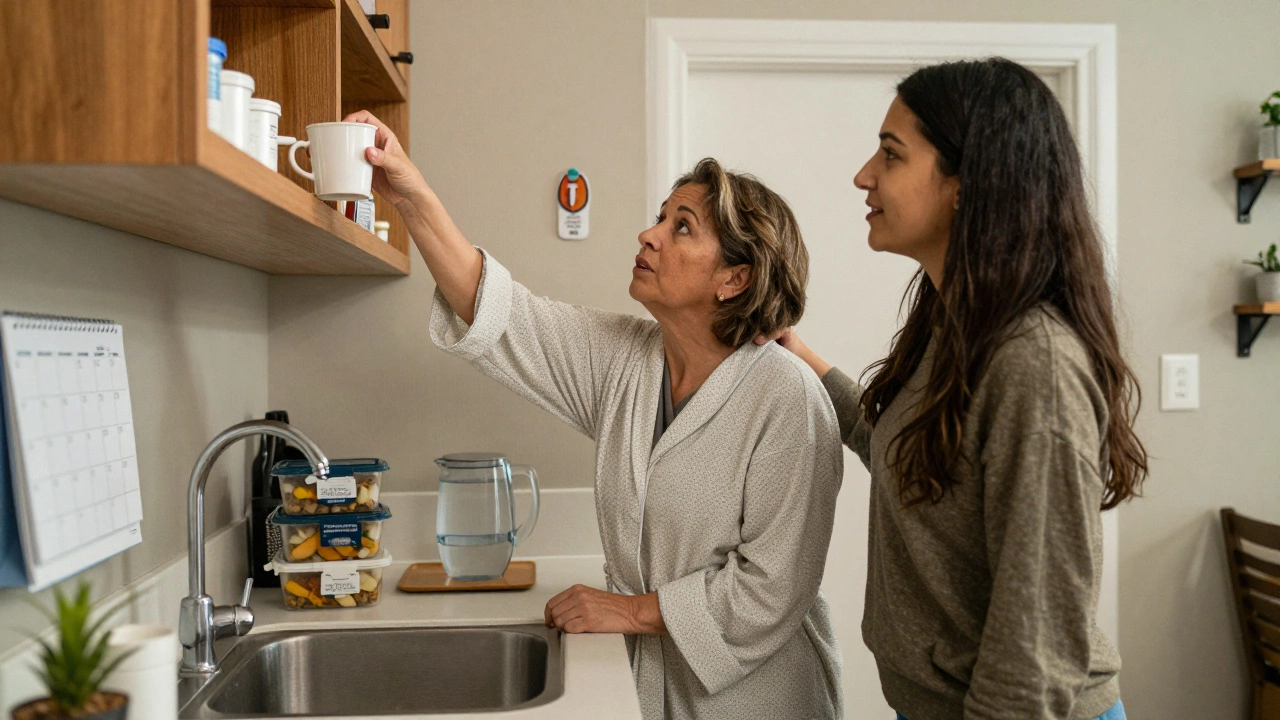
Some people recover faster. Younger patients, those with no prior heart issues, and those with strong support systems at home can sometimes manage without round-the-clock help. But even then, you’re not fully independent.Most doctors recommend having someone check in daily for at least 4 weeks. After that, weekly visits are often enough. You’ll still need help with:
- Carrying groceries
- Using stairs (you can’t lift more than 5 pounds for 8-12 weeks)
- Managing your cardiac rehab schedule
- Handling insurance paperwork and billing
One man, Robert, 58, went home alone after his triple bypass. He thought he was fine. Two weeks later, he missed a dose of his blood thinner. He developed a blood clot in his lung. He ended up back in the hospital. "I didn’t think I needed help," he told me. "I was wrong."
Red Flags You Can’t Ignore
If you’re trying to recover without help, watch for these warning signs:- Forgetfulness: Missing doses, not eating, not drinking
- Isolation: Refusing visitors, not answering calls
- Confusion: Not recognizing family, mixing up days
- Physical decline: Not walking daily, swelling in ankles, rapid weight gain (more than 3 pounds in 2 days)
These aren’t signs of laziness. They’re signs your body is struggling. And your brain isn’t working right yet. If you see any of these, get help immediately.
What If You Live Alone?
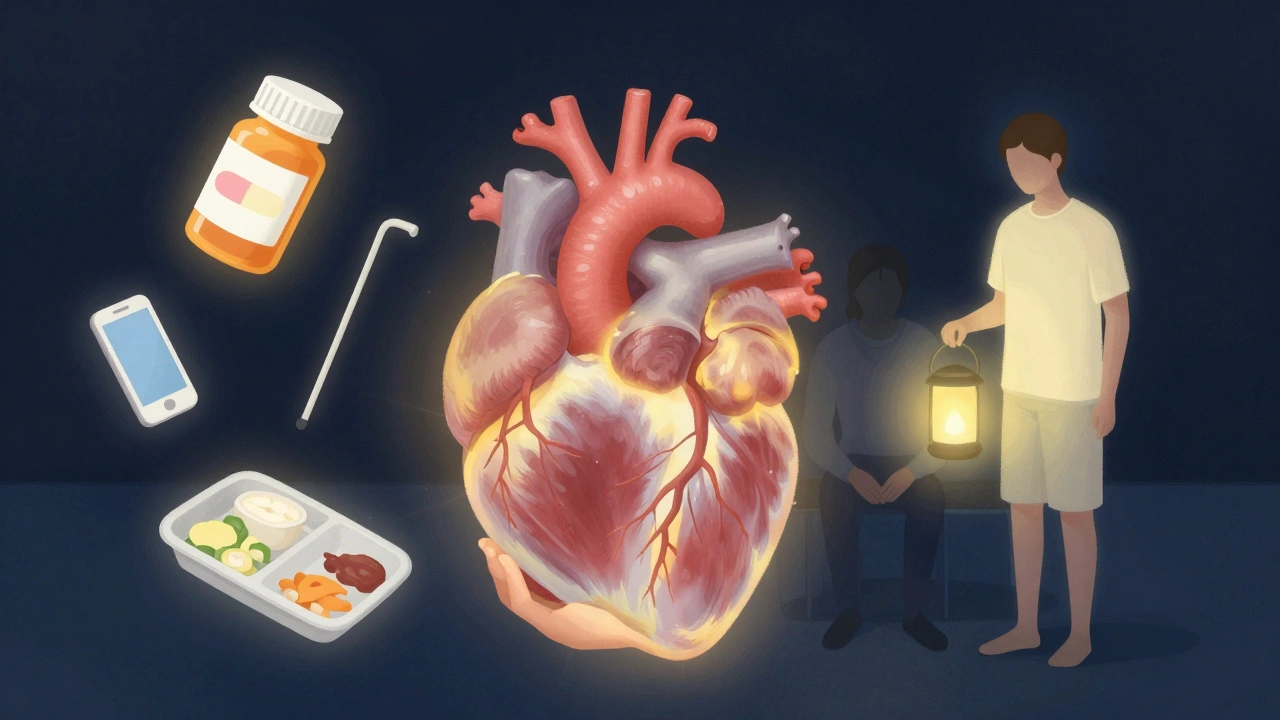
Living alone doesn’t mean you have to be alone in recovery. Many hospitals offer discharge planning services. Ask for:- Home health nursing visits (2-3 times a week for the first month)
- Meal delivery programs (like Meals on Wheels)
- Telehealth check-ins with your cardiologist
- A medical alert system with fall detection
Some communities have volunteer networks-church groups, senior centers, or nonprofit organizations-that offer ride services or check-in calls. Don’t be proud. Ask for help. It’s not weakness. It’s smart.
How Long Does Recovery Really Take?
People say it takes 6 weeks. That’s misleading. Six weeks is when you can return to light work. Full recovery? That takes 3 to 6 months. Your sternum takes 8-12 weeks to heal. Your heart needs time to rebuild strength. Your lungs need to relearn how to work efficiently. And your mind? It can take months to shake off the fog.During that time, you’ll need someone to:
- Help you stick to cardiac rehab
- Encourage you when you want to quit
- Notice when you’re slipping back into old habits (smoking, skipping meds, eating junk)
Recovery isn’t just physical. It’s emotional. Depression is common after heart surgery. One in three patients experience it. A caretaker doesn’t just help with chores. They give you someone to talk to. Someone who notices when you’re quiet too long.
Final Answer: Yes, You Need Help
You don’t need a 24/7 nurse. But you do need someone. Not just for the first week. For the first month. At least. Even if you think you’re strong. Even if you’ve never needed help before. This isn’t like breaking a bone. This is a major trauma to your entire body. And your body doesn’t heal alone.Plan ahead. Talk to your surgeon before the operation. Ask: "Who can help me after?" If you don’t have someone, start looking now. Don’t wait until you’re home, weak, and confused. Recovery isn’t a solo journey. It’s a team effort. And you’re worth having a team.
Do I need a caretaker if I live with family?
Even if you live with family, you still need someone who can actively help-reminding you to take meds, helping you walk, preparing meals, watching for warning signs. Just being in the same house isn’t enough. You need someone who is present, aware, and willing to take responsibility.
Can I hire a professional caretaker instead of relying on family?
Yes. Many families choose professional home health aides, especially if relatives work full-time or live far away. Medicare and private insurance often cover skilled nursing visits for the first 30 days. Private aides cost $20-$35/hour, but they’re trained to handle post-surgery care and can provide consistency.
What if I can’t afford a caretaker?
Many hospitals offer discharge planning services that connect you with free or low-cost resources: meal delivery, volunteer check-ins, telehealth visits, and home health nursing. Ask your social worker before you leave the hospital. Community groups, churches, and senior centers often have programs for cardiac patients. Don’t assume help isn’t available-ask.
How do I know if I’m ready to be alone?
You’re ready when you can: walk 10 minutes without stopping, take all your meds without reminders, prepare simple meals, shower safely, and answer yes to all these: Do I remember my doctor’s instructions? Do I know what symptoms mean danger? Do I have a plan if I feel unwell? If any answer is no, you’re not ready.
Can I use a medical alert system instead of a caretaker?
A medical alert system is helpful, but not a replacement. It can call for help if you fall, but it won’t remind you to take your pills, cook your food, or notice if you’re getting depressed. It’s a safety net, not a support system. Use it alongside human help, not instead of it.